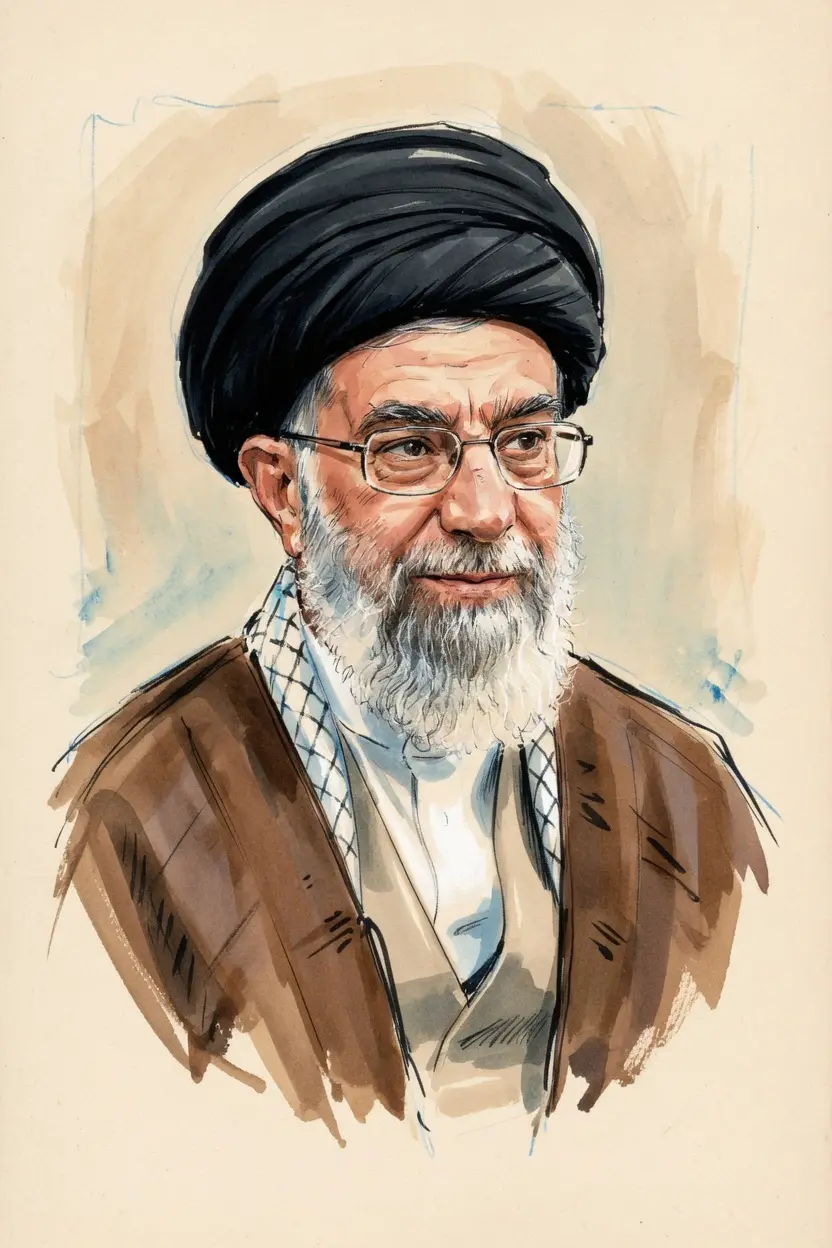
Ayatollah Ali Khamenei on Internal Iranian Politics
TL;DR
Ayatollah Ali Khamenei maintains supreme authority over all state matters, directing both political and security factions within Iran.
Key Points
He maintains the final say over all major state decisions, including foreign policy and military strategy.
Rivalry between conservative factions represents a significant internal challenge that the Supreme Leader must manage.
The issue of power succession after his tenure remains a critical, yet often opaque, component of domestic political stability.
Summary
Ayatollah Ali Khamenei’s position on internal Iranian politics centers on his role as the Supreme Leader, the ultimate political and religious authority in the Islamic Republic. He exercises final say over state policy, military matters, and judicial appointments, effectively overseeing the performance of elected bodies like the presidency and the parliament. His directives are meant to ensure that all domestic political activity remains aligned with the principles of the Islamic Revolution, often leading to tensions between hardline and reformist elements within the governing structure.
This position of ultimate arbitration means that when internal disputes or factional rivalries become pronounced, his pronouncements or interventions serve to resolve or steer the political trajectory. While the president manages the executive branch, the Supreme Leader’s power is constitutionally vested in positions such as command of the armed forces and control over key ideological bodies. His emphasis often falls on maintaining unity against perceived external threats and upholding revolutionary values against internal dissent or deviation.
Frequently Asked Questions
Ayatollah Ali Khamenei holds the final constitutional authority on all matters of state policy within Iran. He directs the political trajectory by overseeing key decision-making bodies and resolving disputes between various elected and unelected factions. His overarching goal is to ensure internal politics adhere to the established revolutionary principles.
The Supreme Leader's influence over the president is extensive, as he is the final arbiter for major state policies and can dismiss the president. While the president manages the executive branch, he operates under the direct oversight of the Supreme Leader and the powerful Guardian Council. This dynamic ensures executive action aligns with his vision for the Islamic Republic.
The process for selecting the next Supreme Leader is a critical and closely guarded aspect of internal Iranian politics. While the Assembly of Experts is constitutionally tasked with this selection, details regarding the potential candidates and consensus-building remain opaque. This future transition is widely seen as a major factor in long-term domestic stability.
Sources5
Power, Succession, and Stability: Assessing Iran’s post-Khamenei landscape
The Revolutionary Guards’ Role in Iranian Politics
Explainer: How the Iran war is causing division
Will the regime in Iran fall? History suggests it might, but not yet
* This is not an exhaustive list of sources.