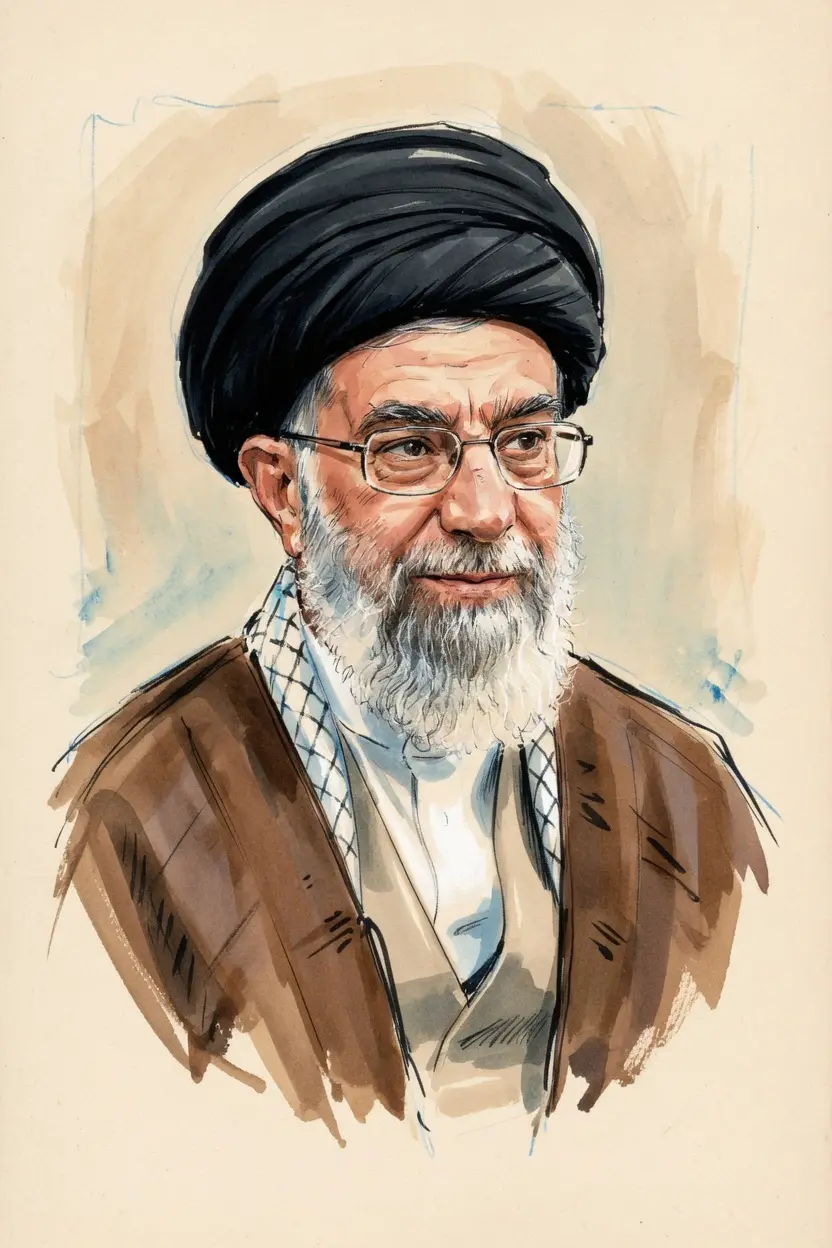
Ayatollah Ali Khamenei on Political Ideology
TL;DR
Ayatollah Ali Khamenei's political ideology centers on Khomeinism, maintaining theocracy through absolute authority, and exporting the Islamic Revolution.
Key Points
He held the ultimate religious and political authority in Iran as the second Supreme Leader from 1989 until his assassination in February 2026.
His political strategy involved building a system that serves and protects him by placing loyalists throughout key state institutions, including the military and judiciary.
He promoted the concept of an "Islamic Civilization" as the successor to the pre-Islamic "Great Civilization" model, fundamentally rooted in Shi'a Islam and velayat-e faqih.
Summary
Ayatollah Ali Khamenei's political ideology is fundamentally rooted in Khomeinism, which mandates the governance of Iran by a supreme Islamic jurist, known as velayat-e faqih, giving him final religious and political authority over all state affairs. He seeks to establish an "Islamic Civilization," a vision that critiques Western materialism and frames the Islamic Republic as an ideological beacon for the Muslim world, building upon the foundation laid by his predecessor. This ideological framework subordinates republican elements of the government, such as the presidency and parliament, to his direct oversight, ensuring all decisions align with revolutionary principles.
This ideological commitment also translates into a foreign policy focused on Shia Islamism, exporting the revolution, and actively countering the influence of the United States and Israel through regional proxy support, often described as the "Axis of Resistance". While the initial commitment to exporting the revolution has reportedly been tempered in practice by geopolitical realities, the core ideological stance of opposing Western powers and supporting ideological allies remains a defining feature of his long tenure. Internally, his rule has been characterized by the consolidation of power, often through a parallel structure of loyalist institutions, and suppression of political dissent.
Key Quotes
Khamenei uses fiery anti-Western rhetoric to appease his conservative allies; on the other hand, he affords extraordinary powers to multiple public and private sector stakeholders to keep a healthy balance of power intact.
Frequently Asked Questions
Ayatollah Ali Khamenei's political ideology is Khomeinism, centered on the principle of velayat-e faqih, or Guardianship of the Islamic Jurist. This grants him absolute final religious and political authority over the state. He also champions the long-term goal of realizing an "Islamic Civilization" as the superior global model.
Ayatollah Ali Khamenei viewed Western political ideology as fundamentally flawed, primarily characterized by materialism and spiritual hollowness. His vision of Islamic Civilization is frequently presented in contrast to the perceived decadence of the West. He promoted resolute opposition to the United States and Israel as core tenets of his foreign policy.
The Supreme Leader maintained a strong ideological commitment to exporting the Islamic Revolution, which is embedded in Iran's constitution. This involved supporting regional groups that align with this doctrine, forming what he termed the "Axis of Resistance." However, in practice, his foreign policy often prioritized geopolitical hegemony over the failed attempt to export the revolution broadly.