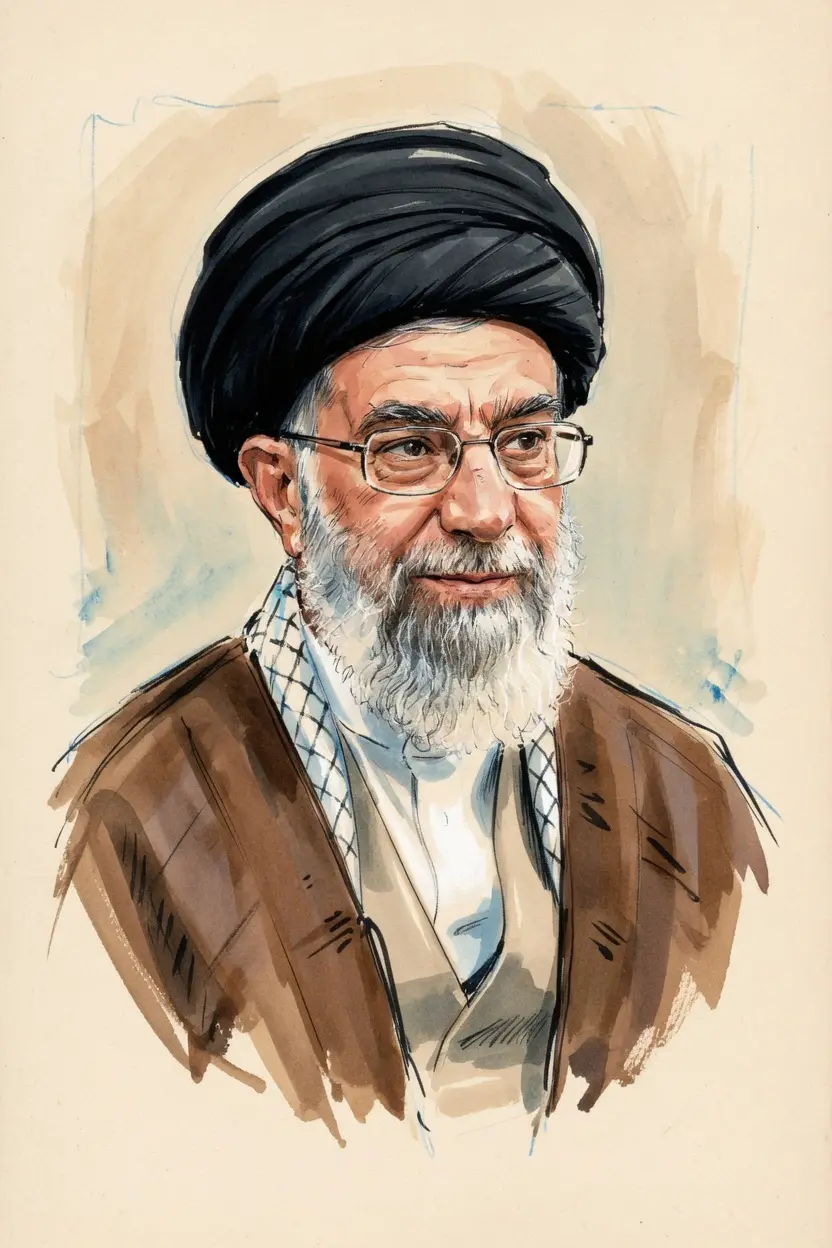
Ayatollah Ali Khamenei on Religious Doctrine
TL;DR
Ayatollah Ali Khamenei views religious doctrine as ultimately subordinate to the pragmatic interests and survival of the Islamic Republic.
Key Points
He has issued a fatwa that declares the production and use of nuclear weapons forbidden under Islamic law, though this is seen as strategically flexible.
The principle of maslaha (expediency) allows the ruling jurist to supersede constitutional and even fundamental Islamic laws if deemed necessary for regime survival.
His position is grounded in Velayat-e Faqih, establishing his interpretation of religious law as having final authority over all other jurists and state institutions.
Summary
Ayatollah Ali Khamenei’s position on religious doctrine is framed by the overriding principle of raison d'état, or regime expediency, which holds the survival of the Islamic Republic as the supreme religious value. This concept, inherited from his predecessor, allows the Supreme Leader to interpret or suspend religious laws, including those related to warfare or even fundamental rituals, if he deems it necessary for the state’s well-being or the advancement of revolutionary Islam. His pronouncements, such as a widely cited fatwa banning the production and use of Weapons of Mass Destruction, are thus understood by analysts as strategic political tools rather than immutable religious commitments. This flexibility is deeply rooted in the political theology of Velayat-e Faqih, which places the ruling jurist above other religious authorities and secular law.
The evolution of his stance reflects this prioritization of state interest over static religious interpretation, as evidenced by historical precedents where doctrinal rulings were adjusted based on shifting geopolitical needs or evidence. For instance, his statements on nuclear weapons have shifted over time, sometimes only prohibiting the use of WMDs while implying production or stockpiling is not strictly forbidden, leaving room for policy change. This doctrinal fluidity, combined with the ideological current of resistance he promotes, ensures that his religious pronouncements serve the regime's long-term strategic and theological struggle against its perceived enemies, ensuring hostility toward the U.S. remains a religious and political duty.
Frequently Asked Questions
Ayatollah Ali Khamenei treats religious doctrine as ultimately subordinate to the political need for the survival and advancement of the Islamic Republic. This is codified by the principle of Velayat-e Faqih, which grants him ultimate authority to interpret and apply Islamic law based on state expediency. Consequently, his religious rulings (fatwas) are adaptable to changing political and strategic circumstances.
Yes, his position, particularly concerning specific applications like nuclear weapons, shows a capacity for evolution based on political context. While he issued a fatwa against WMDs, the emphasis has sometimes shifted between prohibiting the use versus the production of such weapons. This flexibility suggests that theological rulings are interpreted through a lens of raison d'état.
He asserts that the role of the ruling jurist, based on Velayat-e Faqih, is to guide the state and people in determining and implementing the demands of Islam. This establishes his authority as superior to elected bodies and other clerics, ensuring religious principles are enforced as long as they align with the regime's core interests.
Sources7
Strategic Suicide? Why Iran's Ayatollah Khamenei is Again Preparing for War
The Doctrine of Obedience: Iran's Recruitment Architecture and the Illusion of Diplomacy
Khamenei's Nuclear Fatwa: Religious Ruling or Political Strategy?
After Khamenei: Planning for Iran's Leadership Transition
Background: Role of the Supreme Leader | UANI
Nuclear Fatwa - The Washington Institute
Why Iranians Celebrate the Fall of the Regime's Top Leader
* This is not an exhaustive list of sources.