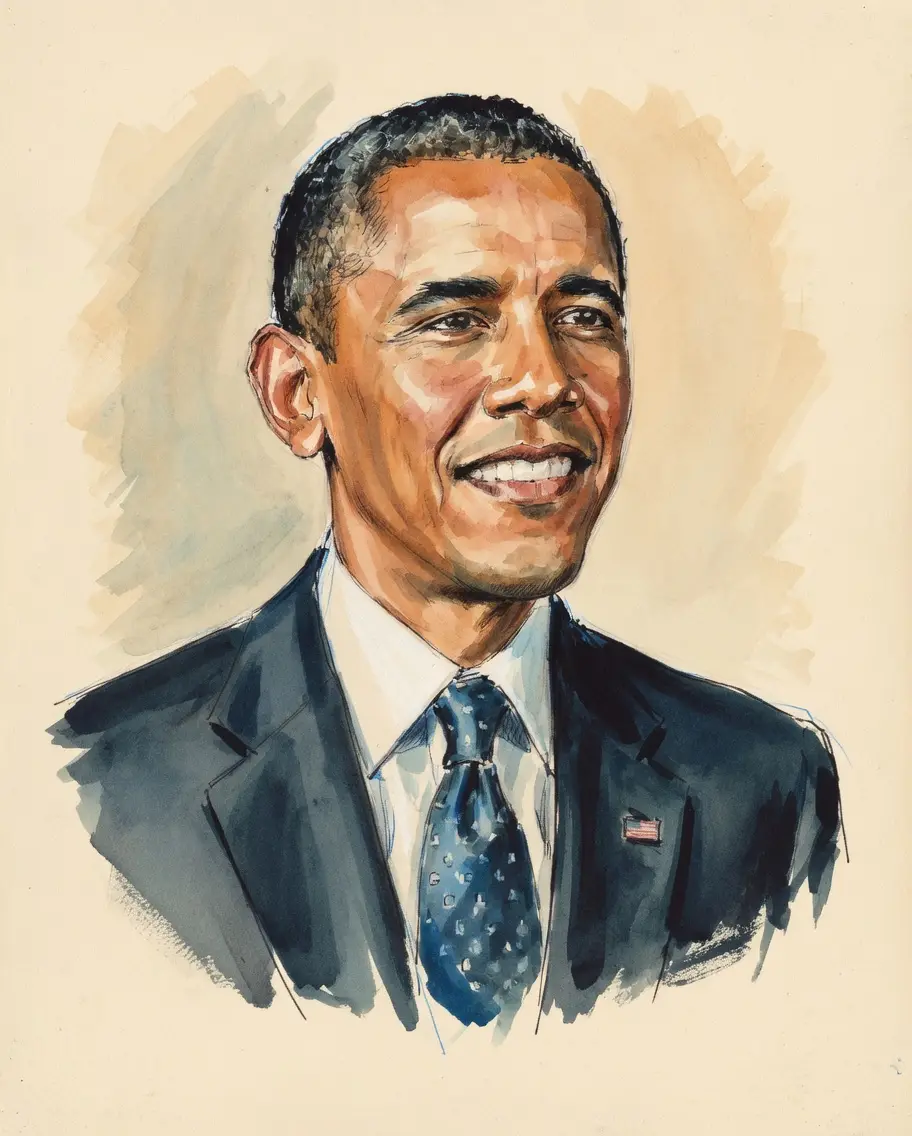
Barack Obama
- Known for
- 44th U.S. President, Affordable Care Act, First African American President
- Born in
- Honolulu, United States
- Education
- Juris Doctor magna cum laude, University of Hawaiʻi at Mānoa
Barack Obama, the 44th U.S. President and the first African American to hold the office, built a career blending community organizing with constitutional law expertise. His presidency was defined by navigating major crises, notably the 2008 financial crisis, while pushing a transformative agenda on health care reform. Obama often positioned himself as a pragmatic leader seeking bipartisan solutions, despite facing fierce political opposition.
Signature Positions
Obama’s administration implemented several landmark policy shifts during his tenure:
- Health Care Reform: Signed the Affordable Care Act (ACA), expanding insurance coverage and prohibiting denial based on pre-existing conditions.
- Economic Policy: Signed the American Recovery and Reinvestment Act of 2009 as a major stimulus package and enacted the Dodd-Frank Act to reform Wall Street.
- Foreign Policy: Negotiated the Iran nuclear deal (JCPOA), restored diplomatic relations with Cuba, and ordered the raid that killed Osama bin Laden.
- LGBT Rights: Became the first sitting president to publicly support same-sex marriage and signed the Don't Ask, Don't Tell Repeal Act.
- Climate Change: Took steps to combat climate change, including signing the Paris Agreement and using executive power to ban offshore drilling.
How Views Have Evolved
Obama's positions on social issues evolved significantly during his political career, particularly regarding LGBT rights.
While running for Illinois Senate in 2004, he opposed same-sex marriage, favoring only civil unions. However, by his 2012 re-election campaign, he affirmed his personal support for marriage equality, becoming the first sitting president to do so.
His stance on Russia shifted dramatically, moving from a policy of outreach symbolized by a 'reset' in 2009 to imposing sanctions following the 2014 Ukraine invasion and 2016 election interference.
Notable Tensions
Obama’s presidency is marked by several notable contradictions and criticisms:
- Drone Strikes: Despite winning the Nobel Peace Prize early in his term, he substantially escalated the use of drone strikes, leading to civilian casualties.
- Financial Sector: While enacting Dodd-Frank, many progressives criticised him for not prosecuting major bank executives following the 2008 crisis.
- Racial Justice: Though achieving a high symbolic status as the first African American president, the rise of Black Lives Matter highlighted ongoing systemic racial tensions during his tenure.
- Israel/Palestine: He strongly supported Israel's defense but controversially abstained from a UN resolution condemning Israeli settlement building near the end of his term.
Obama's legacy is complex: historians credit him with averting a depression and passing transformative health care legislation. He is widely regarded as an exceptional orator and effective campaigner, but some critics note his political effectiveness did not translate into building a lasting, stronger Democratic Party.