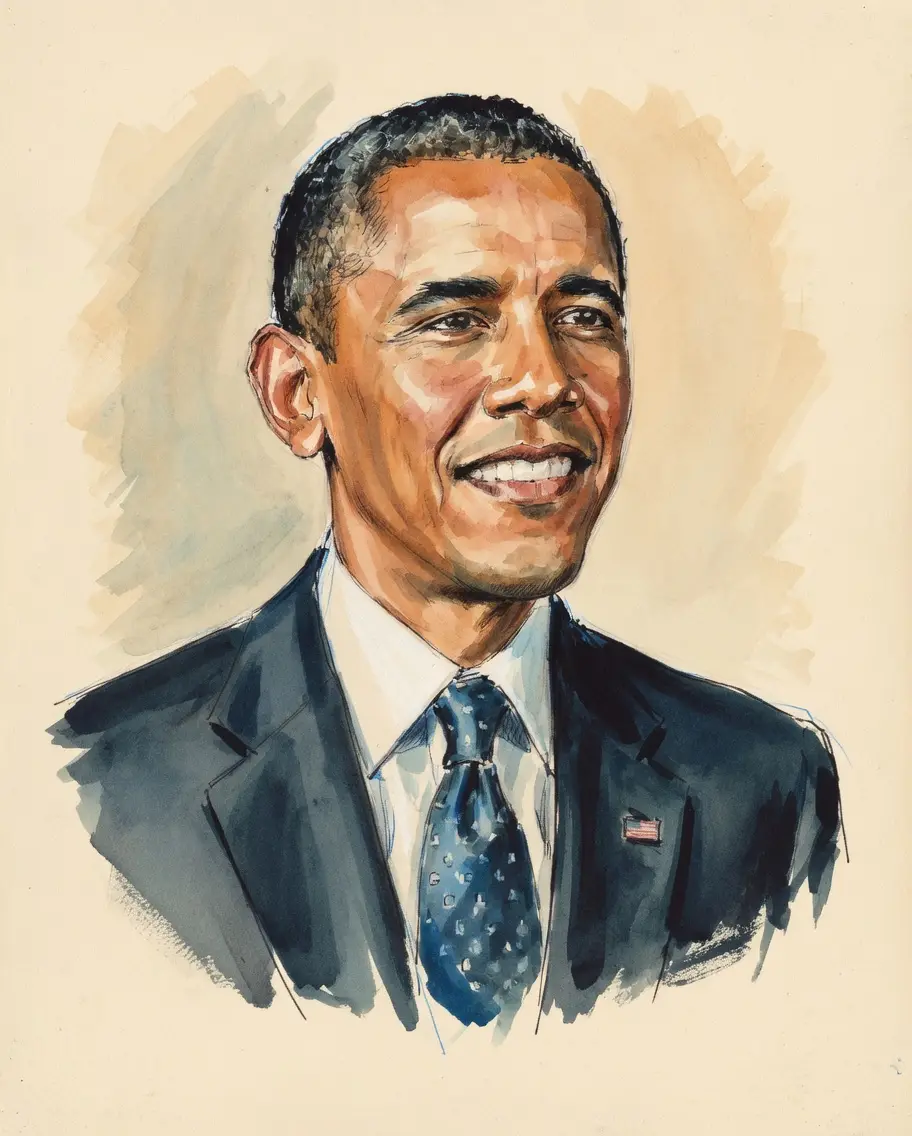
Barack Obama on Leadership
TL;DR
Effective leadership demands confronting complexity by holding opposing truths while prioritizing service, team integrity, and continuous learning.
Key Points
He implemented strict ethics rules upon taking office in 2009, including a gift ban for lobbyists and 'revolving door' restrictions for appointees.
Leadership begins with listening to the voices outside the 'bubble,' a practice he maintained by reading ten letters from citizens daily for eight years.
He views the most important post-presidency function as inspiring and preparing the next generation of civic leaders to take charge.
He stresses that good communication is rooted in sincerity, telling one's story truthfully and clearly rather than relying on charisma tricks.
Summary
Barack Obama views leadership as a deliberate process of navigating complexity, emphasizing the necessity of holding the tension between opposing ideas or truths without becoming paralyzed. He advocates for building an effective team with integrity and then empowering them, noting that true leadership requires recognizing that most difficult decisions lack tidy, perfect answers. This approach demands actively listening to diverse viewpoints, even contrarian ones, to ensure decisions are fact-based, principled, and consider all angles, even when an optimal outcome is not guaranteed.
His approach implies that leaders must remain grounded by maintaining connection to ordinary life and remembering their temporary tenure, often by prioritizing family and personal rituals. Furthermore, he stresses that genuine leadership communication relies on honesty and belief in one's message, using storytelling to connect a vision to a broader narrative of progress. Ultimately, he frames presidential leadership as a relay race, where the primary post-presidency goal is preparing the next generation of leaders to take up the baton.
Frequently Asked Questions
Barack Obama's core leadership philosophy centers on confronting complexity by holding the tension of opposites—believing that opposing truths can coexist—and acting pragmatically. He emphasizes that effective leaders must create sound decision-making processes that listen to experts and follow facts, even when certainty is impossible.
Humility and self-reflection are vital to his view of leadership, as he continuously questioned his own motivations, such as whether his actions were driven by service or by vanity. He stressed the importance of not taking oneself too seriously, even while taking the work very seriously, as a way to maintain perspective.
He stressed that a leader must build an effective team of smart individuals with integrity and then step back to let them work. He valued having contrarians in the room, like his Vice President, to ensure that a singular current of thinking did not dominate crucial decision-making processes.
Sources7
American Leadership | The Obama Foundation
How I Approach the Toughest Decisions
Ethics | The White House - Obama White House Archives
President Barack Obama on Leadership, Family, and Service - Brené Brown
7-Things I learned about Leadership in conversation with Barack Obama
Obama focuses on inspiring next generation of leaders in return to UChicago
Face to face with Barack Obama: Ten vital lessons from a world-class leader
* This is not an exhaustive list of sources.