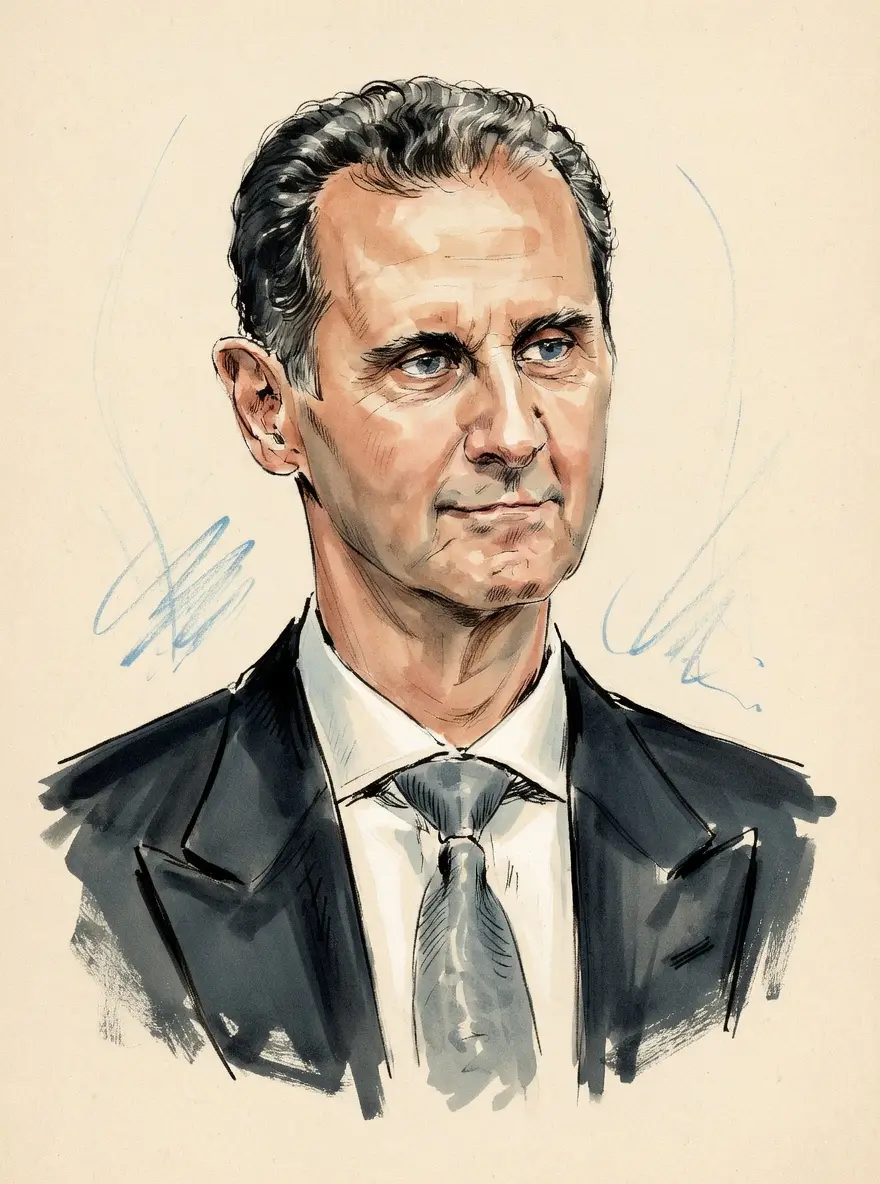
Bashar Al Assad on Islam
TL;DR
Bashar Al Assad aggressively seeks to co-opt and redefine Islam to align explicitly with state authority and security interests.
Key Points
He explicitly stated there is no such thing as "Islamic terrorism," asserting that terrorism is distinct from Islam itself, which he views as a separate concept.
He praised the overthrow of Egypt's Mohammed Morsi in 2013, hailing it as the fall of "political Islam," which he views as anyone using religion for factional interests.
The regime pushed for publications called the “Jurisprudence of Crisis” in 2014, intended to correct what he saw as “false interpretations of Islam” that prohibited political activism against state authority.
Summary
Bashar Al Assad's position on Islam has evolved significantly, particularly since the 2011 uprising, shifting from previously criminalizing sectarian expression to actively attempting to remake and control the religious narrative. The regime frames its stance as championing a “moderate” or “reformed” Islam, contrasting it sharply with what it labels as the “extreme” or “political Islam” of its opposition. This effort involves embedding the president’s interpretations directly into religious education and positioning patriotism toward the Baathist state as a religious prerequisite, effectively seeking the “Assadization” of the religious domain.
Historically, the regime prioritized a form of enforced secularism that suppressed overt religious identity, viewing any loyalty outside the state as a threat, especially to the Sunni majority. Since the conflict, however, he has granted religion greater state support to enhance regime legitimacy, co-opting religious establishments through regulatory decrees to dictate acceptable religious behavior. This strategy is designed to counter Islamist opposition narratives while ensuring the religious establishment supports the state's authority, even extending to incorporating female preachers under state control via specific initiatives.
Key Quotes
“What is happening in Egypt is the fall of so-called political Islam,”
“we've been fighting the Muslim Brotherhood since the 1950s and we are still fighting with them.”
Frequently Asked Questions
Bashar Al Assad positions himself and his government as the defenders of a moderate and reformed interpretation of Islam against what he terms 'political' or 'radical' Islam. He seeks to control and redefine religious discourse to serve the needs and legitimacy of the Syrian state. This approach involves state oversight of religious appointments and the introduction of state-approved religious literature.
Yes, his stance has significantly evolved, especially since the 2011 uprising. Previously, the regime suppressed overt religious expression and criminalized sectarian identification. Following the conflict, he increasingly embraced religious rhetoric, attempting to link national identity with a specific, state-approved version of faith to bolster his rule against Islamist opposition.
Yes, Bashar Al Assad has publicly stated that there is no such thing as 'Islamic terrorism,' arguing that terrorism is separate from Islam, though groups like Al-Qaeda use Islam as a pretext for their violence. He often frames the Syrian conflict as a fight against religious extremists attempting to use religion for political aims.
Sources8
Assad Remakes Syrian Faith to Suit the Regime's Needs
Alhamdulillah. Looks like Assad's oppression and cruelty is over. : r/islam
Sunnis Under the Assads: Repression, Abuse and Discrimination
View of State and Islam in Baathist Syria: Confrontation or Co-optation?
Bashar al-Assad Quotes About Islam | A-Z Quotes
President Bashar al-Assad Is Not A Monster – The Mass Media
Islam in Syria - Wikipedia
Assad hails fall of 'political Islam' in Egypt | The Times of Israel
* This is not an exhaustive list of sources.