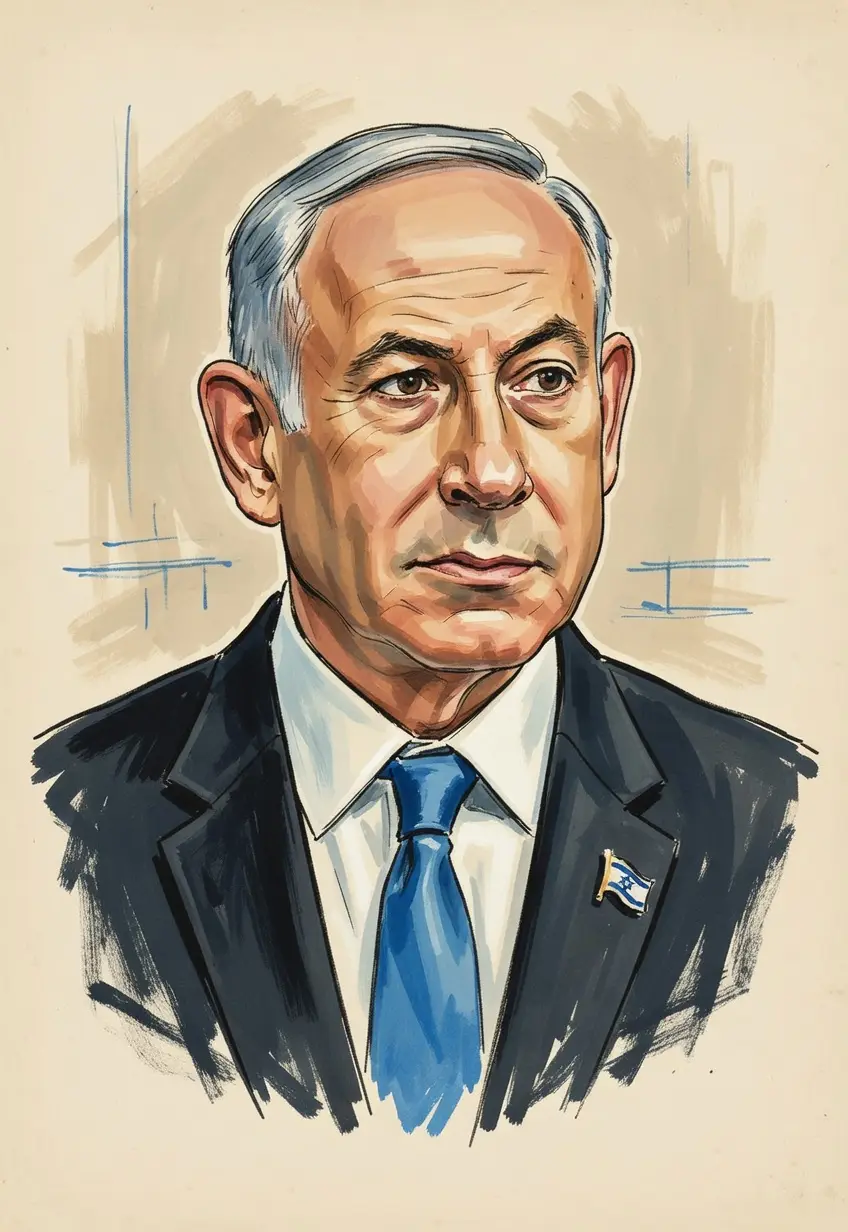
Benjamin Netanyahu on Ceasefire
TL;DR
Benjamin Netanyahu appears to favor conditional or limited ceasefires while strategically delaying or undermining comprehensive agreements to maintain operational freedom.
Key Points
He dismissed the announcement of the Gaza ceasefire's second phase as merely a "declarative move" and not tangible progress.
His government has been accused of proactively taking steps to ensure that the second phase of a US-brokered plan would not proceed as planned.
His office released footage of a meeting regarding the Iran campaign, which included key security and political aides, amidst ceasefire discussions.
Summary
Benjamin Netanyahu's position on a Gaza ceasefire has been characterized by a conditional acceptance or outright resistance to elements perceived as limiting Israel's long-term strategic or military objectives. Evidence suggests that while he has engaged with US-brokered plans, his government takes actions to slow-walk or sabotage later phases of agreements, such as those involving the establishment of a new Palestinian technocratic body for governing and reconstruction. He has been accused of aiming to keep the door open to resuming hostilities at a time of his choosing, often citing the need for the complete disarmament of Hamas before withdrawing forces or allowing full reconstruction to proceed.
This stance is complicated by immense domestic political pressure from his far-right coalition partners, who oppose concessions like prisoner releases or Palestinian governance structures, and instead insist on retaining occupation or resuming full-force assaults. Furthermore, avoiding the establishment of an international stabilization force in Gaza is seen as a way to preserve Israel's unilateral operational freedom within the enclave. Observers suggest that politically, a continuation of conflict could also benefit the Prime Minister domestically by allowing him to present himself as a wartime leader, thereby minimizing criticism over other political challenges and his handling of prior security failures.
Frequently Asked Questions
Benjamin Netanyahu views ceasefires, especially later phases of negotiated agreements, with caution, often emphasizing conditions like the full disarmament of Hamas. He has been reported to resist or slow-walk aspects of deals that would limit Israel's military freedom or progress toward a two-state solution.
Yes, the position appears to have evolved, as his engagement in US-brokered plans contrasts with accusations that his government is actively undermining the agreed-upon next stages. His administration's actions suggest a tactical acceptance rather than a full strategic commitment to all negotiated terms.
The Prime Minister stated that the announcement advancing the Gaza ceasefire to its second phase was largely symbolic or a "declarative move." He conveyed this sentiment while meeting with parents of a hostage, suggesting that concrete progress on key issues remained outstanding.
Sources4
Four reasons why Benjamin Netanyahu may not want a Gaza ceasefire to hold
Netanyahu's office releases footage of Iran war meeting with top aides
Netanyahu says announcement of Gaza ceasefire's next phase is only a 'declarative move'
How Netanyahu is sabotaging phase two of the Gaza ceasefire
* This is not an exhaustive list of sources.