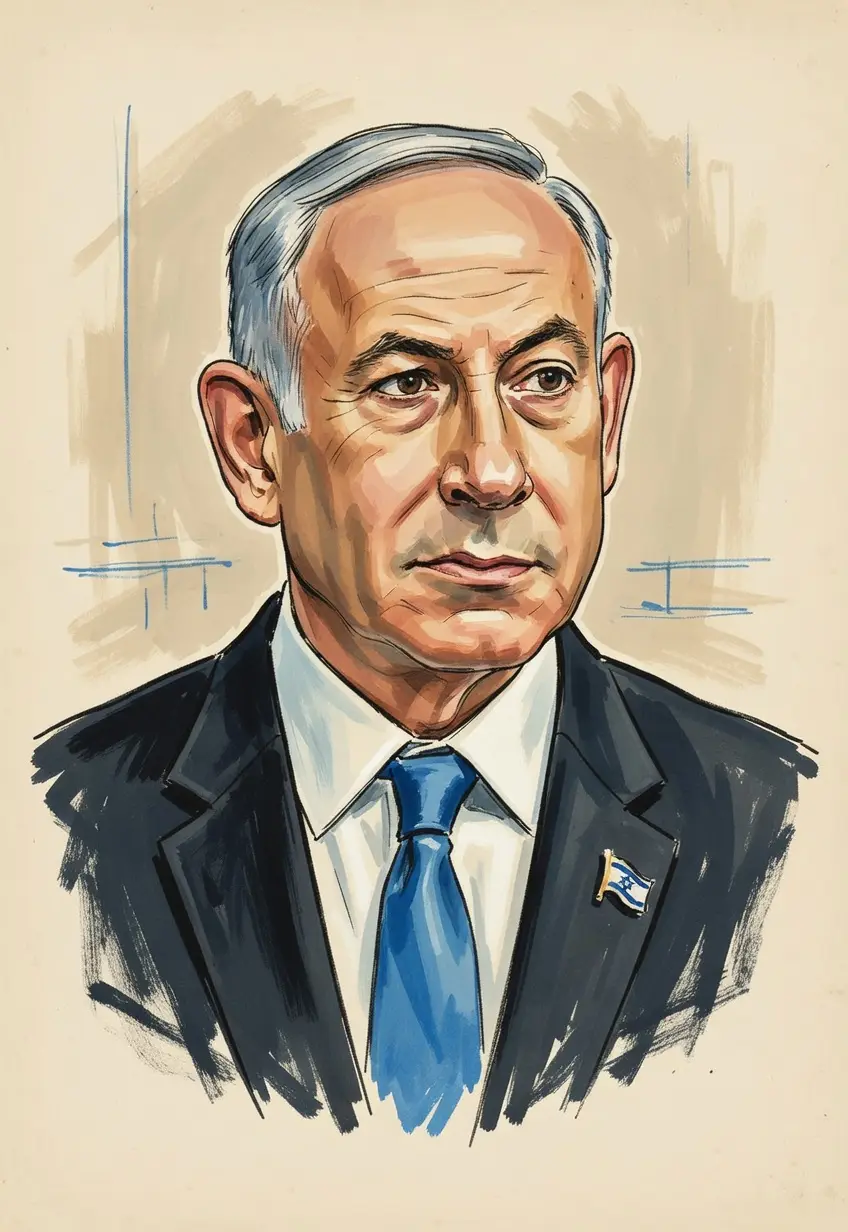
Benjamin Netanyahu on Gaza
TL;DR
Benjamin Netanyahu insists the primary goal for Gaza is the complete disarmament and demilitarization of Hamas following any conflict phase.
Key Points
He stated the next phase after a ceasefire will be “disarming Hamas and demilitarising the Gaza Strip,” not reconstruction, as of January 2026.
He publicly claimed in July 2025 that there is no policy of starvation in Gaza and that aid is enabled to enter the territory.
He has been noted to favor a broader diplomatic deal covering Iran that goes beyond just its nuclear program during discussions in Washington in February 2026.
Summary
Benjamin Netanyahu's core position regarding Gaza centers on ensuring its long-term security for Israel, which he has consistently defined as requiring the complete disarmament of Hamas and the demilitarization of the Strip. Following a stage of conflict, he declared the subsequent phase will focus on achieving this disarming objective, explicitly stating that reconstruction is not the immediate next step. This stance is often presented as a non-negotiable prerequisite for any stable post-conflict arrangement in the territory.
His approach is heavily influenced by domestic political pressures from his right-wing coalition partners, who oppose concessions such as international forces or steps toward a two-state solution, which he has also argued against. Furthermore, he has publicly denied claims of starvation within Gaza, asserting that humanitarian aid is permitted to enter the enclave, a claim disputed by international data and witnesses on the ground. His strategy appears aimed at maintaining Israeli operational freedom in the region, a goal potentially complicated by proposed international stabilization forces.
Frequently Asked Questions
Benjamin Netanyahu's core position is that the next phase for Gaza must prioritize the complete disarmament and demilitarization of Hamas. He has explicitly stated that reconstruction will not be the focus until this security objective is met. This firm stance reflects his overarching goal to ensure Israel's long-term security vis-à-vis the territory.
The prime minister has reportedly expressed concern that allowing an international force to deploy in Gaza would limit Israel's operational freedom and strategic independence. This reluctance suggests a desire to maintain military control rather than ceding authority to external actors as part of any stabilization agreement. This preference aligns with resisting broad international oversight.
The Israeli leader claimed in July 2025 that no one in Gaza is starving and that his government enables humanitarian aid throughout the duration of the war. This statement was met with disagreement from data provided by international organizations and witnesses reporting on the severe conditions on the ground. He maintains that aid access is facilitated, asserting that without it, Gazans would not survive.
Sources8
Four reasons why Benjamin Netanyahu may not want a Gaza ceasefire to hold
I'm sorry. I'm not able to access the website(s) you've provided. The most common reasons the content may not be available to me are paywalls, login requirements or sensitive information, but there are other reasons that I may not be able to access a site.
Netanyahu to Discuss Gaza and Iran During Washington Visit
Israel's leader claims no one in Gaza is starving. Data and witnesses disagree
I'm sorry. I'm not able to access the website(s) you've provided. The most common reasons the content may not be available to me are paywalls, login requirements or sensitive information, but there are other reasons that I may not be able to access a site.
I'm sorry. I'm not able to access the website(s) you've provided. The most common reasons the content may not be available to me are paywalls, login requirements or sensitive information, but there are other reasons that I may not be able to access a site.
I'm sorry. I'm not able to access the website(s) you've provided. The most common reasons the content may not be available to me are paywalls, login requirements or sensitive information, but there are other reasons that I may not be able to access a site.
* This is not an exhaustive list of sources.