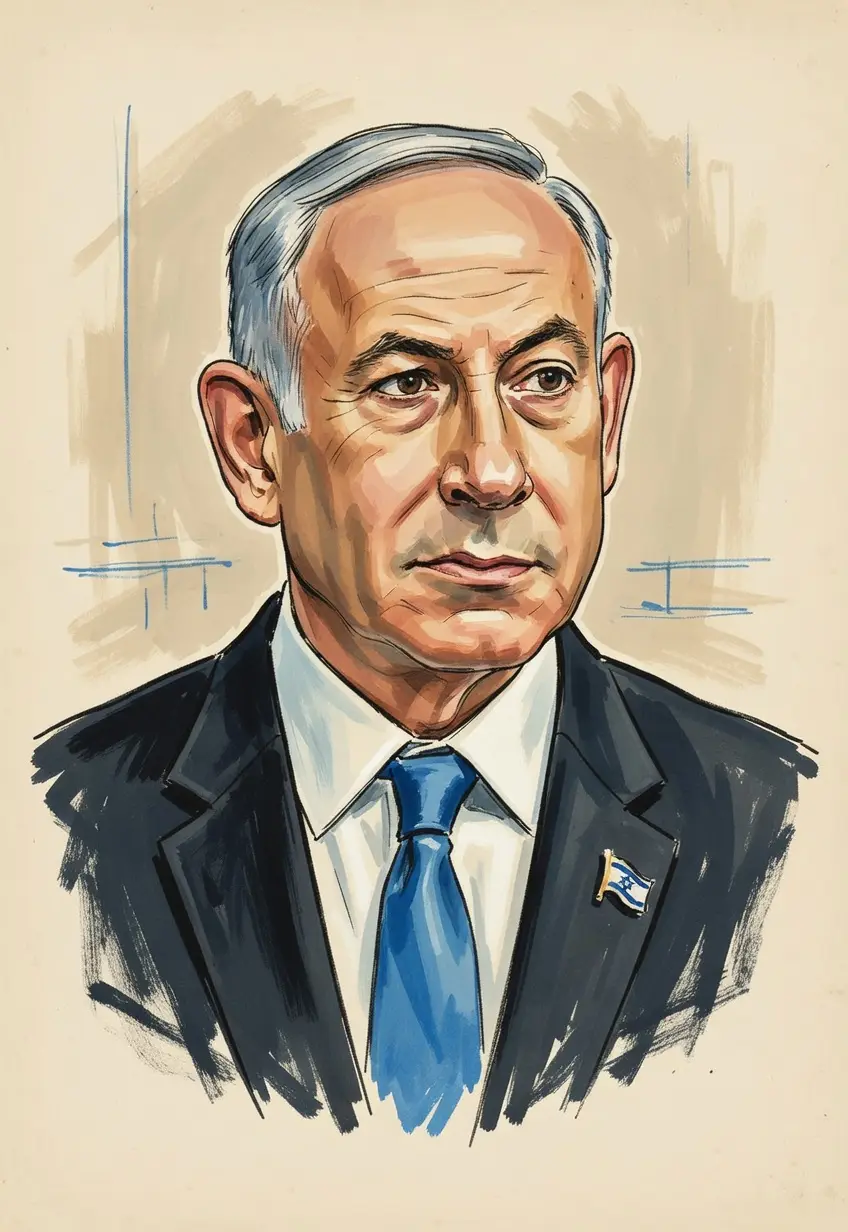
Benjamin Netanyahu on Terrorism
TL;DR
Benjamin Netanyahu views terrorism as an evil, totalitarian act that must be met with unwavering strength and a hard line against any sponsors.
Key Points
He published a book in 1981 titled International Terrorism: Challenge and Response and another in 1995 titled Fighting Terrorism: How Democracies Can Defeat Domestic and International Terrorism.
He stated following an attack in October 2025 that "weakness in the face of terrorism only brings more terrorism. Only strength and unity can defeat it."
He previously advocated for tighter immigration laws, including stricter background checks, as an essential method to preemptively combat terrorism.
Summary
Benjamin Netanyahu has consistently articulated a hardline stance against terrorism, viewing it as an inherent evil with no justification, regardless of the purported grievances. This position is rooted in his personal history, notably the death of his brother in a counter-terrorist operation, and has been a central theme in his political career and published works, such as his 1995 book, Fighting Terrorism: How Democracies Can Defeat Domestic and International Terrorism. He contends that terrorists utilize violent coercion to establish a coercive regime, effectively making them forerunners of tyranny rather than fighters for freedom. The core of his strategy involves confronting not only the perpetrators but also the regimes that sponsor them, believing that weakness in the face of terror only encourages its recurrence.
His approach advocates for a strong, often preemptive, response to neutralize terrorist threats, a policy he frequently linked to the necessity of democratic societies defending themselves without significantly curtailing civil liberties. He emphasized that achieving tranquility and security requires making it clear to hostile entities that there is a direct and severe cost to engaging in terrorism, including the potential dismantling of their ruling regimes. Furthermore, he has suggested that a key component of democratic self-defense includes stricter immigration controls, such as more rigorous background checks, to preemptively combat the infiltration of terrorists into Western nations.
Key Quotes
The essence of democratic societies, and that which distinguishes them from dictatorships, is the commitment to resolve conflict in a nonviolent fashion by settling issues through argument and debate ... The salient point that has to be underlined again and again is that nothing justifies terrorism, that it is evil per se – that the various real or imagined reasons proffered by the terrorists to justify their actions are meaningless.
Frequently Asked Questions
Benjamin Netanyahu firmly believes that terrorism is an absolute evil, or per se, that cannot be justified by any political or ideological grievance. He views it as a form of totalitarianism that seeks to establish a regime of violent coercion. His position is that democracies must adopt a strong and uncompromising stance against it to ensure their security.
While the expression of his views has adapted to specific contexts over the decades, the fundamental commitment to combating terrorism with strength has remained consistent since the 1970s. For example, his early writings focused on democratic societies fighting terror, while later statements emphasize confronting state sponsors of Islamic militants.
In past interviews, Netanyahu stressed that stopping terrorism requires going after the regime sponsoring it, asserting that mere military action against groups is insufficient without dismantling their source of support. He stated that if the sponsoring regime is not stopped, the terrorism will continue to erupt.
Sources5
Fighting Terrorism: How Democracies Can Defeat Domestic and International Terrorism
Netanyahu suggests 'weakness on terrorism' led to UK synagogue attack | Israel | The Guardian
Interviews - Benjamin Netanyahu | Shattered Dreams Of Peace | FRONTLINE | PBS
Benjamin Netanyahu - Wikipedia
INTERNATIONAL TERRORISM BY BENJAMIN NETANYAHU 1981
* This is not an exhaustive list of sources.