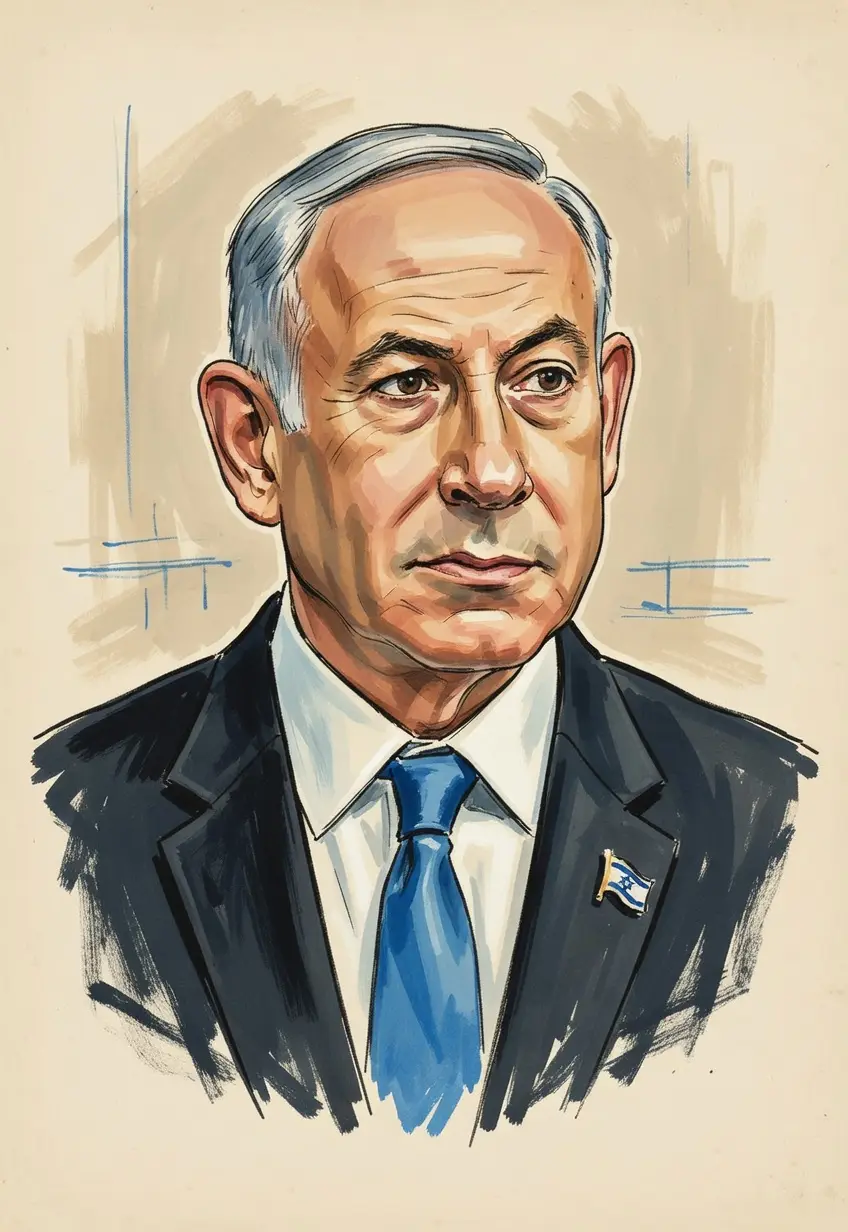
Benjamin Netanyahu on Ukraine
TL;DR
Benjamin Netanyahu maintains a cautious, nonaligned stance on Ukraine, prioritizing Israeli security interests over full alignment with the West.
Key Points
He inherited and largely maintained a policy of refusing to supply weapons, including missile defense technology, to Ukraine due to security concerns.
Netanyahu reportedly expressed support for Ukraine's sovereignty and territorial integrity during a phone call with the Ukrainian president in August 2024.
He has cited the 'complex' relationship with Russia, primarily concerning Israel's freedom of military action against Iran in Syrian skies, as a major factor in his approach.
Summary
Benjamin Netanyahu’s position regarding the war in Ukraine has been characterized by a need to balance Israel's strong relationship with the United States and European allies against its critical security relationship with Russia, particularly concerning military operations in Syria. His government has consistently refused calls to supply Ukraine with lethal military aid or impose broad economic sanctions on Russia, confining its visible support primarily to humanitarian assistance, such as sending generators and opening a field hospital. This posture has often drawn criticism from Kyiv and has resulted in a policy that keeps open channels of communication with the Kremlin, a practice informed by the need to secure freedom of action against Iranian entrenchment in Syria.
This approach represents an attempt to maintain Israel’s ability to operate effectively against regional threats, where Russia’s presence is a key factor. While he has expressed support for Ukraine’s sovereignty and territorial integrity, and has reportedly discussed security matters like Iranian drones, the refusal to provide advanced defensive weaponry, like the Iron Dome, has persisted due to concerns that Israeli technology could fall into Iranian hands. Furthermore, domestic considerations, including the large Russian-speaking population and the potential legitimization of future annexation claims in the West Bank should Russia’s territorial gains be tacitly accepted, contribute to this carefully calibrated, non-confrontational policy toward Moscow.
Key Quotes
Prime Minister Netanyahu expressed support for the sovereignty and territorial integrity of Ukraine.”
While it might feel like a lifetime ago, it has been a mere two years since an Israeli annexation of West Bank territory seemed imminent, as then-prime minister, Benjamin Netanyahu, was nearing securing an endorsement from the Trump administration for what has long been an aspiration for the nationalistic right in Israel.
Frequently Asked Questions
Benjamin Netanyahu’s position is characterized by a nonaligned approach where Israel offers substantial humanitarian aid but refrains from supplying lethal weapons to Ukraine. He prioritizes maintaining operational freedom in Syria by managing the relationship with Russia.
While there were expectations of a policy shift upon his return to office, his core stance—balancing ties with the West against security needs regarding Russia in Syria—has largely remained consistent. He has, however, engaged in high-level calls with the Ukrainian president.
The Prime Minister has indicated a willingness to 'look into' supplying Israeli weapons, including the Iron Dome, but has ultimately not provided military hardware. This hesitation stems from concerns about technology transfer to Iran via Russia.
Sources7
Israel breaks with US, backs Ukrainian UN resolution in rare show of support
Israel–Ukraine relations - Wikipedia
The Israeli Reaction to the War in Ukraine | IWM WEBSITE
The Netanyahu Government's Approach to Russia and Ukraine
Ukraine: Netanyahu and Zelensky spoke on phone, PM backed Ukraine's territorial integrity
Bilateral relations | Ministry of Foreign Affairs
Ukraine Israel relations Articles and latest stories | The Jerusalem Post
* This is not an exhaustive list of sources.