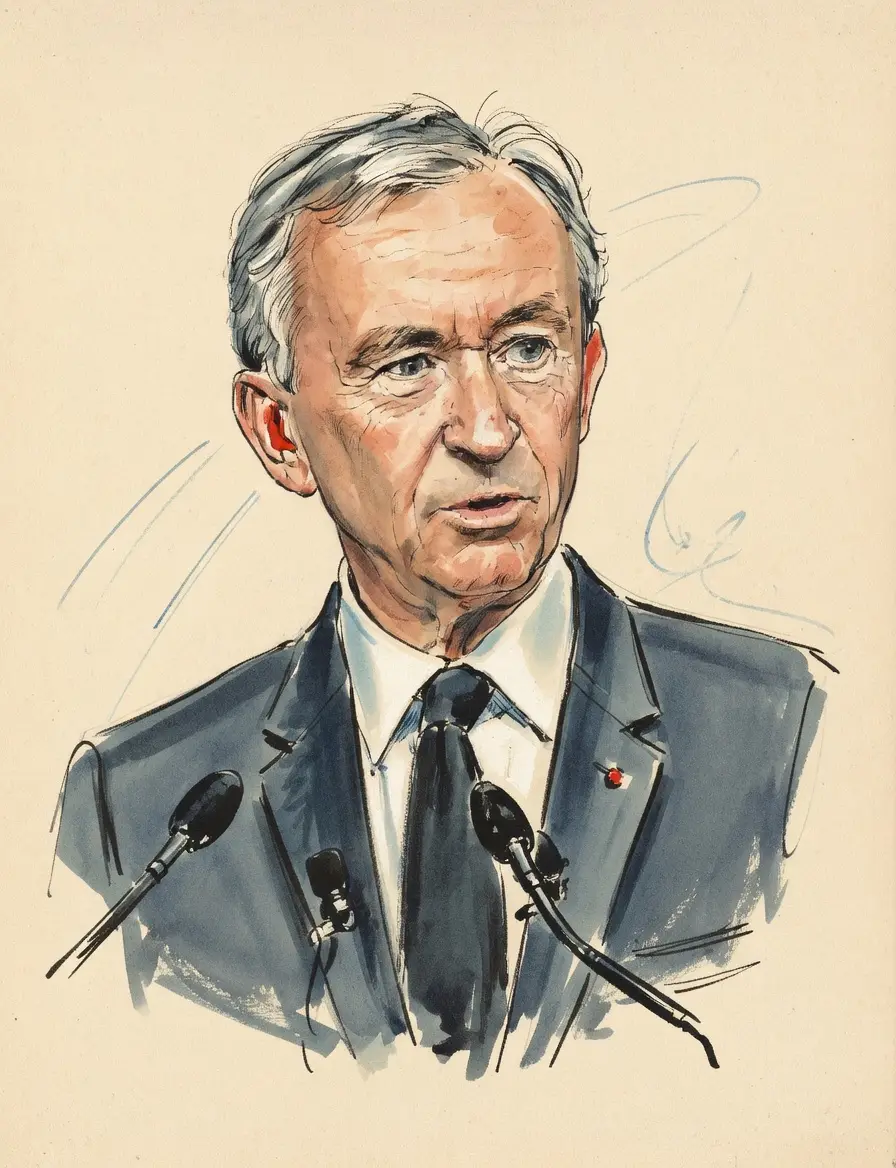
Bernard Arnault on Luxury Industry
TL;DR
Bernard Arnault views the luxury industry as an arena for strategic acquisition, timeless brand building, and relentless pursuit of global market dominance.
Key Points
He articulated that Louis Vuitton and Dior brands succeed because they simultaneously embody timelessness and modernity.
His expansion strategy heavily relies on acquisitions, such as securing Tiffany & Co. in January 2021, to solidify global market position.
He emphasizes that capital must serve a grander ambition to build durable power within the industry, rather than pursuing simple quick wealth.
Summary
Bernard Arnault's position on the luxury industry is one of absolute mastery, focused on strategic acquisition, brand fortification, and relentless global expansion, positioning LVMH as the undisputed global powerhouse. He believes the most successful luxury brands possess a contradictory yet vital dual nature: being both timeless in their essence and at the utmost level of modernity in their execution. This is evidenced by his long-term vision, which prioritizes control and building durable corporate value over short-term gains, a philosophy he contrasts with mere quick riches.
His approach is characterized by a hands-on management style that involves deep involvement in brand operations and a willingness to make decisive, tough choices. The consistent strategy has been to identify companies with strong brand recognition and growth potential, frequently using mergers and acquisitions as the primary vehicle for expansion, as seen in the development of the LVMH empire since 1987. He stresses localization in global markets while maintaining the core exclusivity and quality of the products, ensuring that LVMH remains the leading entity in the sector.
Frequently Asked Questions
Bernard Arnault's core philosophy centers on identifying and acquiring brands with strong recognition and growth potential, then integrating them into the LVMH structure. He believes success requires a balance, where brands must feel both timeless and highly modern to appeal to a global clientele.
He champions a strategy combining geographic expansion, active mergers and acquisitions, and localization to connect with regional consumers. He maintains that maintaining the quality and exclusivity of the products is paramount, even while adapting marketing and offerings to local cultures.
The chairman and CEO stated that the success of brands like Louis Vuitton and Dior stems from their ability to be both timeless and absolutely modern. This duality, which he likened to fire and water, is a key principle he applies to building enduring luxury houses.
Sources3
Bernard Arnault & LVMH international constellation
Bernard Arnault - Wikipedia
The taste of luxury – some principles that took Bernard Arnault to the top of the luxury industry
* This is not an exhaustive list of sources.