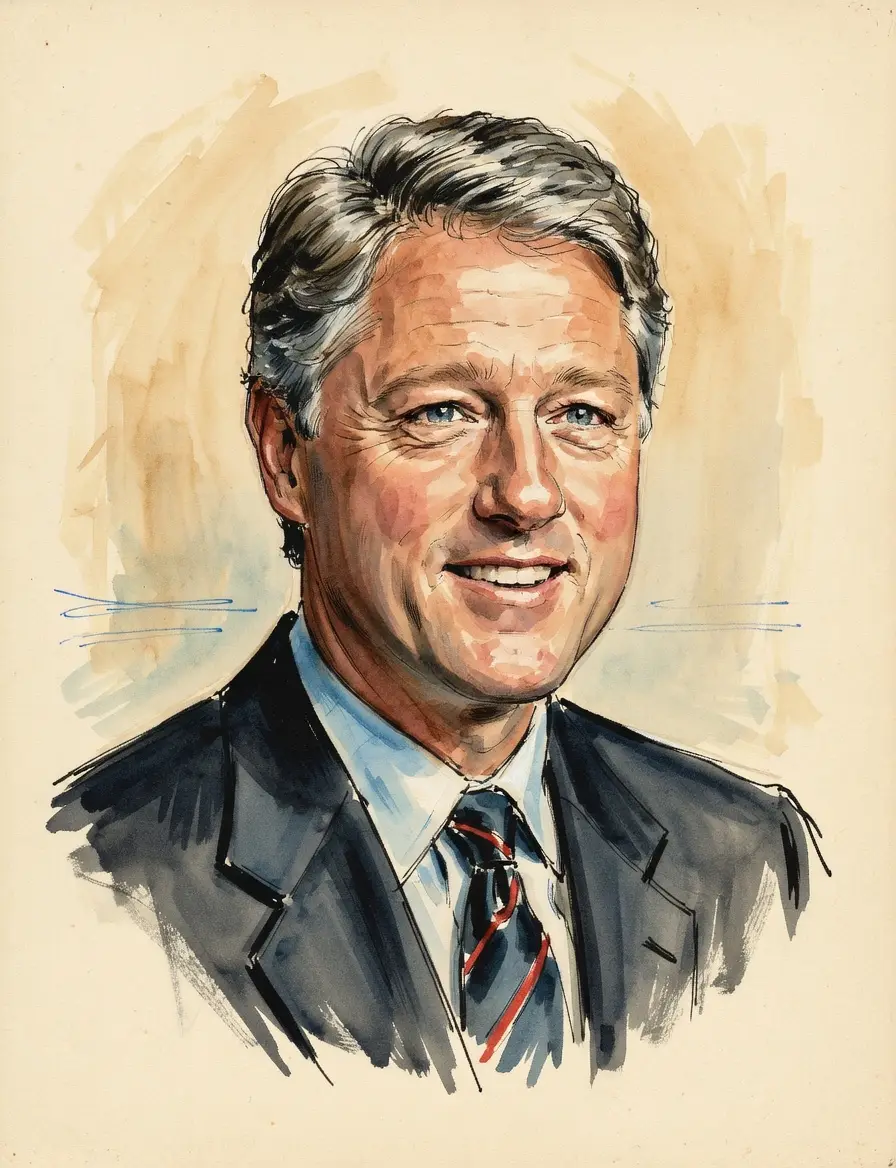
Bill Clinton on Gun Control
TL;DR
Bill Clinton strongly advocated for and signed significant federal gun control measures, including a background check system and an assault weapons ban.
Key Points
He signed the Brady Handgun Violence Prevention Act into law on November 30, 1993, mandating background checks for handgun purchases.
The administration successfully enacted the Federal Assault Weapons Ban in 1994, which banned the manufacture and transfer of certain semi-automatic firearms until its expiration in 2004.
In 1999, he pushed for closing the gun show loophole and supported banning juvenile possession of assault weapons and large-capacity magazines.
Summary
Bill Clinton, during his presidency from 1993 to 2001, made gun control a central part of his domestic agenda, actively lobbying for and signing two major pieces of legislation: the Brady Handgun Violence Prevention Act and the 1994 Federal Assault Weapons Ban. The Brady Bill, which established a required waiting period and background checks for handgun purchases, was a personal focus for the president, who viewed it as essential for public safety following prior legislative stagnation. This era also saw the passage of the Violent Crime Control and Law Enforcement Act of 1994, which included the Federal Assault Weapons Ban prohibiting certain semi-automatic firearms and large-capacity magazines, measures he supported following high-profile mass shootings.
His efforts in gun control, while achieving significant legislative victories, also proved politically costly, contributing to the opposition backlash and the subsequent loss of Congressional control for his party in the 1994 elections. Following the Columbine High School massacre, he continued to push for further restrictions, such as closing the gun show loophole and banning the importation of high-capacity ammunition clips, using executive orders when Congress proved resistant. He maintained that such measures represented a balanced approach, designed to keep guns from criminals and children without infringing on the rights of law-abiding citizens, like hunters or those seeking self-protection.
Key Quotes
"There are too many loopholes in the gun control laws we have. Today's vote is a step toward closing them."
Frequently Asked Questions
Bill Clinton's main achievements in gun control were signing the Brady Bill in 1993 and the Federal Assault Weapons Ban in 1994. The Brady Bill instituted federal background checks for handgun purchases, and the ban targeted specific semi-automatic firearms. He believed these actions were crucial steps toward reducing gun violence.
The former president indicated that the Second Amendment is not absolute and can be subject to reasonable restrictions. He argued that the founders' intent did not preclude measures designed to keep guns out of the hands of criminals and children. He opposed any effort to say people could not have firearms entirely, supporting measures that did not burden law-abiding citizens.
He opposed the expiration of the Federal Assault Weapons Ban, which included a ten-year sunset provision. Following its lapse in 2004, he continued to call for its renewal and subsequent measures, such as closing loopholes related to ammunition magazines, to enhance gun safety.
Sources7
Gun control policy of the Clinton administration - Wikipedia
President Bill Clinton on Gun Ban | History & U.S. Laws | Study.com
Chapter Two: | William J. Clinton Presidential Library and Museum
Clinton: National gun laws needed - GunCite
May 21, 1999 - Clinton White House
Remarks on Senate Action on Gun Control Legislation | The American Presidency Project
The Political Perception and Reality of the Gun Rights Issue | Brennan Center for Justice
* This is not an exhaustive list of sources.