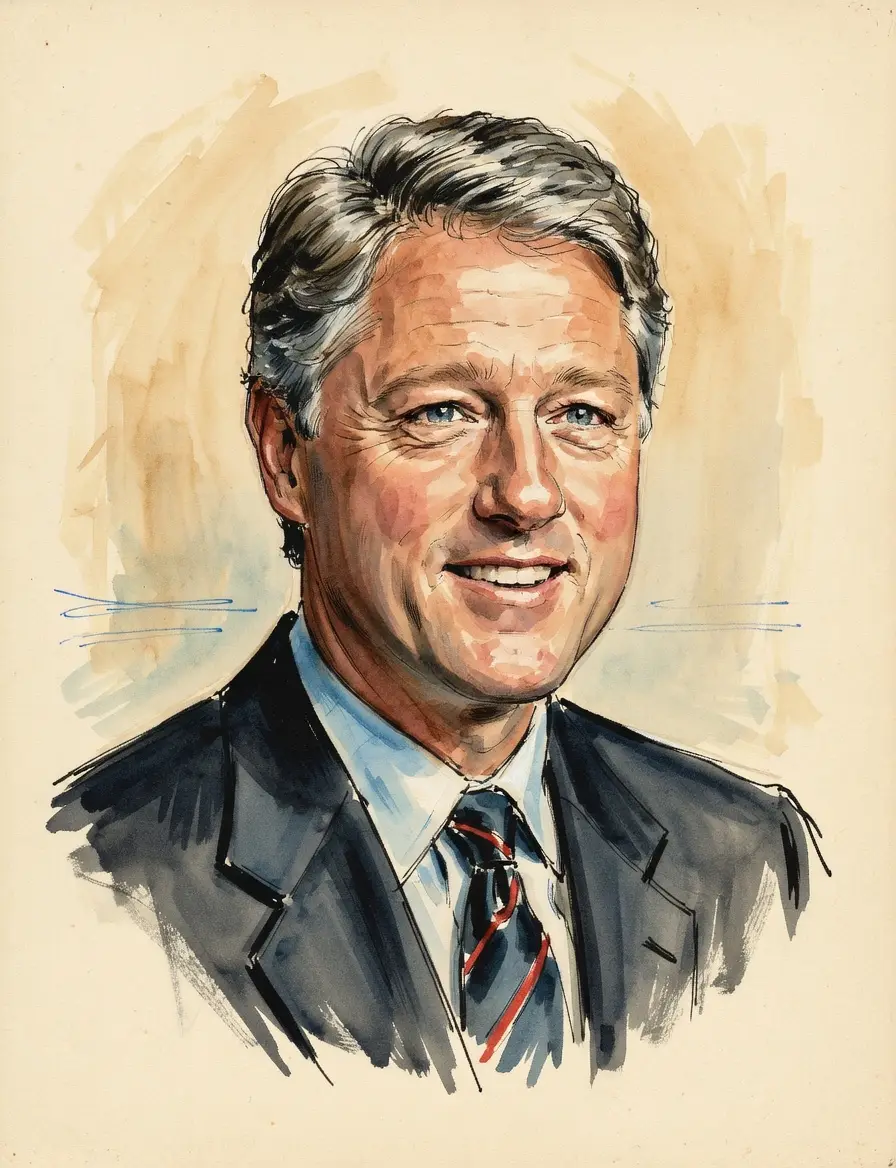
Bill Clinton on Iraq War
TL;DR
Bill Clinton favored aggressive sanctions and military strikes against Iraq but opposed the 2003 unilateral invasion without broader international backing.
Key Points
He ordered the 1998 bombing campaign, Operation Desert Fox, in response to Iraq's interference with United Nations weapons inspectors.
His administration signed the Iraq Liberation Act into law on 31 October 1998, which formalized the goal of regime change in Iraq.
In 2003, he advocated for the security mission to be transferred to a UN-sanctioned NATO force, arguing this would boost international legitimacy.
Summary
Bill Clinton's administration engaged in a sustained, though less publicized, military and economic conflict with Iraq, often characterized as a "quiet war" leading up to the 2003 invasion. His administration conducted multiple military actions, most notably Operation Desert Fox in December 1998, which involved significant bombing campaigns against Iraqi targets due to non-compliance with UN resolutions regarding weapons inspections. This prolonged engagement included enforcing no-fly zones, which began during the previous administration and were expanded under his tenure, often without explicit UN authorization for the military action itself.
Following the 2003 invasion, the former president expressed reservations, stating that the 2003 action should have been transferred to a UN-sanctioned NATO force to gain international legitimacy, even if the US retained a dominant command role. While Clinton's administration pursued regime change as a policy goal, signing the Iraq Liberation Act, he later criticized the 2003 conflict for proceeding without robust international consensus and for relying on intelligence he felt was weak.
Frequently Asked Questions
The Clinton administration maintained a policy of dual containment, which involved military force, expanding no-fly zones, and maintaining comprehensive economic sanctions against Iraq. He also signed legislation in 1998 formalizing regime change as official US policy. He viewed this sustained pressure as necessary until Saddam Hussein was removed from power.
The former president did not explicitly support the unilateral 2003 invasion as it occurred. He criticized the decision to proceed without broader authorization from the United Nations. He believed the post-invasion security effort should have been internationalized under a UN-sanctioned NATO command.
He bears responsibility for cementing a policy of regime change and repeatedly using military force against Iraq through actions like Operation Desert Fox. Critics argue this "quiet war" of bombings and sanctions set the groundwork for the Bush administration's 2003 invasion.
Sources4
1998 bombing of Iraq - Wikipedia
When Iraq Was Clinton's War
'Let NATO Take Charge of Iraq's Security' - Clinton
[Unpopular Opinion] Bill Clinton would have invaded Iraq if not for 2 things. : r/AlternateHistory
* This is not an exhaustive list of sources.