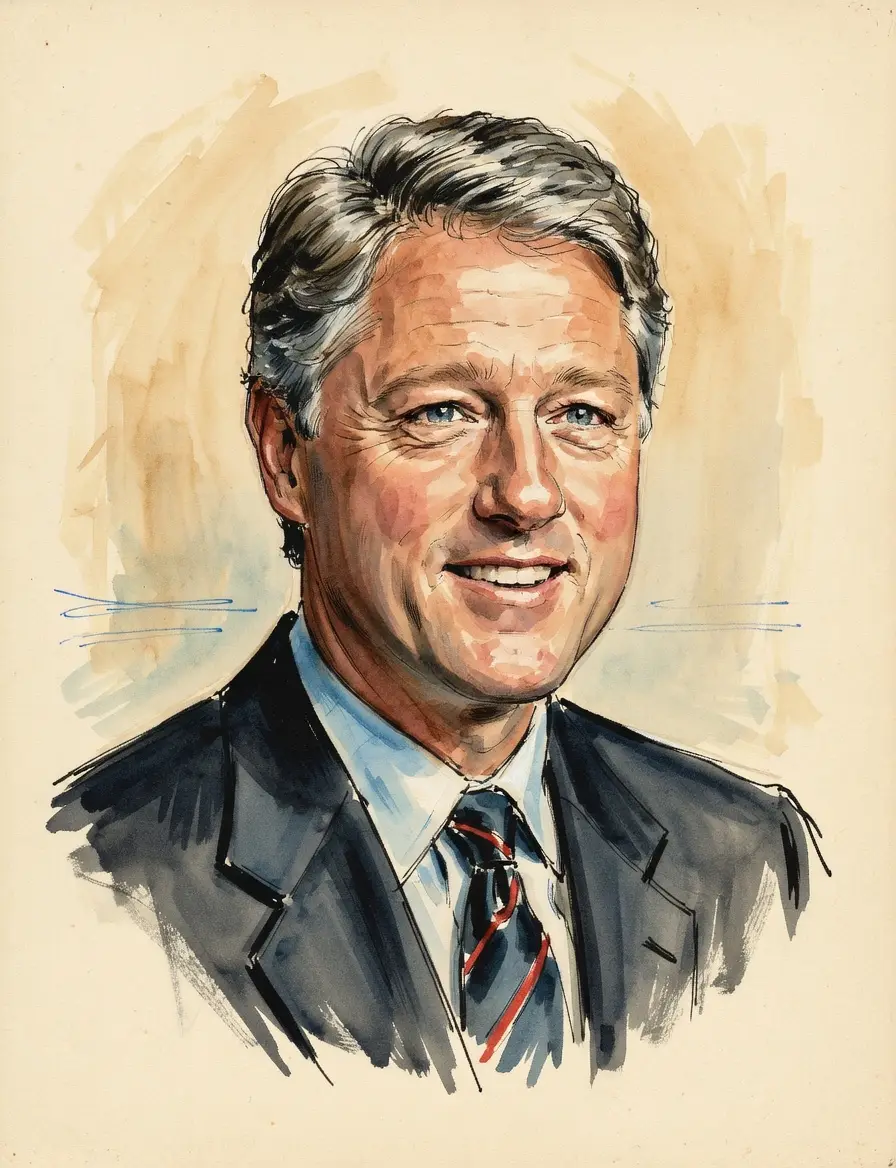
Bill Clinton on Middle East
TL;DR
Bill Clinton strongly promoted the Oslo Accords process, focusing on direct Israeli-Palestinian negotiations for a lasting peace agreement.
Key Points
He signed the Middle East Peace Facilitation Act of 1993 to provide financial support for the peace process.
Remarks were made by the former president following the 2000 attack on the USS Cole in Yemen.
He spoke at an event in November 2025 commemorating the thirtieth anniversary of the assassination of an Israeli prime minister.
He later credited the former president and others for securing a ceasefire in the Israel-Hamas conflict.
Summary
Bill Clinton's presidency was defined by an active personal investment in resolving the Israeli-Palestinian conflict, centering on the promotion of the Oslo Accords framework. He vigorously supported the diplomatic process that aimed for a two-state solution through direct negotiations between the involved parties, evident in his administration's hosting of key leaders and his personal engagement in brokering agreements. His administration passed legislation like the Middle East Peace Facilitation Act of 1993 to support this effort through economic means.
However, his later statements have reflected the difficulties inherent in the conflict, including recent commentary where he suggested that Israel was forced into difficult military actions with civilian consequences. This suggests an evolving perspective acknowledging the complexity and ongoing tragedy of the region, even while he remains associated with the foundational peace-making efforts of the 1990s, such as honoring the memory of the assassinated Israeli prime minister who signed the initial accords.
Key Quotes
“President Trump and his administration, Qatar, and other regional actors deserve great credit for keeping everyone engaged until the agreement was reached.”
Frequently Asked Questions
Bill Clinton's primary position was to strongly support the direct negotiations established under the Oslo Accords framework during his presidency. He worked to facilitate a comprehensive peace agreement between Israelis and Palestinians. Even in later years, he remains engaged in discussions about the region's security.
The former president made statements suggesting that Israel was forced into military actions resulting in civilian casualties in Gaza. Separately, he also credited his successor and others with securing a recent ceasefire in the conflict. His comments reflect both historical commitment to peace and the evolving nature of the challenges in the region.
While his foundational commitment to the Oslo framework remains evident through his public appearances, his recent commentary reflects a shift in emphasis acknowledging complex modern realities. He has been criticized for specific recent remarks regarding the actions of one party in the conflict. Therefore, his public posture appears nuanced and subject to evolution based on current events.
Sources6
Bill Clinton criticised for saying Israel forced to kill Gaza civilians
Former President Bill Clinton speaks at IGP event on Israeli Prime Minister Yitzhak Rabin 30 years after his assassination
Bill Clinton says Trump, others deserve 'great credit' for Israel-Hamas ceasefire
Remarks on the Attack on the USS Cole and the Situation in the Middle East
Middle East Peace Facilitation Act of 1993
The Oslo Accords
* This is not an exhaustive list of sources.