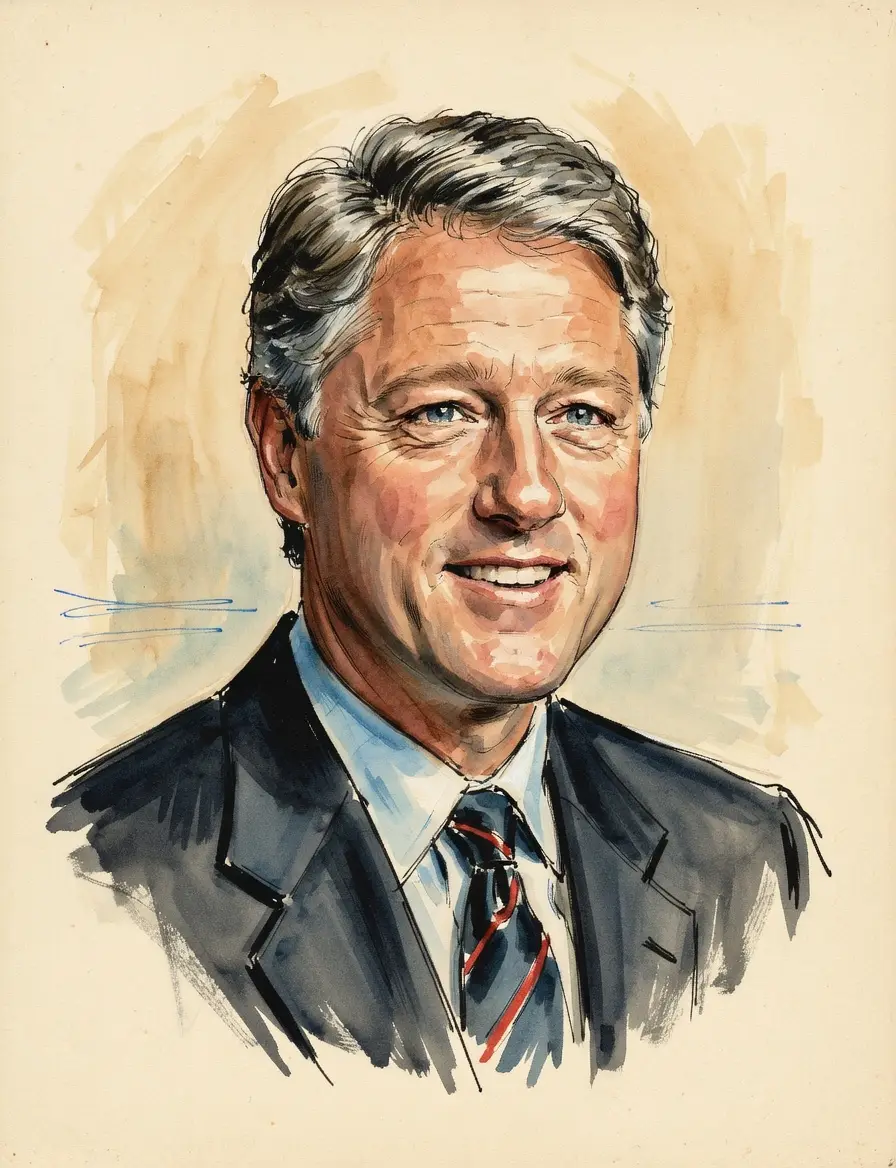
Bill Clinton on NATO
TL;DR
Bill Clinton strongly advocated for and oversaw the expansion of NATO to include former Eastern Bloc nations for long-term European stability.
Key Points
He initiated the Partnership for Peace in 1994, setting in motion a process leading to NATO enlargement.
His administration signed the NATO-Russia Founding Act in May 1997, aimed at fostering cooperation despite opposition to expansion.
He later stated that the expansion of NATO, which saw countries like Poland and Hungary join, was a good and sensible risk that strengthened the alliance.
Summary
Bill Clinton’s core position on NATO was one of active expansion, believing it essential to secure the hard-won peace and democracy in post-Cold War Europe. Early in his administration, he announced the Partnership for Peace in 1994, which he framed as a process leading to full NATO enlargement, thereby settling the question of incorporating former Eastern Bloc states. This push was driven by a belief that NATO membership would consolidate democracy and free-market economies in Central and Eastern Europe, offering a security guarantee against potential Russian backsliding. His administration also worked to define a new cooperative relationship with Russia, culminating in the 1997 NATO-Russia Founding Act, even as the expansion continued.
Despite Russia’s deep and consistent objections, which were acknowledged internally, the decision to enlarge NATO was ultimately judged by the administration as a necessary and worthwhile risk for European stability. While his former advisor noted that the policy sometimes involved giving Russia a voice without granting it a veto, Clinton celebrated the eventual accession of countries like the Czech Republic, Poland, and Hungary. He maintained that the expansion was not about undermining Russia but about providing security to states knocking on the alliance's door, seeing the resulting enlargement as an immense strengthening of NATO.
Key Quotes
The essence of strategy as I see it is to prepare for the worst while trying to bring about the best.
Frequently Asked Questions
Bill Clinton was a strong advocate for expanding NATO to include former Eastern Bloc countries following the collapse of the Soviet Union. He viewed this expansion as necessary to stabilize Europe and ensure the consolidation of new democracies in the region. His administration worked to implement this expansion while simultaneously trying to engage Russia constructively through mechanisms like the NATO-Russia Founding Act.
Yes, President Clinton faced internal and external opposition regarding NATO enlargement. Domestically, some officials favored a slower approach focused on engaging Russia first. Internationally, Russian leaders, including President Yeltsin, strongly protested the eastward movement of the alliance, viewing it as a threat. However, the conviction of the expansionists in his administration ultimately prevailed.
Clinton argued that the expansion was about supporting the aspirations of nations seeking security and democratic integration, asserting it was the East knocking on NATO's door, not NATO moving aggressively toward Russia. He believed that if the expansion was handled correctly, it would lead to peace and prosperity, which he viewed as largely successful over the following decades.
Sources6
The Clinton-era blunder that set the stage for today's Ukrainian crisis
NATO-Russia charter 1997 was “forced step,” said Yeltsin | National Security Archive
NATO Enlargement in 1994 (NSC) | CFR Education
President Clinton's Remarks to Mark the 25th Anniversary of the Czech Republic, Poland, and Hungary's Membership to NATO
Bill Clinton: Why I Expanded NATO : r/CredibleDefense - Reddit
New Sources on NATO Enlargement from the Clinton Presidential Library | Wilson Center
* This is not an exhaustive list of sources.