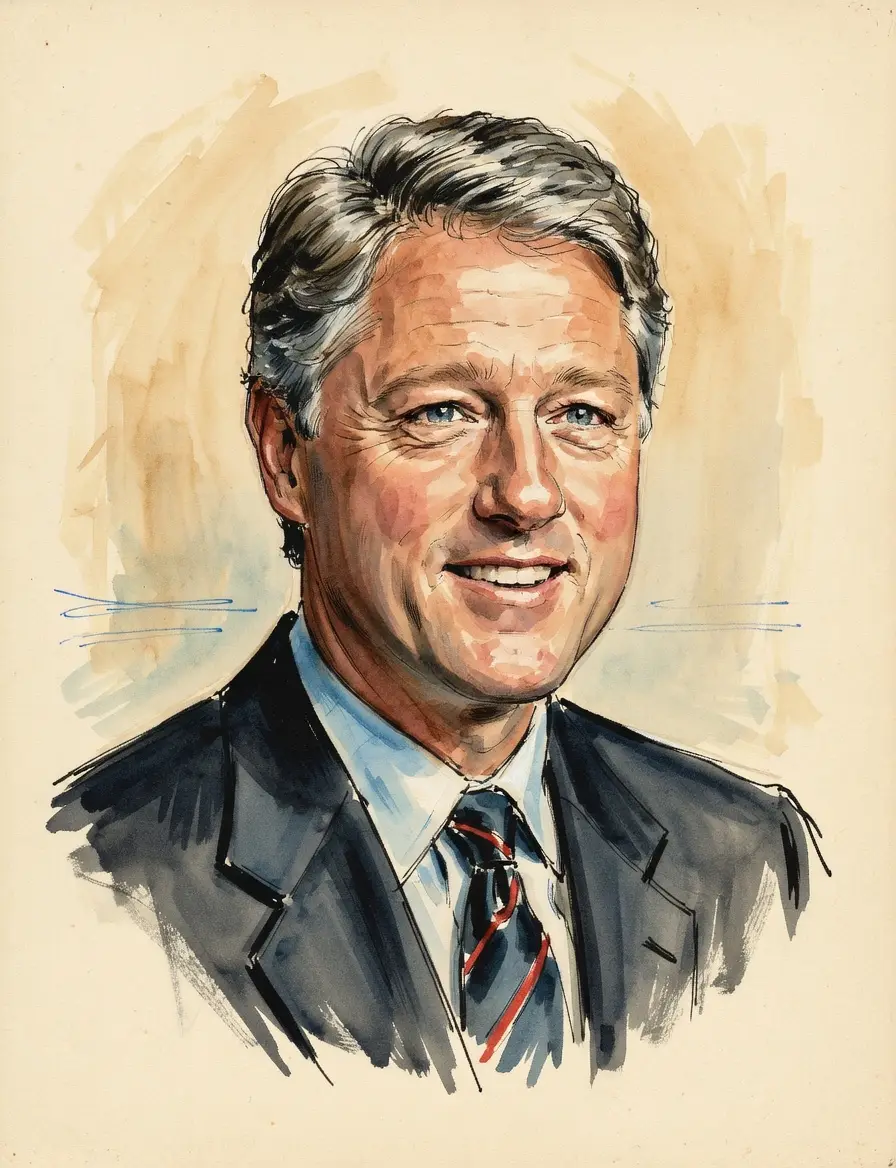
Bill Clinton on Social Security
TL;DR
Bill Clinton strongly advocated for preserving Social Security by using budget surpluses to ensure long-term solvency through comprehensive reform.
Key Points
He declared that 100 percent of any projected budget surplus must be reserved until the necessary measures were taken to strengthen Social Security for the 21st century, which he termed "Save Social Security first."
In 1994, he signed the Social Security Independence and Program Improvements Act, which separated the Social Security Administration as an independent agency within the executive branch.
Clinton explored concepts like Universal Savings Accounts (USAs) and advocated for bipartisan forums, including a White House Conference in December 1998, to debate comprehensive reform options.
Summary
Bill Clinton, during and after his presidency, made the long-term solvency of Social Security a central domestic priority, frequently stating his commitment to saving the program first before utilizing any budget surpluses. He consistently framed Social Security as the cornerstone of a civilized society, essential for lifting the elderly out of poverty and maintaining the social compact between generations. His public statements emphasized that while the system was sound in the short term, the impending retirement of the large baby-boom generation necessitated action to prevent future benefit cuts or unsustainable tax increases.
Evidence suggests his administration seriously studied the idea of incorporating personal investment accounts, influenced by reforms in other countries, a proposal that reportedly gained his tentative support before his impeachment proceedings derailed major legislative efforts. Following his presidency, the focus remained on using budget surpluses to secure the trust fund, though critics argued his later proposals for Universal Savings Accounts (USAs) were a step toward privatization. Throughout his tenure, he called for inclusive, bipartisan discussions, culminating in a White House Conference in late 1998, designed to build consensus around comprehensive, forward-looking reforms.
Frequently Asked Questions
Bill Clinton's main goal was to ensure the long-term solvency of the Social Security system before the large baby-boom generation began to retire. He insisted that any projected budget surpluses be reserved entirely for this purpose under the principle of "Save Social Security first."
Yes, sources indicate that during his administration, Clinton's team studied partial privatization involving personal investment accounts, and he personally leaned toward supporting the concept. This effort was ultimately derailed by his impeachment.
In 1994, President Clinton signed a law making the Social Security Administration an independent agency, separating it from the Department of Health and Human Services. This was intended to insulate the agency's operations from general political and budgetary decisions.
Sources10
How Big Is Bill Clinton's Social Security Check? | Nasdaq
Clinton Wanted Social Security Privatized | Cato Institute
Clinton's Bait-and-Switch Social Security Plan | The Heritage Foundation
President William J. Clinton - Social Security Online History Pages
The Social Security Reform Bill Clinton Almost Brought to America | AIER
White House at Work - SAVE SOCIAL SECURITY NOW
Bill Clinton: Domestic Affairs | Miller Center
The Budget and Deficit Under Clinton - FactCheck.org
* This is not an exhaustive list of sources.