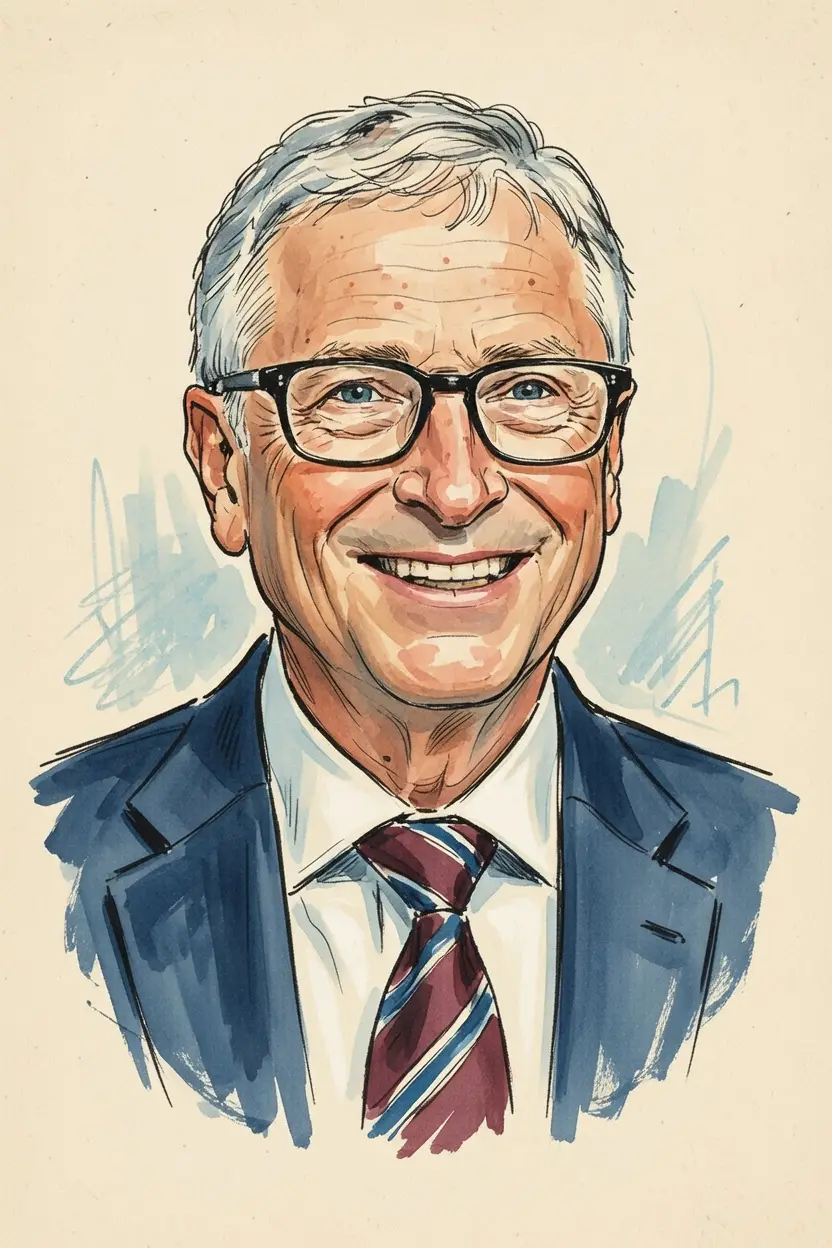
Bill Gates on Climate Change
TL;DR
Bill Gates champions technology and innovation as the primary drivers to solve climate change while prioritizing human welfare.
Key Points
He urges world leaders at the COP30 climate summit to prioritize climate adaptation and human development alongside emissions reduction.
He founded Breakthrough Energy in 2015 to speed up innovation in clean energy technologies like clean steel and cement production.
He believes that even with moderate action, the 1.5°C Paris agreement goal will likely be missed by 2040 due to growing energy demand.
Summary
Bill Gates views climate change as a serious, but non-civilization-ending, global problem that must be solved primarily through scientific innovation and technological breakthroughs, rather than solely focusing on near-term emissions reduction targets. He argues for a strategic pivot in global efforts to focus more on preventing human suffering, especially in the poorest countries, stating that improvements in health and prosperity are the best defense against climate change impacts. He acknowledges that every fraction of a degree of warming matters because a stable climate facilitates improvements in people's lives, but maintains that limited resources should be rigorously allocated based on data-driven analysis to maximize impact on human welfare.
His position is heavily informed by his work with the Gates Foundation, leading him to view climate adaptation and development as intrinsically linked, suggesting that development itself is a form of adaptation. Gates has established Breakthrough Energy to accelerate clean energy innovation in sectors with high 'Green Premiums,' such as steel and cement, expressing confidence that new affordable zero-carbon technologies will be ready to scale by mid-century with the right policies. He advocates for governments to drive the cost difference between clean and polluting methods to zero and to rigorously measure the impact of all climate spending based on its effect on human well-being.
Key Quotes
If given a choice between eradicating malaria and a tenth of a degree increase in warming, "I'll let the temperature go up 0.1 degree to get rid of malaria. People don't understand the suffering that exists today."
Climate change will not be the end of civilization.
Frequently Asked Questions
Bill Gates considers climate change a very important problem that must be solved, but he fundamentally believes that scientific innovation and new technologies are the keys to curbing it. He advocates for a pragmatic approach that prioritizes maximizing human welfare and reducing suffering, particularly in poor countries.
He suggests that the primary metric for success should shift from solely limiting rising temperatures or focusing on near-term emissions goals to measuring progress by the improvement of human lives and the prevention of suffering. He urges rigorous, numerical analysis to ensure climate aid spending delivers the greatest possible impact cost-effectively.
He places a strong emphasis on accelerating innovation, particularly in areas where clean alternatives have a high 'Green Premium' (the cost difference between clean and dirty options). He is optimistic that by focusing investment, affordable zero-carbon technologies will be ready to scale in key sectors by the middle of the century.
Sources5
Three tough truths about climate
Bill Gates calls for climate fight to shift focus from curbing emissions to reducing human suffering
Firestorm over Bill Gates' climate message shouldn't cloud the facts
Making Sense of Gatesgate
Statement from the Global Climate and Health Alliance Regarding Bill Gates Commentary and Responses to It
* This is not an exhaustive list of sources.