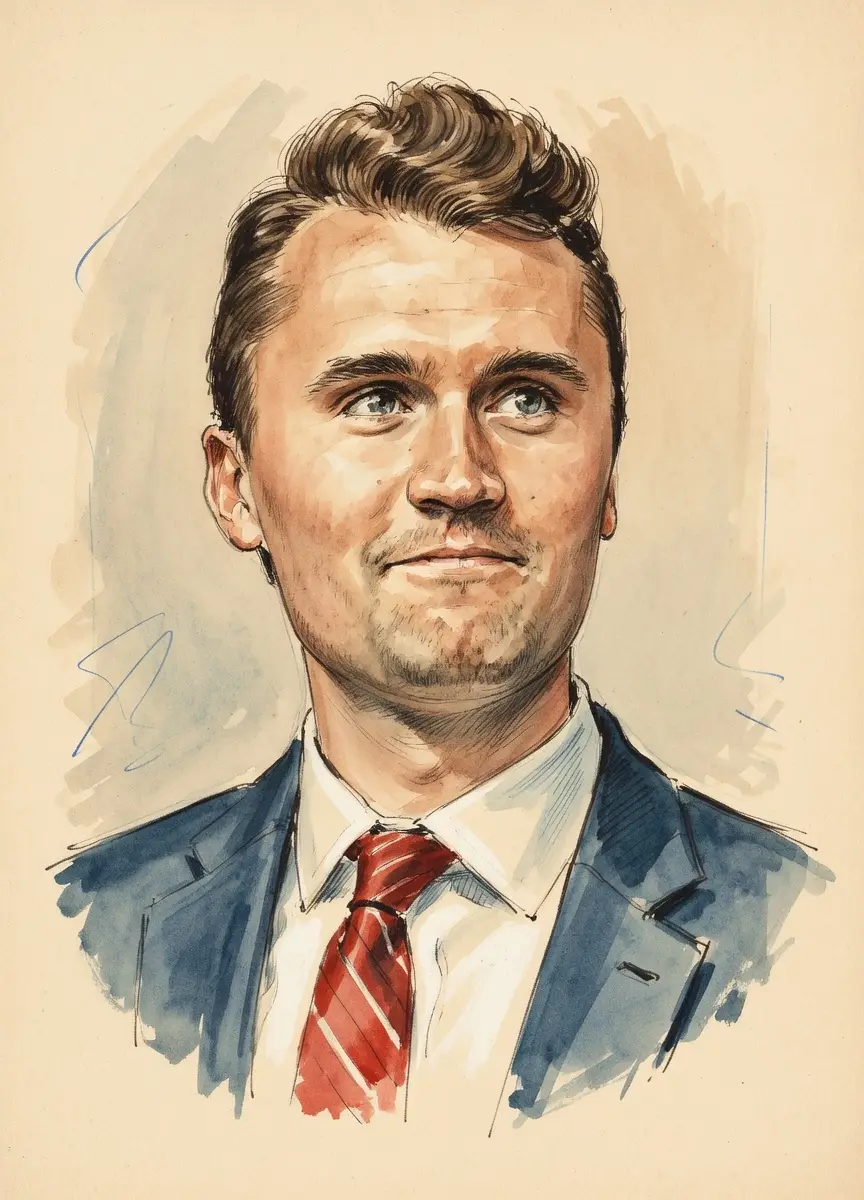
Charlie Kirk on Christianity
TL;DR
Charlie Kirk strongly championed a form of socially conservative Christianity deeply intertwined with American political and cultural conservatism.
Key Points
His later rhetoric emphasized that freedom is not sustainable without Christianity, connecting faith to national sustainability.
He organized his youth movement's efforts into seven components, aligning with the political strategy of the Seven Mountains Mandate.
He maintained that one could not be a Democrat and call oneself a Christian, a position noted by commentators as politically charged.
Summary
Charlie Kirk's public alignment with Christianity became a more prominent feature of his messaging in his later career, characterized by an adoption of socially conservative evangelical positions. This evolution involved embracing a form of Christian Nationalism, reportedly influenced by figures like Rob McCoy, which views the salvation of the nation as part of the gospel's spread. His theology fundamentally supported anti-abortion stances and traditional views on gender and the family, linking these beliefs to secular conservative goals like free markets and smaller government. He increasingly saw political figures, such as the former president, through a lens of spiritual fighting and divine mission.
This alignment also involved the organizational structuring of his political youth movement into seven arms, mirroring the strategy of the Seven Mountains Mandate, a Christian Nationalist concept aimed at Christianizing key cultural institutions. While proponents view him as an icon for engaging young people with conservative Christianity and free speech, critics argue his brand of Christianity was more aligned with empire and political power than with the core tenets of love and solidarity preached by Jesus. His rhetoric, which sometimes focused on upbraiding minorities and marginalized groups, has been described by some commentators as divisive and more focused on 'heat' than 'light,' prioritizing political conflict over compassion.
Frequently Asked Questions
Charlie Kirk strongly advocated for a form of socially conservative evangelical Christianity that he deeply integrated with American political conservatism. This included embracing Christian Nationalism and linking his faith to conservative fiscal and social policies. He saw his political mission as deeply intertwined with the spread of his Christian beliefs.
Sources suggest that his increased emphasis on Christianity in his rhetoric was less of a personal religious conversion and more of a political one, occurring around the end of 2019. This shift involved adopting the framework of Christian Nationalism and the Seven Mountains Mandate.
Critics often argued that Kirk's brand of Christianity served empire and power, describing it as 'Caesar's, not Christ's.' They pointed to his rhetoric against marginalized groups and his embrace of unfettered capitalism as contradictory to the gospel's focus on love and solidarity with the oppressed.
Sources5
As a Christian I struggled with Charlie Kirk's divisive opinions
Charlie Kirk's Brand of Christianity: A Conversation with Matthew Boedy
Charlie Kirk became an icon of free speech and Christianity
Charlie Kirk : r/Christianity
Charlie Kirk's Christianity Was Caesar's, Not Christ's
* This is not an exhaustive list of sources.