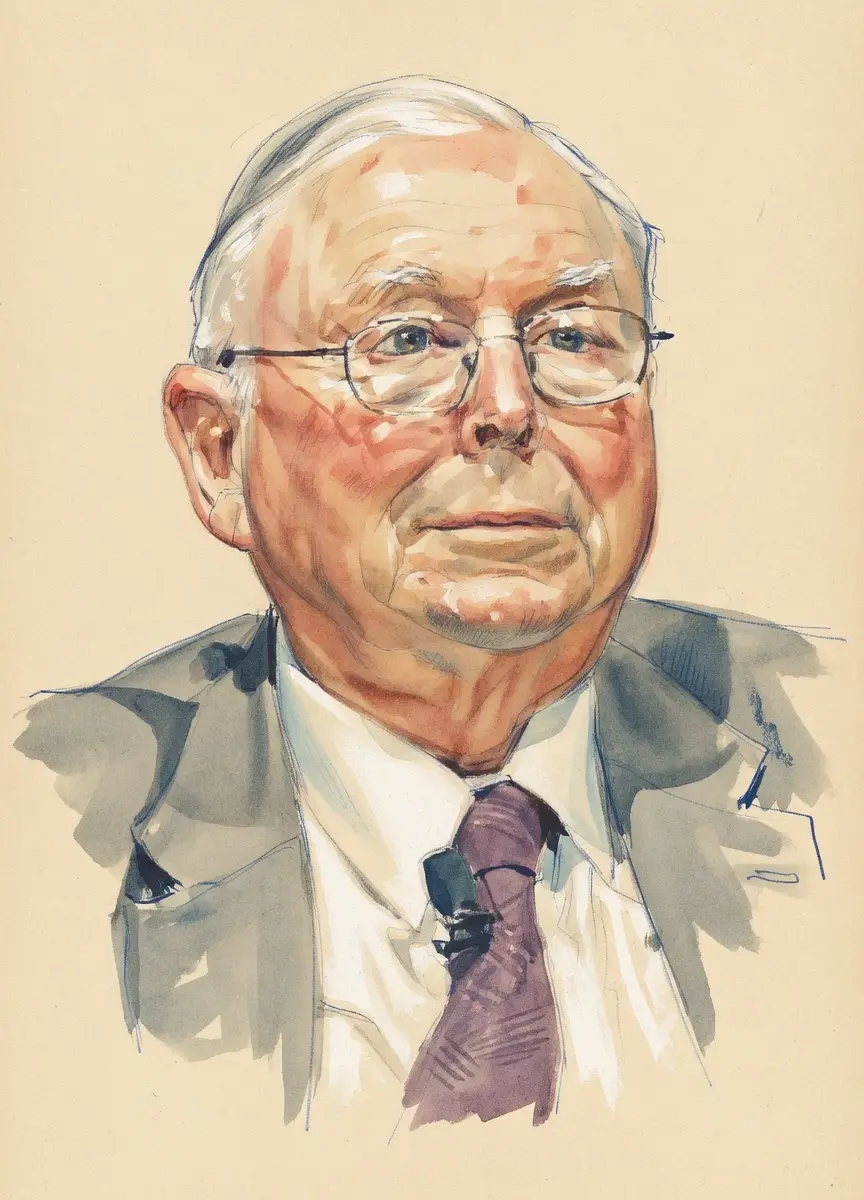
Charlie Munger on Politics
TL;DR
Charlie Munger strongly disliked the escalating hatred and resentment prevalent in contemporary American political discourse.
Key Points
He observed in 2020 that people hate each other in politics more than they used to, calling the situation very ugly.
He believed excessive hatred blinds cognition and is damaging to the bearer, regardless of political affiliation.
The investor, a former moderate Republican, stated he would never vote for a specific major political figure despite agreeing with some of his policies.
Summary
Charlie Munger frequently expressed a negative view on the state of United States politics, particularly focusing on the extreme levels of mutual hatred and resentment between political sides. He observed that this animosity was worse than in prior eras, noting that such intense emotional states blind one's cognition and are fundamentally damaging to the person harboring them. He suggested that while disagreements are natural, allowing them to escalate into personal hatred is irrational and unproductive, offering the historical example of figures like Hitler exhibiting complex behavior despite their wider atrocities to illustrate that total condemnation of an opponent is unnecessary.
The pragmatic investor believed that excessive partisanship and emotional toxicity hinder sensible decision-making, which is antithetical to his rational worldview. While he was a self-described moderate Republican, he indicated he would not vote for a specific major political figure due to defects he associated with that type of politician, contrasting this with the typical politician he was accustomed to, like the incumbent president at the time. Ultimately, Munger viewed the political climate as ugly and counterproductive, advocating for a more measured and less emotionally charged approach to civic disagreement.
Frequently Asked Questions
Charlie Munger held a strong, negative view regarding the tone of modern politics, primarily criticizing the intense hatred and resentment between opposing factions. He saw this emotional climate as irrational and detrimental to clear thinking and sound decision-making.
Yes, Charlie Munger commented on political figures, noting that while the sitting president was a typical Democratic politician with defects, he would never vote for a specific major political figure. He often focused on character and conduct rather than policy alignment alone.
He strongly cautioned against allowing political disagreements to turn into hatred, stating that resentment and hatred cause enormous damage to the individual holding those feelings. He suggested one can be disappointed in an opponent without resorting to extreme animosity.
Sources5
Billionaire Charlie Munger said politics is getting worse because people 'hate each other more'
Charlie Munger Explains Why Bureaucracy is not Shareholder Friendly
Charlie Munger: What's going on with U.S. Politics today? | Redlands Forum 2020【C:C.M Ep.179】
A state different in some very good ways
CHARLIE MUNGER TOLD THE WORLD ABOUT TRUMP IN 2011 - IN 2011!
* This is not an exhaustive list of sources.