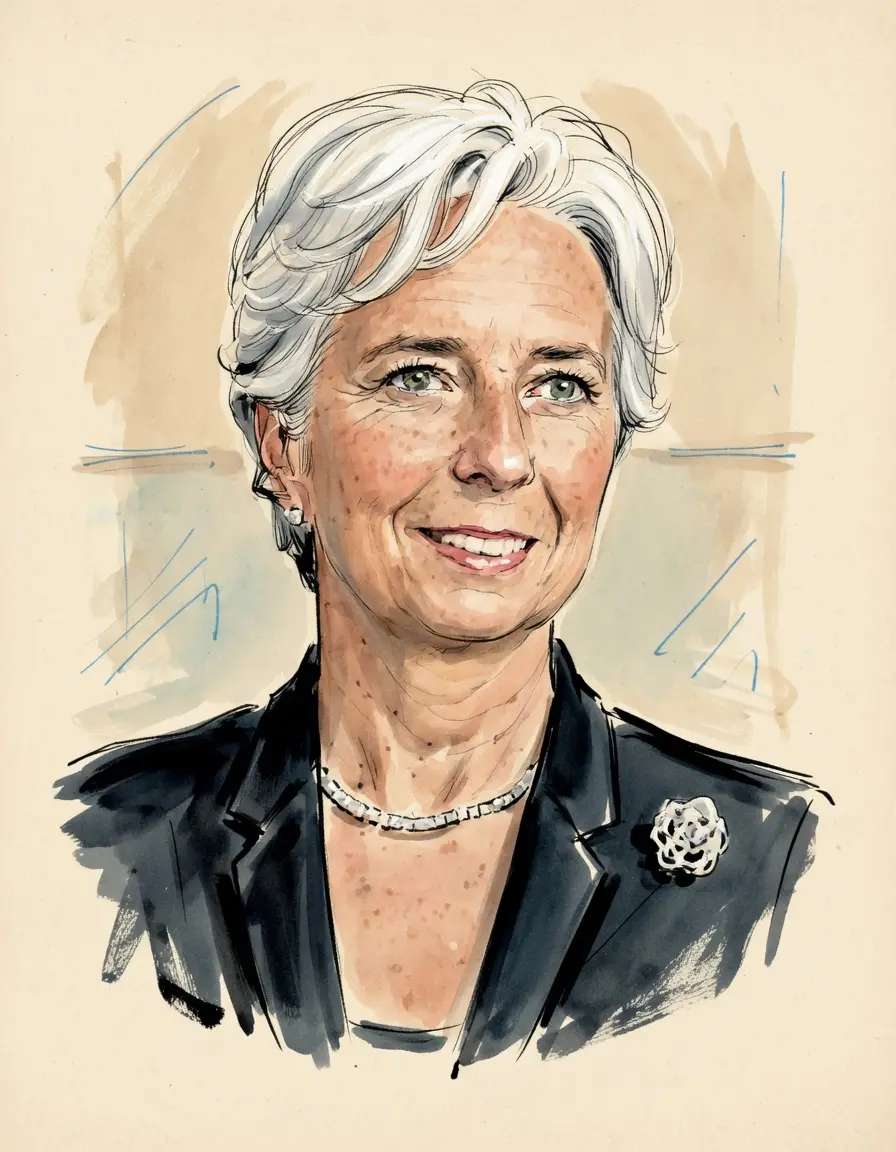
Christine Lagarde on Donald Trump
TL;DR
Christine Lagarde is concerned that renewed U.S. tariff threats under Donald Trump risk undermining global economic equilibrium and trust.
Key Points
The ECB President warned that new U.S. tariff threats under the former President risk upsetting the existing economic equilibrium with the EU as of February 2026.
She stated at Davos in January 2026 that trust has eroded, making it necessary for the EU to develop a "Plan B" for trade relations.
Concerns focus on trade uncertainty slowing investment across the euro area, which affects productivity growth and complicates inflation control efforts.
Summary
Christine Lagarde, as the European Central Bank President, has strongly expressed concern regarding the economic implications of policy shifts associated with Donald Trump, particularly concerning international trade. She emphasized that renewed U.S. tariff threats raise uncertainty, which can delay investment and negatively impact Europe's fragile economic outlook. The ECB President's core stance is that the unpredictability of such actions can inflict greater damage than the tariffs themselves, complicating the ECB's efforts to maintain price stability and support growth in the euro area.
She indicated that trust between Europe and the United States in the trade relationship has been eroded, necessitating the exploration of alternatives, or a "Plan B," for the European Union to reduce economic interdependence. While she maintains confidence in the American people, she acknowledged the necessity of changing attitudes toward long-standing partners due to compromised trust. Lagarde supported the European Commission's move to pursue other trade agreements to counter this perceived weakness, framing the situation as a profound change in the international context that requires pragmatic policy adjustments.
Frequently Asked Questions
Christine Lagarde's position is primarily one of concern regarding the economic uncertainty generated by his protectionist trade policies, such as renewed tariff threats. She views these actions as risking the established global economic equilibrium and eroding trust in transatlantic trade. The ECB President has advocated for the EU to develop contingency plans, or a "Plan B," to mitigate these risks.
The available information suggests Christine Lagarde's stance against trade-related uncertainty is consistent, particularly when facing renewed protectionist signals. She has framed the current situation as a return of risks seen previously, necessitating proactive measures like developing a 'Plan B.' Her public statements indicate a sustained critique of policies that create market unpredictability, rather than a shift in her fundamental economic principles.
Christine Lagarde has warned that the return of U.S. tariff threats introduces significant uncertainty that can delay crucial investment across the euro area. She emphasized that this unpredictability harms business planning more than the tariffs themselves. Therefore, she implied that his approach complicates the central bank's efforts to stabilize inflation and support modest economic growth.
Sources4
Lagarde also breaks with Trump: 'We need a plan B, or more. Trust has been eroded.'
ECB's Lagarde Warns Trade Uncertainty Returns as Trump Signals New Tariffs on Europe
Christine Lagarde: Can Europe's economy withstand Trump 2.0?
Lagarde Says US Tariff Moves Risk Upsetting Equilibrium With EU
* This is not an exhaustive list of sources.