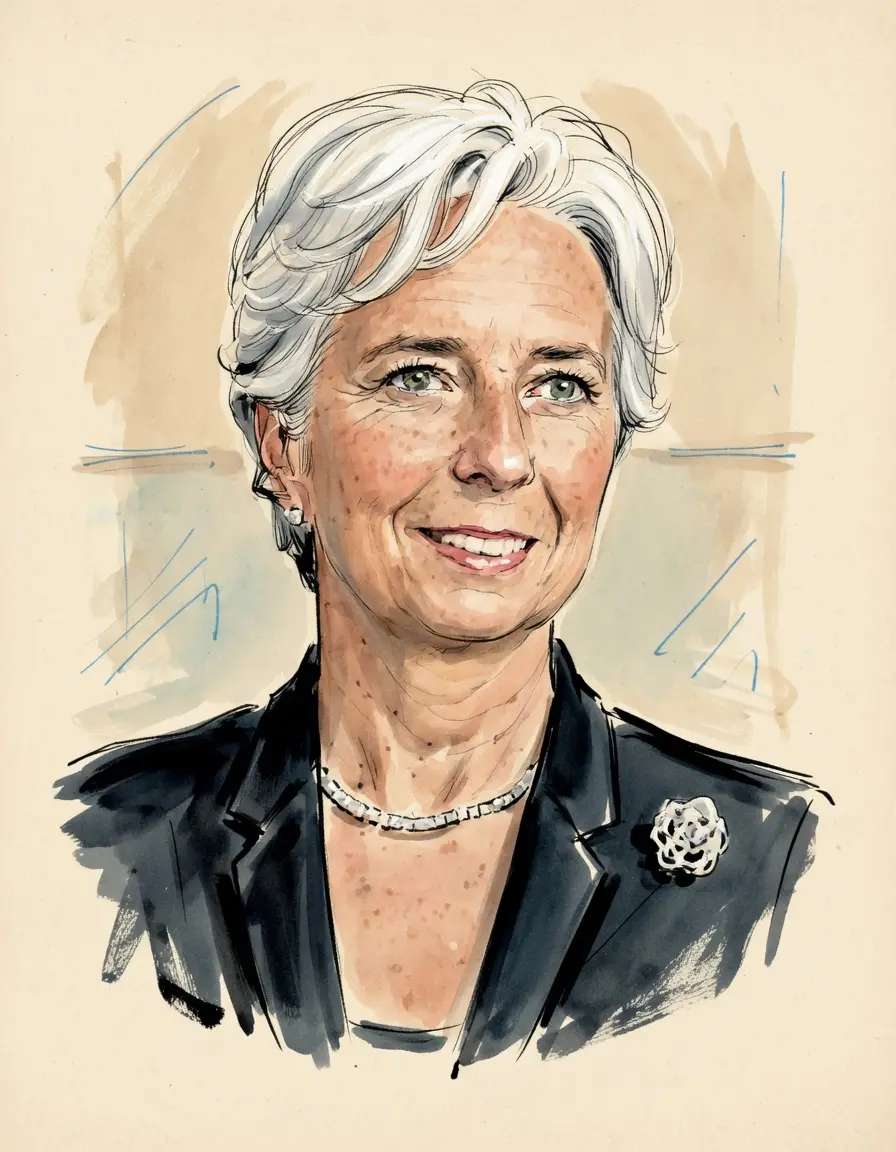
Christine Lagarde on Gender Equality
TL;DR
Christine Lagarde strongly advocates for gender equality, framing it as a critical component for global macroeconomic stability and inclusive economic growth.
Key Points
As IMF Managing Director, she wrote that gender balance is critical for economies and published five factors showing how women’s engagement improves economic growth.
She consistently used informal settings at the ECB to address gender-specific economic burdens exacerbated by the COVID-19 pandemic, such as the wage gap.
She spoke at a World Trade Organization event on March 8, 2023, noting that geopolitical tensions threaten to roll back advances in women's economic empowerment.
Summary
Christine Lagarde consistently promotes gender equality, viewing it as a global imperative that directly contributes to macroeconomic stability and inclusive economic growth, not merely an ethical consideration. During her tenure as IMF Managing Director, she framed the empowerment of women as 'smart economics,' using the institution's mandate to advocate for formal policy changes in member countries, such as improving female labor force participation, access to finance, and legal protection against harassment. Research during her time indicated that closing the employment gender gap could significantly increase GDP for countries with high inequality.
As President of the European Central Bank (ECB), where the mandate is more constrained to monetary policy, her approach shifted to informal settings like interviews and podcasts to discuss the disproportionate economic impact of crises, like the COVID-19 pandemic, on women. She consistently highlighted issues such as the gender wage gap and the imbalance in unpaid work. This dual strategy highlights an evolution where she tailors her advocacy—using formal policy influence at the IMF and persuasive discourse in informal settings at the ECB—to the institutional constraints of each organization.
Frequently Asked Questions
Christine Lagarde's core belief is that gender equality is essential for macroeconomic stability and inclusive global economic growth, framing it as 'smart economics.' She views empowering women as a necessary component for societies and economies to be more productive and inclusive.
At the IMF, she used her leadership autonomy to push for formal policy changes within the institution’s mandate related to member states’ economic policies. At the ECB, due to a narrower monetary policy mandate, she relied more on informal settings, like interviews, to discuss the social and economic challenges disproportionately affecting women.
She has repeatedly highlighted the gender wage gap, the underrepresentation of women in leadership positions across economic sectors, and the imbalance in unpaid work between men and women. She has also stressed the positive correlation between female participation in the labor force and GDP growth.
Sources9
How Christine Lagarde Fights for Gender Equality
My message on the launch the World Bank Group's Women, Business and the Law Report
Christine Lagarde: A Global Imperative to Empower Women – IMF Finance & Development Magazine
Why do we need gender equality? Listen to @ChristineLagarde on the importance of gender balance and how it drives economic growth.
Give To Gain: The return on investing in financial education for women is high
The Organisation Matters: Comparing Christine Lagarde's Policies on Gender Equity at the IMF and the ECB
Empowering women in a changing global economy
Tweet from Christine Lagarde
* This is not an exhaustive list of sources.