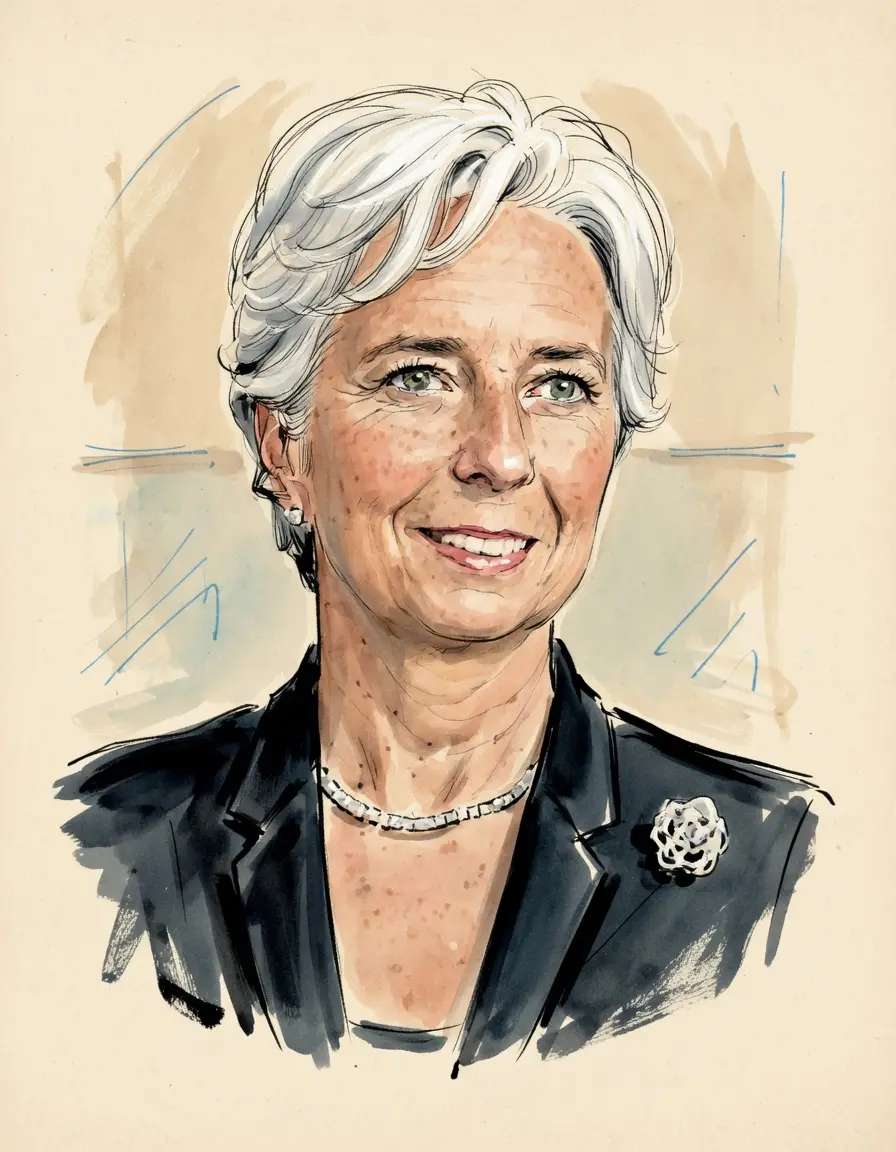
Christine Lagarde on International Monetary Fund (IMF)
TL;DR
Christine Lagarde's tenure as IMF Managing Director focused on modernizing the fund, expanding its focus beyond austerity, and increasing global cooperation.
Key Points
She was elected by consensus for a second five-year term as Managing Director starting 5 July 2016, being the only candidate nominated.
In June 2019, she called for a reduction in trade obstacles, including tariffs, and for accelerated reform of the World Trade Organization (WTO).
She secured the inclusion of the Chinese renminbi into the basket of currencies that form the Special Drawing Right (SDR).
Summary
Christine Lagarde, as the eleventh Managing Director of the International Monetary Fund (IMF) from 2011 to 2019, established a legacy characterized by diplomatic skill, substantive innovation, and a focus on broader economic issues. She was the first woman to head the institution, inheriting a role amid the intensification of the European sovereign debt crisis. Early in her tenure, she separated her focus from her prior role as French finance minister by addressing capital weaknesses in European banks, but she also stood her ground against European partners regarding Greek austerity measures, insisting on debt relief.
During her leadership, she expanded and streamlined the IMF's lending instruments and upgraded the institution's attention to structural and behavioral financial issues. Lagarde significantly revived the Fund's focus on combating corruption and expanded its policy debates to include climate change, gender inclusion, and income inequality, grounding these forays in research showing their macroeconomic relevance. She was politically astute in securing the 2010 quota and governance reform approval from the United States and successfully guided the executive board to include the Chinese renminbi in the Special Drawing Right (SDR) basket.
Frequently Asked Questions
Christine Lagarde's main focus at the IMF involved modernizing the institution's tools and expanding its purview beyond traditional fiscal austerity. She worked to strengthen the Fund’s capacity to respond to members' needs while navigating the global financial transitions of the era.
Yes, Christine Lagarde maintained the tradition that the IMF head is from Europe, as she was the eleventh consecutive European to hold the post. Her predecessor was also European, Dominique Strauss-Kahn.
As her tenure concluded, Christine Lagarde called for stronger international cooperation, noting that while the global economy was at a precarious stage, working together could set the world on a path of stronger growth. This statement was made following the G20 Summit in Osaka in June 2019.
Sources9
Lagarde's IMF Legacy: A Stronger but Still Vulnerable Fund
Christine Lagarde - Wikipedia
Press Release: Statement by Christine Lagarde on her Second Term as IMF Managing Director
IMF / LAGARDE LECTURE GLOBAL ECONOMY | UN Audiovisual Library
Christine Lagarde Named New IMF Chief Replacing Dominique Strauss-Kahn, Christine Lagarde is now the first woman to lead the International Monetary Fund.
IMF's Lagarde: World Financial Growth Still Falling Short
Interview - Christine Lagarde, Managing director, International Monetary Fund (Africa Report) | Center For Global Development
The Lagarde Effect: Assessing Policy Change Under the First Female Managing Director of the International Monetary Fund (IMF): Global Society: Vol 35, No 2
* This is not an exhaustive list of sources.