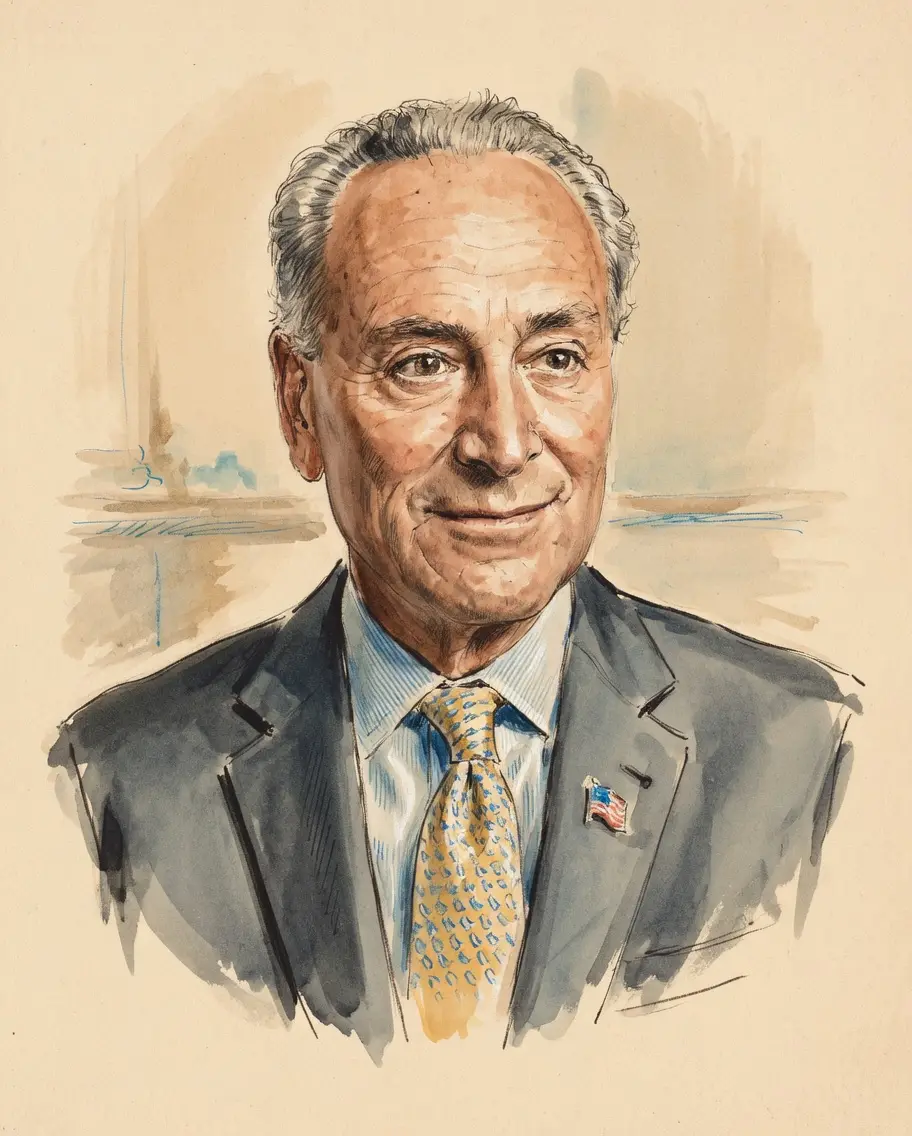
Chuck Schumer on Taxes
TL;DR
Chuck Schumer advocates for corporations and the wealthy to pay their fair share while protecting middle-class families from tax hikes.
Key Points
He supported the Inflation Reduction Act, which aims to make corporations pay more in taxes without raising rates on families making under $400,000 annually.
In May 2025, he celebrated the Senate passage of the No Tax on Tips Act, which seeks to eliminate federal taxes on tipped wages.
He joined other Democrats in February 2026 to demand the return of over $130 billion in tariffs collected by the previous administration.
In October 2008, he took the position that no taxes should be raised when the economy is shrinking due to recessionary fears.
Summary
Chuck Schumer, as Senate Majority Leader, has consistently advocated for tax policies that aim to make corporations and the wealthiest Americans pay what he describes as their fair share in taxes. A key piece of his recent agenda includes legislation that finances investments in American manufacturing and clean energy by ensuring large corporations contribute more revenue. His position emphasizes that these measures are necessary to support working Americans, while explicitly stating that taxes should not be raised on families earning under $400,000 per year.
This stance contrasts with past economic downturns where he previously stated that raising any taxes during a recession is detrimental because it removes money from a shrinking economy. His current policy focus implies a belief that the economy is not currently in that state, or that the need for revenue outweighs that historical caution. Furthermore, he has actively supported measures to provide tax relief to specific groups, such as eliminating taxes on tipped wages for service workers.
Frequently Asked Questions
Chuck Schumer generally supports tax increases targeting large corporations and wealthy individuals to fund national priorities. He works to protect middle-class families from new tax burdens. His approach aims for the wealthy to pay what he considers their fair share.
Yes, his stated position appears to have evolved based on economic context. While he once opposed any tax increases during a recession in 2008, his current legislative focus involves raising corporate taxes. He has not explicitly reconciled these positions.
The Senator strongly backed the Senate passage of the No Tax on Tips Act, which is designed to eliminate federal income and payroll taxes on tips. He has also championed tax credits within the Inflation Reduction Act for clean energy.
Sources5
Jobs & The Economy - Chuck Schumer for Senate
Leader Schumer Statement On Senate Passage Of No Tax On Tips Act | The Senate Democrats
Luján, Schumer, Wyden, and Senate Democrats Demand Trump Return Money Stolen From Consumers Through Tariff Tax - Senator Ben Ray Luján
Flashback: Schumer Opposed All Tax Hikes in a Recession - Americans for Tax Reform
Taxes | Senator Chuck Schumer of New York
* This is not an exhaustive list of sources.