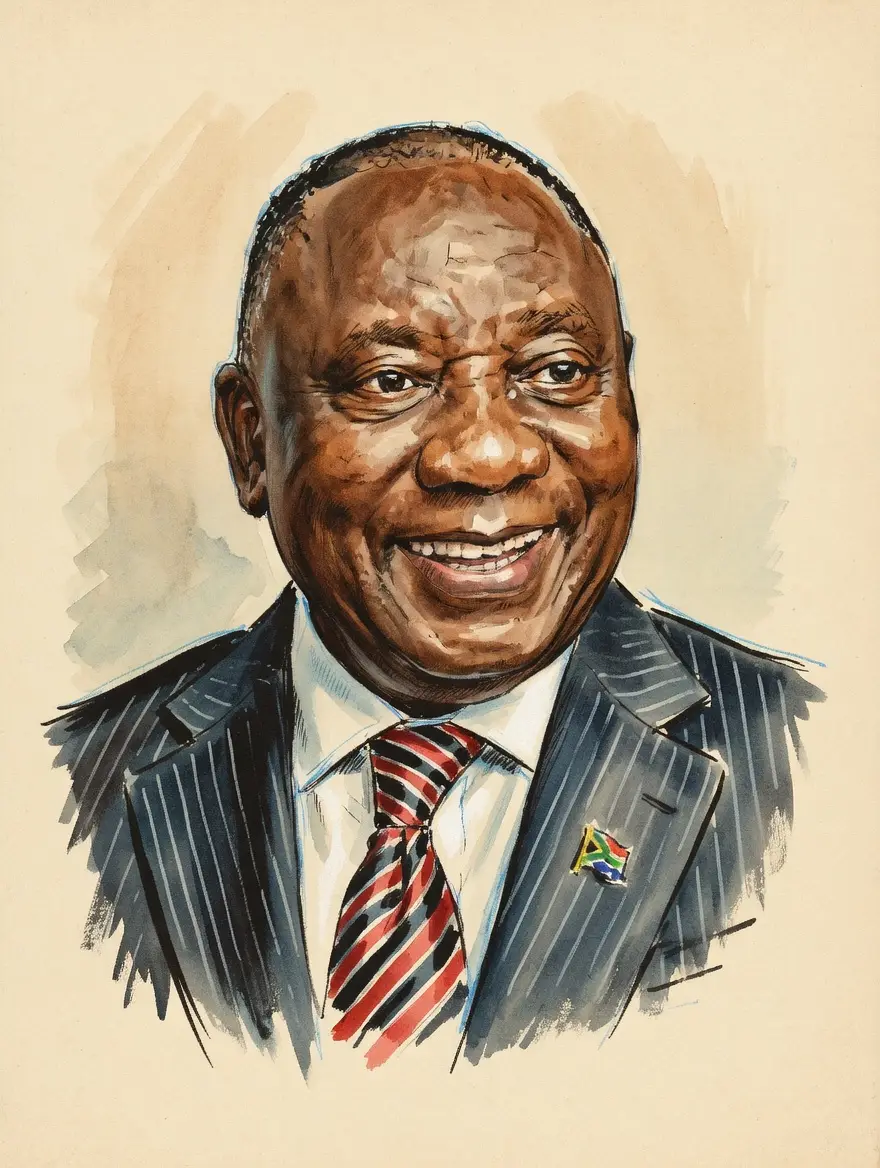
Cyril Ramaphosa on Land Expropriation
TL;DR
Cyril Ramaphosa signed the controversial Land Expropriation Bill into law to address equitable land reform, allowing state seizure for public interest.
Key Points
Cyril Ramaphosa signed the Land Expropriation Bill into law in January 2025, replacing the 1975 Expropriation Act.
His office stated the Act is a constitutionally mandated legal process ensuring equitable land access, not a confiscation instrument.
In 2018, he supported opening an inquiry into revising Section 25 of the Constitution to allow for expropriation without compensation.
Summary
Cyril Ramaphosa, the South African president, signed the controversial land expropriation bill into law in January 2025, replacing the pre-democratic Expropriation Act of 1975. The new law permits the government to seize land for public purposes and public interests, which the Constitution defines to include the nation's commitment to land reform and equitable resource distribution. While the law stipulates fair compensation, it also allows for seizure without compensation in specific, defined circumstances, such as when property is unused or poses a safety risk, which the presidency maintains is a constitutionally guided process, not arbitrary confiscation.
This move followed pressure for comprehensive reforms to address historical land disparities, as the prior "willing buyer, willing seller" program largely failed to significantly redistribute agricultural land, with white citizens still owning the majority. The signing, however, drew international criticism, notably from a former US President who denounced it as persecution and linked it to the pausing of US foreign aid, despite the South African government's insistence that the Act is a necessary mechanism for justice and equity, not punishment.
Key Quotes
...South African President Cyril Ramaphosa announced that he would support amending the South African Constitution to allow for the expropriation of land without compensation.
In terms of this law, an expropriating authority may not expropriate property arbitrarily or for a purpose other than a public purpose or in the public interest
Frequently Asked Questions
Cyril Ramaphosa's position is one of support for land expropriation as a necessary tool for equitable land reform, as evidenced by signing the new law. He asserts that the process is legally guided by the Constitution and balanced to serve the public interest, distinguishing it from arbitrary confiscation.
Yes, his position has evolved from supporting the constitutional review process for expropriation without compensation in 2018 under party pressure. He ultimately enacted the controversial new legislation in 2025, solidifying a move away from only the previous 'willing buyer, willing seller' approach.
The president's office issued a statement clarifying that the recently adopted Expropriation Act is not a confiscation instrument. He framed it as a legally sound process designed to ensure public access to land in a just and equitable manner, as directed by the Constitution.
Sources4
South Africa's president signs land expropriation bill into law
What's South Africa's land law at the heart of the Trump-Ramaphosa spat?
South African president signs controversial land seizure bill, eroding private property rights
South African Land Expropriation: Is Compensation Required, and to Whom?
* This is not an exhaustive list of sources.