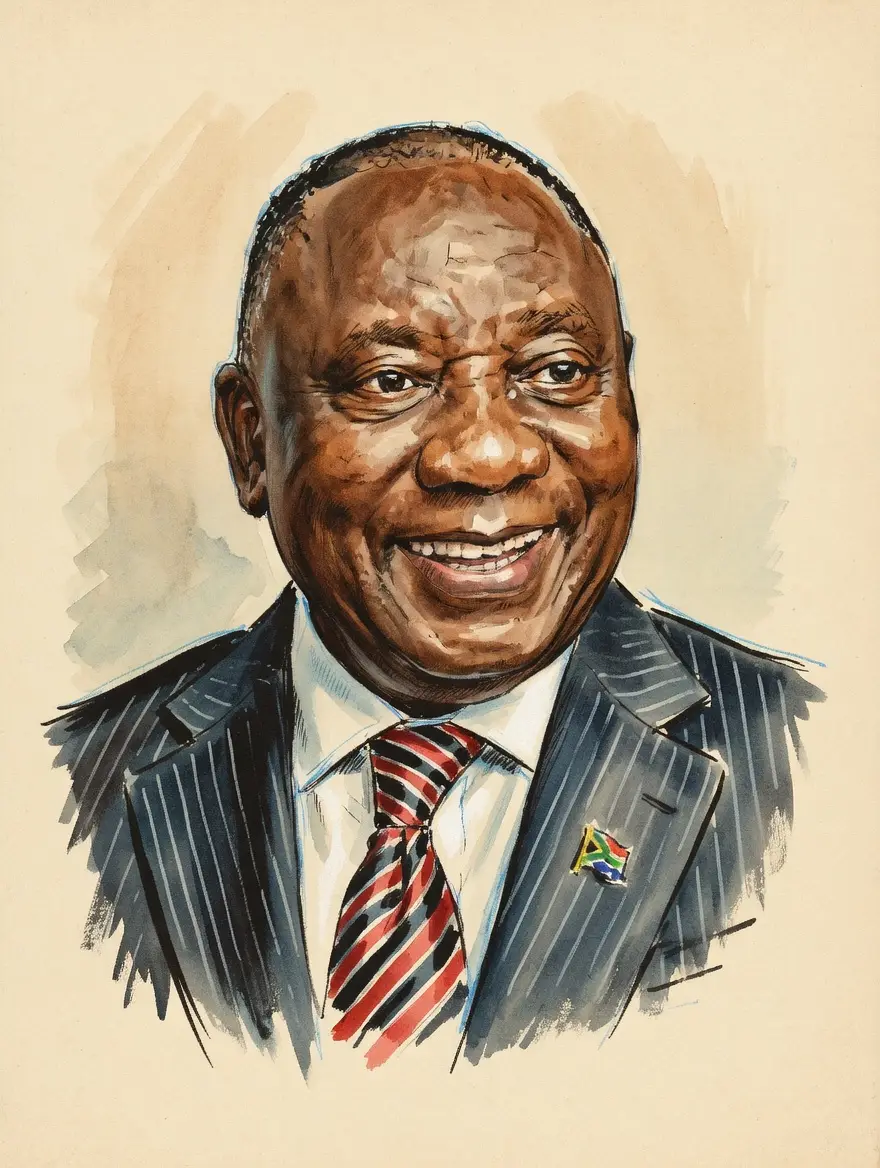
Cyril Ramaphosa on Land Reform
TL;DR
Cyril Ramaphosa strongly supports accelerating land reform for equitable access, emphasizing constitutional compliance and agricultural production protection.
Key Points
He publicly supported a constitutional amendment process to allow for expropriation of land without compensation, as resolved by his party in December 2017.
In February 2020, the President indicated the government intended to accelerate land redistribution that year to redress the injustice of the 1913 Natives Land Act.
Ramaphosa signed the Expropriation Bill into law in January 2025, which repeals the 1975 Act and redefines compensation requirements for government expropriated land in certain cases.
Summary
Cyril Ramaphosa's core position on land reform is to accelerate the program to redress the historical injustice of dispossession under apartheid, viewing it as a moral, social, and economic imperative. He commits to using all available mechanisms within the South African Constitution to foster conditions for citizens to gain equitable access to land, a commitment which the government has framed as essential for unlocking economic potential and narrowing severe racial inequality. A key piece of legislation reflecting this stance is the new Expropriation Act, signed into law by the president in January 2025, which updates procedures for state expropriation of property for public interest, including land reform, and allows for nil compensation in specific, constitutionally guided circumstances.
His administration emphasizes that land reform must proceed without undermining investor confidence or agricultural output, often stressing the need to protect commercial agriculture which dominates food security. While the ruling party previously supported broad expropriation without compensation, the enacted law focuses on clarifying compensation requirements under existing constitutional mandates, assuring negotiations precede any expropriation steps. Furthermore, economists suggest that the focus should be less on new legislation and more on efficiently distributing land already acquired by the state to black farmers to build an inclusive agricultural sector.
Frequently Asked Questions
Cyril Ramaphosa views land reform as a necessary and urgent process to correct the historical wrongs of apartheid dispossession. He strongly advocates for accelerating land redistribution to create equitable access to land for all citizens while maintaining constitutional principles. His administration seeks to balance this redress with the need to protect agricultural production and investor confidence.
Yes, his stance has shown evolution, particularly regarding expropriation without compensation (EWC). While his party initially supported EWC, the subsequent legislation signed by Ramaphosa in 2025 focuses on providing a common framework within the Constitution, which permits nil compensation only in specific, defined circumstances, rather than broad, uncompensated seizure.
The President described the newly signed Expropriation Act as a legally mandated process to ensure public access to land in a just and equitable manner, aligning the law with the Constitution. His office stressed that the Act is not a 'confiscation' instrument but a balanced legal process that maintains the principle of negotiation with property owners before any expropriation steps are taken.
Sources6
Land reform in South Africa - Wikipedia
South Africa's president signs land expropriation bill into law | ConstitutionNet
Land reform | South African Government
South Africa president signs bill redefining compensation requirements for government expropriated land - Jurist.org
What's South Africa's land law at the heart of the Trump-Ramaphosa spat? | Donald Trump News | Al Jazeera
Ramaphosa Confronts Land Reform in South Africa | Council on Foreign Relations
* This is not an exhaustive list of sources.