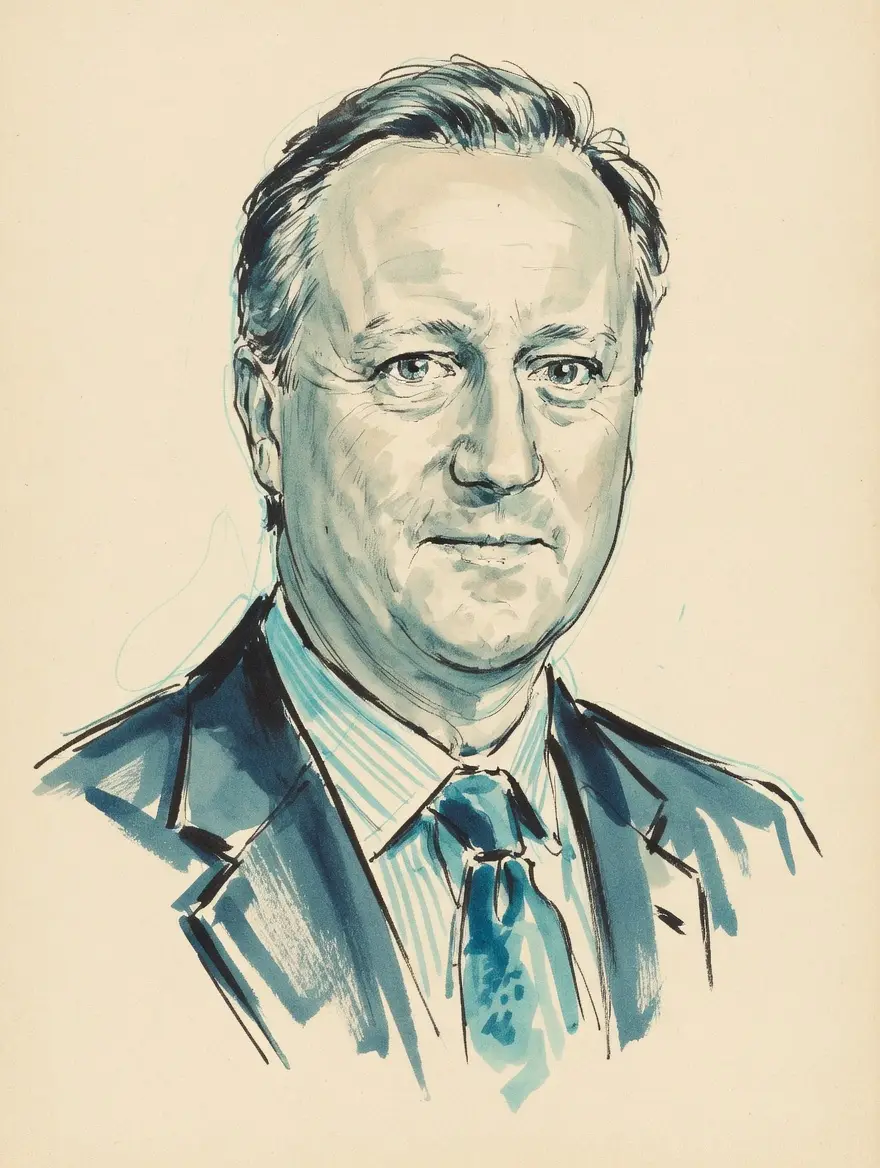
David Cameron
- Known for
- UK Prime Minister, Brexit referendum, Coalition government
- Born in
- London, UK
- Education
- MA, Brasenose College, Oxford
David Cameron is defined by his tenure as UK Prime Minister (2010–2016), leading the first post-war coalition government before resigning after the Brexit referendum. Identifying as a one-nation conservative, he blended socially liberal reforms with economically cautious austerity measures.
Signature Positions
Cameron's premiership involved significant domestic and international action:
- Austerity: Instituted deep spending cuts to reduce the budget deficit following the 2008 financial crisis, while protecting some public services.
- Constitutional referendums: Oversaw referendums on AV voting and Scottish independence, both resulting in outcomes he favored.
- Social Reform: Championed LGBT rights, including the legalization of same-sex marriage in England and Wales.
- Immigration: Advocated for stricter non-EU immigration limits, though the government failed to meet its net migration targets.
- China Relations: Oversaw a significant warming of ties with China, labeling the period a "golden era" of relations.
How Views Have Evolved
Cameron’s views on social issues saw notable shifts during his career.
He transitioned from opposing Section 28 (Thatcher-era anti-gay legislation) and calling gay rights a "fringe agenda" as an opposition leader, to actively pushing for the legalization of same-sex marriage while in office.
In foreign policy, while initially supporting the Iraq War, he later called for the Chilcot Inquiry findings to be published, demonstrating a shift in accountability focus.
Notable Tensions
Cameron’s legacy is marked by internal party tensions and external controversies:
- Brexit Fallout: His decision to call the 2016 referendum, which he lost, directly led to his resignation and subsequent political instability.
- Austerity vs. Social Outcomes: Critics argue that the austerity program contributed to social inequality and welfare losses, despite his stated focus on poverty reduction.
- Lobbying and Elitism: He faced scrutiny over his family's offshore investments (Panama Papers) and his post-premiership lobbying roles, raising questions about elitism and transparency.
- Foreign Policy Shifts: His government was criticized for an intelligence failure regarding the Libyan intervention and his initial handling of Syria military action.
Cameron sought to modernize the Conservative Party by attempting to move it toward the center, earning him comparisons to Tony Blair early on. His career, however, is ultimately defined by the Brexit referendum, which fractured the consensus he tried to build between the moderate and right wings of his party.