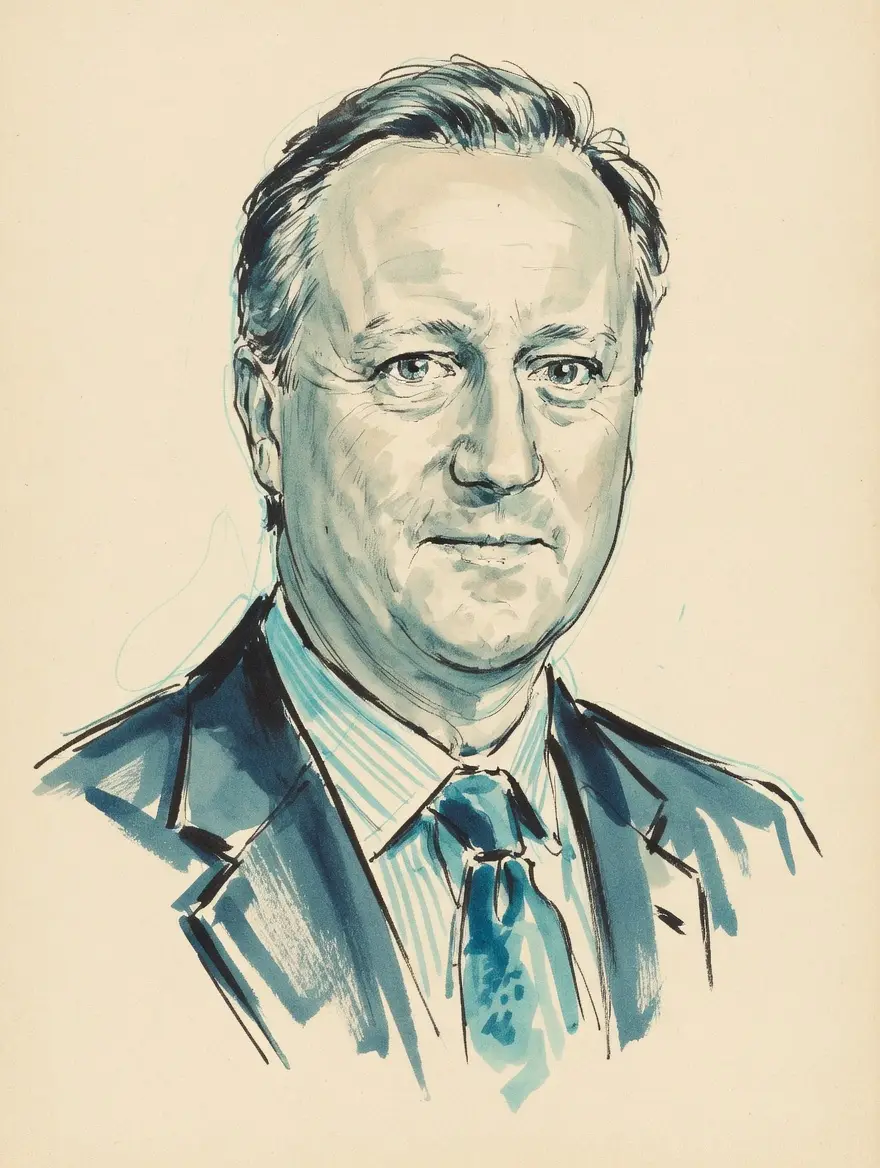
David Cameron on Nick Clegg
TL;DR
David Cameron's position on Nick Clegg was defined by their necessary but ultimately strained five-year partnership in a coalition government.
Key Points
He entered into a coalition government with Nick Clegg following the 2010 General Election to secure a parliamentary majority.
Cameron and Clegg jointly launched a review of government policy in 2011, emphasizing stability and reform.
After the coalition ended in 2015, Cameron acknowledged the necessity of the working arrangement but highlighted constitutional strain.
Summary
David Cameron formed a coalition government with Nick Clegg following the 2010 General Election when neither party secured a majority, positioning the Conservative leader as the Prime Minister and the Liberal Democrat leader as his Deputy Prime Minister. This unprecedented arrangement required significant compromise from Cameron, including adopting policies such as reforming parliamentary constituencies and the introduction of a tuition fee increase, which were central to their initial agreement. While the partnership began with an emphasis on stability and delivering necessary economic reform after the financial crisis, the relationship between the two leaders evolved into one marked by pragmatic necessity and occasional public tension over policy direction.
Over time, the implications of the coalition became apparent, notably in the strain it placed on both parties' distinct ideologies and voter bases. Cameron's government later held a referendum on electoral reform, a key Liberal Democrat demand, which ultimately failed, marking a significant low point for the partnership. Following the coalition's end after the 2015 General Election, Cameron referred to Clegg as a friend and acknowledged the necessity of their working relationship, albeit one that stretched the British constitution.
Key Quotes
Two and a half years ago, Nick and I put party differences aside to come together in the national interest and form the first coalition government in Britain for over 65 years.
I have not been sitting like some latter day de Gaulle … waiting to be asked, how should I put it, to 'take back control'. Nor am I Cincinnatus, hovering over my plough.
Frequently Asked Questions
David Cameron's relationship with Nick Clegg was primarily that of a necessary coalition partner, with Cameron serving as Prime Minister and Clegg as Deputy Prime Minister from 2010 to 2015. This involved significant power-sharing and compromise on key policy areas to ensure the government could function. While the partnership was pragmatic, it involved navigating distinct ideological differences between the Conservative and Liberal Democrat parties.
After the coalition ended following the 2015 election, David Cameron spoke positively about his former partner, referring to Nick Clegg as a friend. He also reflected on the challenges of governing together, noting that the arrangement tested the British constitution. Cameron acknowledged the necessity of the government they formed for delivering stability.
No, David Cameron and Nick Clegg did not agree on all policies, as the coalition required both leaders to make significant compromises. Key areas of negotiation included the introduction of higher tuition fees and electoral reform, the latter of which Cameron supported for a referendum but which ultimately failed. Their relationship was characterized by this pragmatic negotiation for five years.
Sources7
Cameron and Clegg on constituency reform
Cameron–Clegg coalition
David Cameron and Nick Clegg press conference: Launch of mid-term review
David Cameron references friend Nick Clegg and takes swipe at Boris Johnson in maiden Lords speech
David Cameron and Nick Clegg are stretching the British constitution but our confrontational style of government is a problem
British Coalition Government Formation
Why Cameron and Clegg need to reflect on working in coalition
* This is not an exhaustive list of sources.