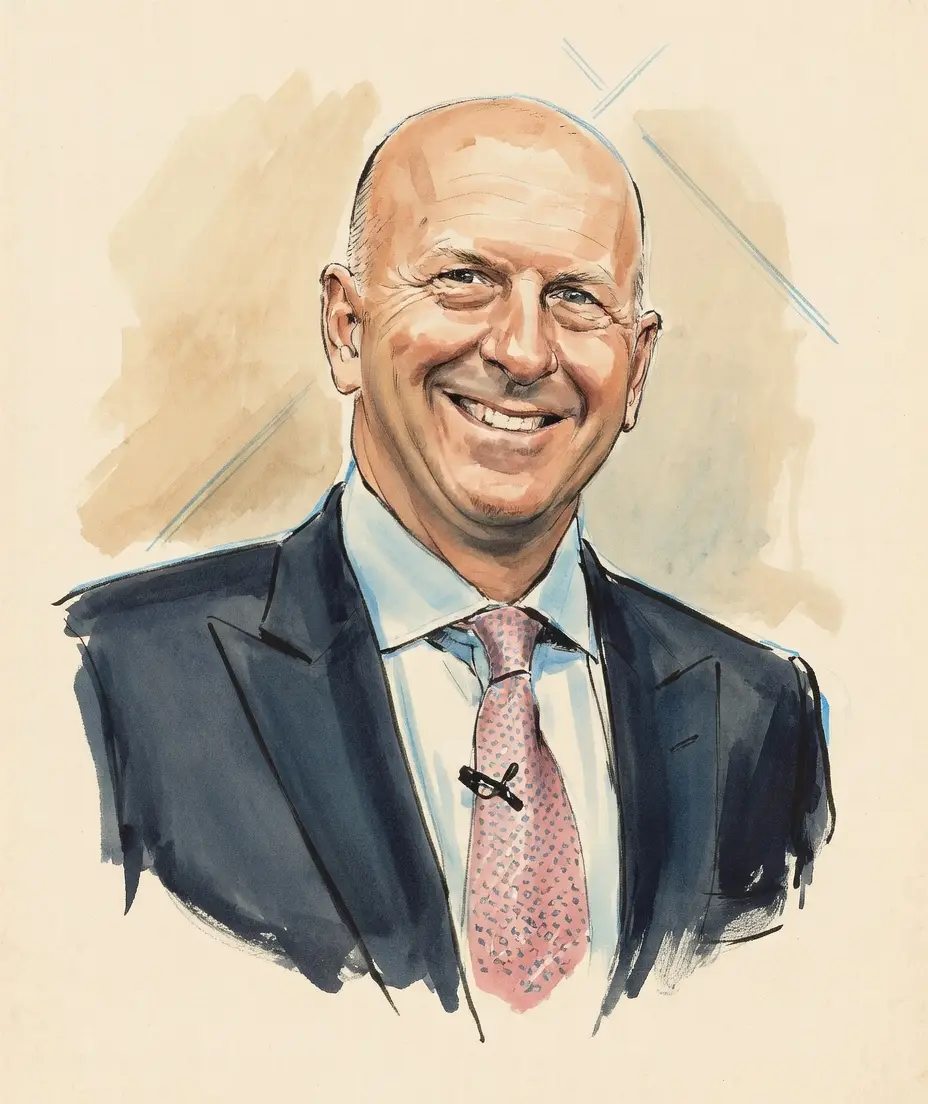
David Solomon on Workforce Layoffs and Culture
TL;DR
David Solomon predicts AI will ultimately create more jobs at Goldman Sachs by boosting capacity rather than causing net workforce decline.
Key Points
He rejected the "job apocalypse camp" narrative regarding generative AI during a January 2026 podcast appearance.
Goldman Sachs announced plans to constrain headcount growth and conduct a limited reduction in roles in October 2025 amid AI implementation.
Solomon has cited his own career, where technology dramatically increased research productivity, yet the analyst workforce ultimately expanded.
Summary
David Solomon, as CEO of Goldman Sachs, has taken a position arguing against the narrative of an AI-driven employment apocalypse, instead predicting that technological advancement will lead to an expansion of the firm's workforce over the long term. He draws on historical precedents, noting that past productivity-enhancing technologies, like computers in his early career, led to market expansion and the creation of entirely new roles rather than mass job elimination. The core of his argument is that increased productivity frees up capacity, allowing the firm to tackle larger problems, serve more clients, and enter new markets, which ultimately drives new hiring.
This stance is coupled with internal operational strategy, as Goldman Sachs executes its multi-year automation roadmap known as OneGS 3.0, which involves significant investment in AI to gain efficiency in areas like client on-boarding and reporting. While the firm has announced plans for limited, selective reductions in roles alongside hiring constraints in late 2025, Solomon maintains that the overall effect of AI integration will be to increase the value of human judgment for strategic work. He emphasizes that employees must engage actively with new tools to thrive, framing the current environment as one of disruption and necessary reskilling rather than outright job destruction.
Key Quotes
“I'm not in the job apocalypse camp,”
Frequently Asked Questions
David Solomon rejects the notion of an imminent AI-driven employment apocalypse, arguing instead that the technology will function as a catalyst for job creation. He believes that generative AI, like previous industrial shifts, will increase productivity, which then expands the scope of business and creates new roles.
Yes, Goldman Sachs announced a limited reduction in roles and a constraint on headcount growth near the end of 2025 as part of its operational overhaul tied to AI efficiency gains. However, the CEO frames these as selective adjustments within a broader strategy focused on capacity growth.
He advises employees to actively engage with AI tools to amplify their capabilities rather than resisting the change, stating that those who lean in will find new opportunities. David Solomon stresses that human judgment and strategic thinking become more valuable when routine tasks are automated.
Sources5
Why Goldman's CEO Is Right: AI Will Create Jobs, Not Destroy Them
Goldman Tells Staff It Will Cut More Jobs as AI Saves Costs
Goldman CEO Refutes AI Employment Apocalypse Narrative
The Finance Talent Arbitrage: Why Entry-Level Jobs Are Disappearing
Goldman Sachs eyes layoffs and hiring slowdown amid AI push, memo shows
* This is not an exhaustive list of sources.