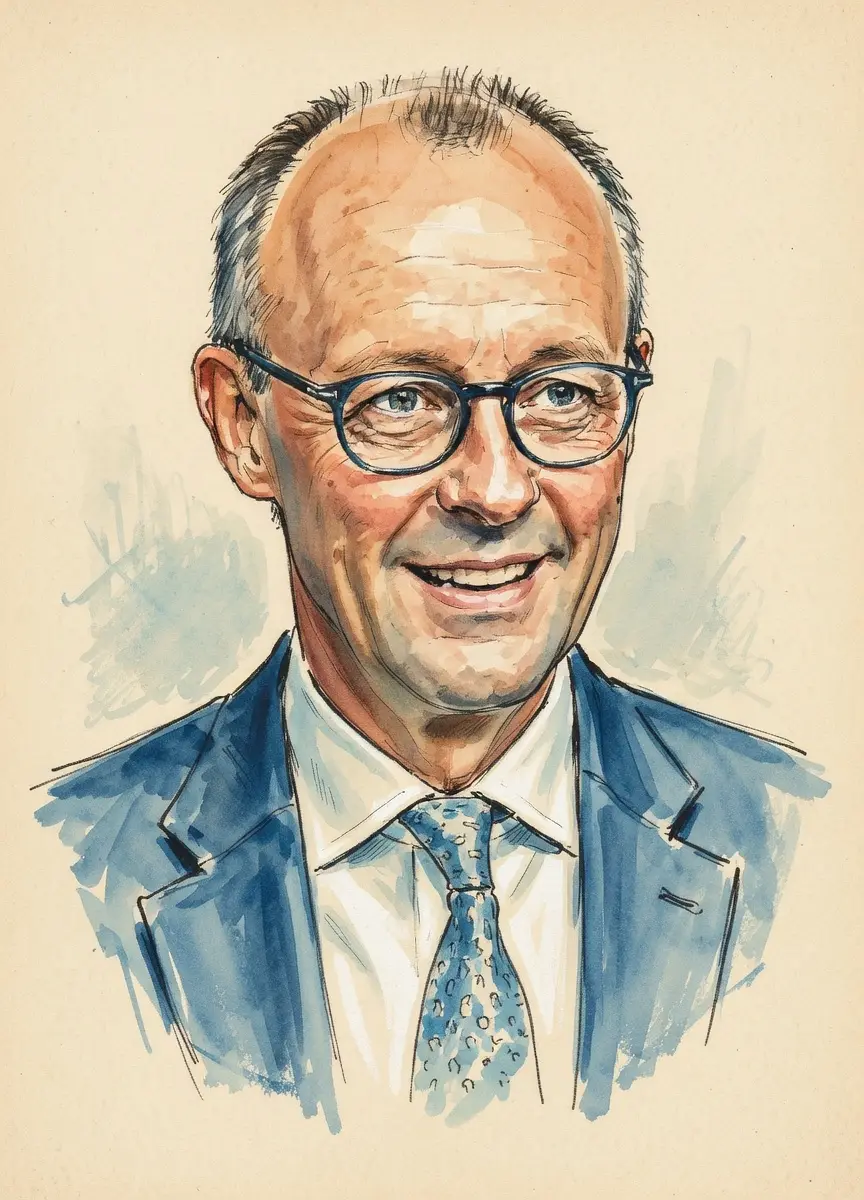
Friedrich Merz on Minimum Wage
TL;DR
Friedrich Merz has stated that a minimum wage of 15 euros per hour is achievable, feasible, and desirable for Germany.
Key Points
He described a 15 euro minimum wage as desirable, achievable, and feasible in his first government statement in May 2025.
The coalition agreement does not plan to have the minimum wage enshrined directly in law, relying instead on the minimum wage commission.
Future minimum wage commission proposals will incorporate 60% of the gross median wage as a reference point, aligning with the EU Directive.
Summary
Federal Chancellor Friedrich Merz indicated in his first government statement that achieving a minimum wage of 15 euros per hour is "achievable, feasible and desirable," although he clarified it will not be enshrined directly in law. The coalition agreement, under which he leads, intends for the minimum wage to be increased by proposals from a minimum wage commission. This approach suggests support for a market-based or negotiated increase rather than a direct legislative mandate from the government on the exact figure.
While the commission is set to continue basing decisions on collective agreements, future determinations will also factor in 60% of the gross median wage, aligning with the European Minimum Wage Directive. This structural change, which the Chancellor has described as desirable, aims to ensure the wage floor meets a certain adequacy benchmark. The actual planned increases, however, fall short of the 15 euro target by 2026, with projections aiming for 14.60 euros by 2027, suggesting a reliance on the commission's process over immediate, politically set targets.
Key Quotes
A minimum wage of 15 euros is achievable, feasible and desirable, but will not be enshrined in law.
... even conservative Chancellor Friedrich Merz had described a €15 minimum wage as “desirable.”
Frequently Asked Questions
Friedrich Merz has stated that a minimum wage of 15 euros per hour is desirable, achievable, and feasible for Germany. However, his government plans to let the independent minimum wage commission determine the exact level rather than enacting a direct legislative mandate.
The coalition Merz leads supports the two-stage increase recommended by the commission, which will raise the minimum wage to 14.60 euros per hour by January 2027. While this falls short of the 15 euro mark he called desirable, it represents an alignment with European standards.
No, the coalition agreement indicates that the minimum wage will not be directly enshrined in law by the government. Instead, the independent commission is tasked with proposing adjustments based on evolving criteria, including the median wage benchmark.
Sources6
First government statement on 14 May 2025
Changes to Labor and Employment Law by the New German Federal Government
Germany's New Coalition Agreement Impacts Labor Law and Social Policy: 10 Key Takeaways for Employers
Germany's Minimum Wage Hike In Accordance With The European Minimum Wage Directive
Germany's minimum wage set for record increase | Courthouse News Service
Germany: Bureaucracy out, Digital in? The new Government's plans for labour and employment
* This is not an exhaustive list of sources.