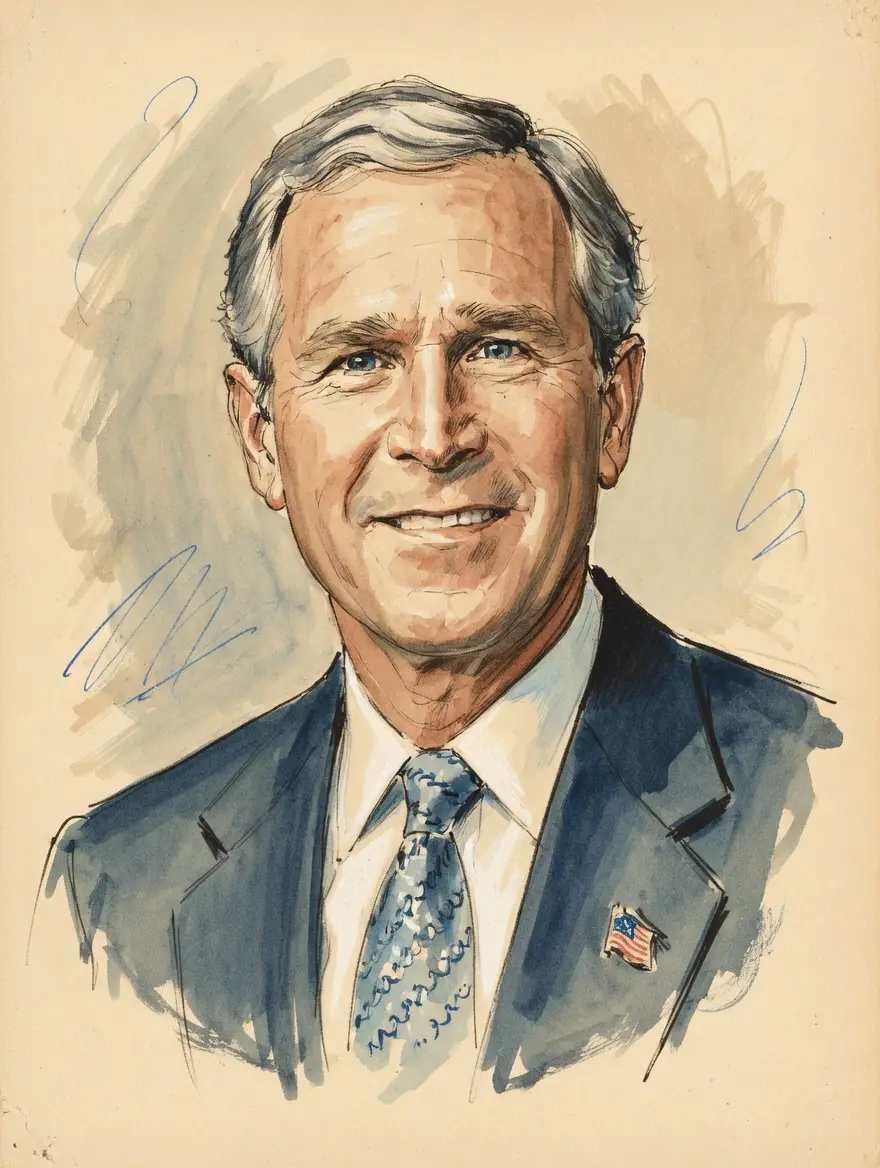
George W. Bush on Climate Change
TL;DR
George W. Bush favored a technology-driven, market-based approach over mandatory cuts, rejecting the Kyoto Protocol's framework.
Key Points
He announced a national goal to stop the growth of U.S. greenhouse gas emissions by 2025, to be achieved through technology and market-based strategies.
In March 2001, he reversed an earlier campaign pledge, stating that the U.S. would not seek to regulate carbon dioxide emissions from power plants due to economic concerns.
He created international initiatives like the Asia-Pacific Partnership on Clean Development and Climate, which focused on sharing cleaner energy technologies with major emitters.
Summary
George W. Bush's core position on Climate Change centered on a science-based approach that prioritized technological innovation and market mechanisms over mandatory, sweeping regulatory cuts. He announced an ambitious national goal to reduce the greenhouse gas intensity of the American economy by 18 percent by 2012, and later committed to stopping the growth of U.S. greenhouse gas emissions by 2025, framing this as a rational balance between environmental protection and economic growth. His administration heavily invested in R&D for clean energy, nuclear power, and carbon capture, viewing these as the long-term keys to addressing the global challenge. He consistently opposed the Kyoto Protocol, arguing it was flawed for excluding major developing nations like China and India while imposing drastic economic restrictions on the U.S.
Contextually, his administration faced significant criticism for its early reversal of campaign pledges to regulate carbon dioxide from power plants and for a perceived skepticism toward scientific consensus, including accusations of political pressure on federal scientists. Despite this, his administration took several concrete domestic actions, such as signing the Energy Policy Act of 2005 to incentivize efficiency and renewables, and launching international partnerships like the Asia-Pacific Partnership to promote clean technologies. Later in his presidency, he pivoted toward greater international engagement through initiatives like the Major Economies Process, seeking a new climate agreement that required meaningful participation from all major economies.
Key Quotes
My Administration's climate change policy will be science-based, encourage research breakthroughs that lead to technological innovation, and take advantage of the power of markets.
Frequently Asked Questions
George W. Bush's main strategy for addressing climate change was technology-focused and market-based. He emphasized spurring innovation and deploying cleaner energy technologies rather than imposing mandatory emissions cuts across the economy.
No, George W. Bush opposed the Kyoto Protocol when he took office, stating in 2001 that he would not implement it. He argued the treaty was flawed because it would limit U.S. economic growth while allowing major developing nations to increase their emissions.
Yes, the administration took action through legislation like the Energy Policy Act of 2005, which offered incentives for efficiency and renewables. He also set domestic goals to reduce emissions intensity and later to stop the growth of total emissions by 2025.
Sources7
Clean Energy and Climate Change - the White House
How George W. Bush Helped Mitigate the Climate Crisis - UT Austin News
"G.W. Bush's Climate Change Policy" by Armin Rosencranz
Climate change policy of the George W. Bush administration - Wikipedia
Environment | George W. Bush Library
The U.S. and Climate Change: Washington's See-Saw on Global Leadership | National Security Archive
* This is not an exhaustive list of sources.