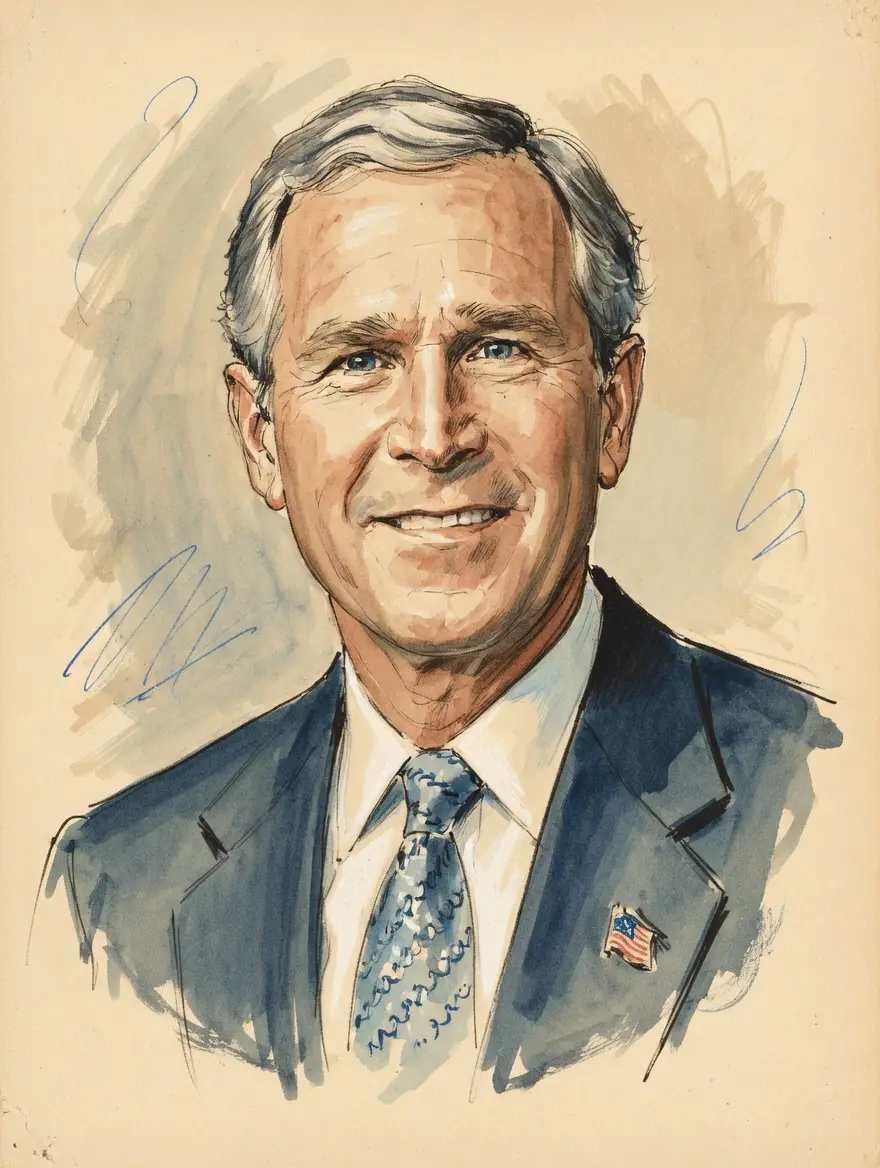
George W. Bush on Foreign Policy
TL;DR
George W. Bush aggressively pursued global security through preemptive military action and the promotion of democracy following the 9/11 attacks.
Key Points
The administration declared a global war on terror after 9/11, stating it would not end until every terrorist group of global reach was defeated.
The Bush Doctrine, formalized in 2002, embraced the concept of preemptive military strikes against perceived threats before they could act against the U.S.
The presidency saw a significant expansion of foreign aid, most notably the creation of the President's Emergency Plan for AIDS Relief (PEPFAR) in 2003.
Summary
George W. Bush fundamentally reshaped American foreign policy in response to the September 11, 2001, terrorist attacks, abandoning the previous half-century's reliance on multilateralism and international organizations for ensuring security. Galvanized by the attacks, his administration adopted the Bush Doctrine, centered on preventive war—striking enemies before they could attack the U.S.—unilateral action when deemed necessary, and actively spreading democracy and free markets globally. This new assertive internationalism contrasted with his earlier campaign rhetoric which suggested a less interventionist approach, demonstrating a significant evolution in his stance driven by a perceived grave and growing danger from terrorists and hostile regimes.
The implications of this doctrine were most visible in the launches of Operation Enduring Freedom in Afghanistan and the subsequent invasion of Iraq, which critics argued was overly bellicose and relied too heavily on military force rather than diplomacy. While the administration achieved initial military successes and dramatically increased foreign aid, particularly through initiatives like PEPFAR, its policies in the Middle East were widely considered to have failed to advance U.S. national security long-term, exacerbating the terrorism situation and straining relationships with traditional allies. The core premise was that a proactive and dominant American posture was the only way to ensure national safety in a new, dangerous world.
Frequently Asked Questions
The primary event shaping George W. Bush's foreign policy was the September 11, 2001, terrorist attacks, which led to the global War on Terror. This response defined his administration's focus on defeating terrorist organizations abroad and enhancing homeland security measures at home.
The Bush Doctrine centered on three main points: preventive war, allowing the U.S. to strike preemptively; unilateral action, reserving the right to act alone if necessary; and the promotion of democracy worldwide. This marked a shift away from relying solely on multilateral institutions.
George W. Bush viewed foreign aid as a moral responsibility and a strategic tool to promote U.S. interests and values like democratic governance. His most expansive aid initiative was the President's Emergency Plan for AIDS Relief (PEPFAR), which provided substantial funding for global health.
Sources7
George W. Bush: Foreign Affairs | Miller Center
George W Bush On Foreign Policy: Disarmament Diplomacy: - George W Bush On Foreign Policy
The Bush Revolution: The Remaking of America's Foreign Policy | Brookings
Power without Influence: The Bush Administration's Foreign Policy Failure in the Middle East
Policy 101: Foreign Aid | George W. Bush Presidential Center
Foreign policy of the George W. Bush administration - Wikipedia
Lessons From History Series Meeting: The Foreign Policy Legacy of the George W. Bush Administration
* This is not an exhaustive list of sources.