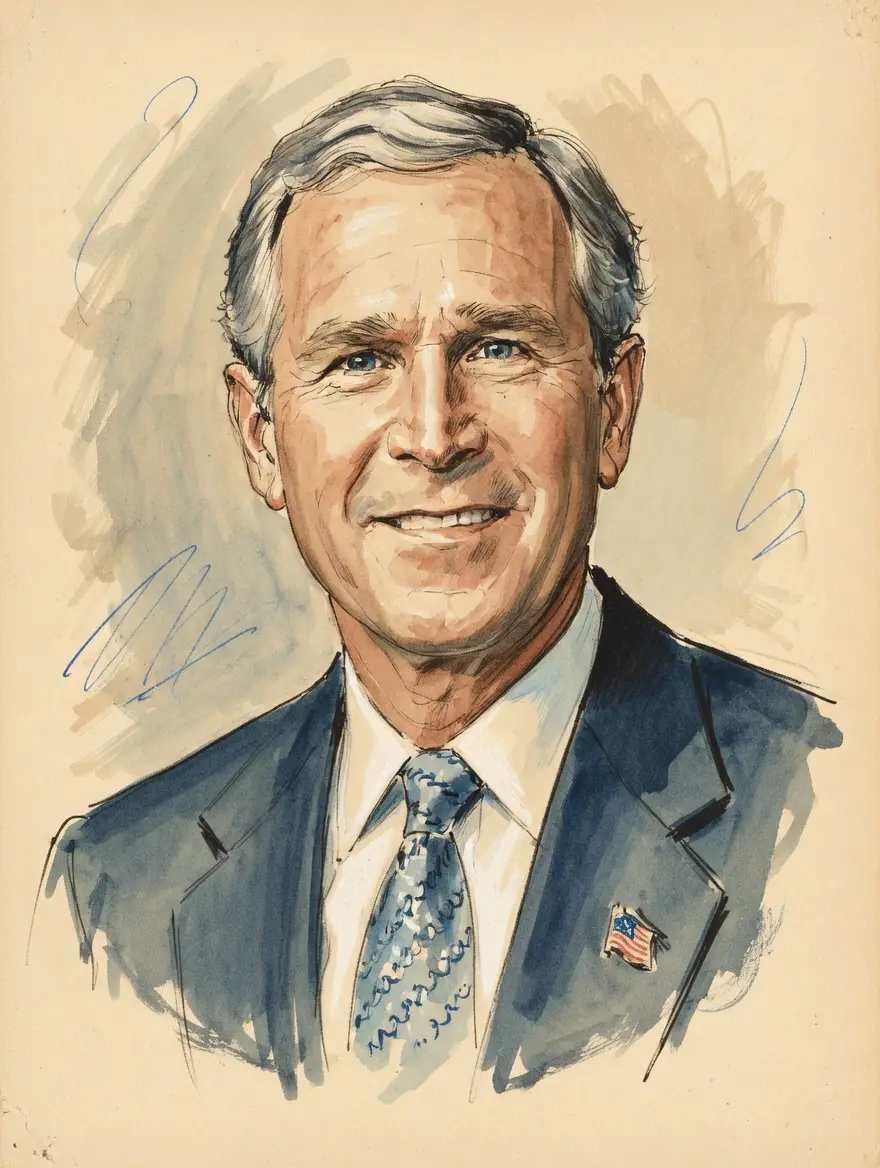
George W. Bush on Iraq War
TL;DR
George W. Bush launched the Iraq War based on WMD threats and regime change, later defending the necessity of the initial decision.
Key Points
He referred to Iraq, Iran, and North Korea as an “axis of evil” in his State of the Union address on January 29, 2002.
On May 1, 2003, he announced that major combat operations had ended aboard the USS Abraham Lincoln, although the war continued for years.
He committed more than 20,000 additional American troops to Iraq in 2007 as part of a strategy change to counter sectarian violence, known as the “surge”.
Summary
George W. Bush's core position on the Iraq War, which began in March 2003, was that the invasion was a necessary pre-emptive military action against the regime of Saddam Hussein. The administration built its case on the assertion that Iraq possessed Weapons of Mass Destruction (WMD) and posed a grave danger, especially in the post-9/11 environment where the calculus changed regarding unacceptable threats. Despite later revelations that the WMD intelligence was in error, those close to the President maintained that the decision was his and that he had no doubt it was necessary at the time.
The context surrounding the decision reveals a focus on political imperatives and military solutions, with advisors who favored invasion having significant influence within the administration’s decision-making structure. Following the swift toppling of the regime, Bush famously announced the end of major combat operations on May 1, 2003, aboard the USS Abraham Lincoln, an act that became symbolic of declaring victory prematurely as the insurgency intensified. Later, he expressed regret only for the misleading banner, not for the initial decision to go to war, which he maintained was a considered, necessary step for which he alone took responsibility.
Key Quotes
We'll be deliberate; yet, time is not on our side. I will not wait on events while dangers gather. I will not stand by as peril draws closer and closer. The United States of America will not permit the world's most dangerous regimes to threaten us with the world's most destructive weapons.
Frequently Asked Questions
George W. Bush's primary justification for initiating the Iraq War was the belief, based on intelligence available at the time, that Saddam Hussein's regime possessed weapons of mass destruction that posed a grave threat. This was framed within the broader Global War on Terror following the September 11th attacks. The administration sought to enforce UN resolutions and remove the dictator.
The former President has expressed regret specifically over the use of the 'Mission Accomplished' banner on the USS Abraham Lincoln in May 2003, stating it conveyed the wrong message. While some commentators interpret a 2022 Freudian slip while discussing the invasion of Ukraine as an admission regarding Iraq, he has generally maintained that the initial decision to go to war was necessary based on the information he possessed.
The decision-making process was influenced by advisors who strongly favored military action, including the Vice President and the Secretary of Defense, who held sway in the President's organizationally hierarchical environment. Advisors who favored diplomatic caution, such as the Secretary of State, reportedly had limited influence on the final decision to launch Operation Iraqi Freedom.