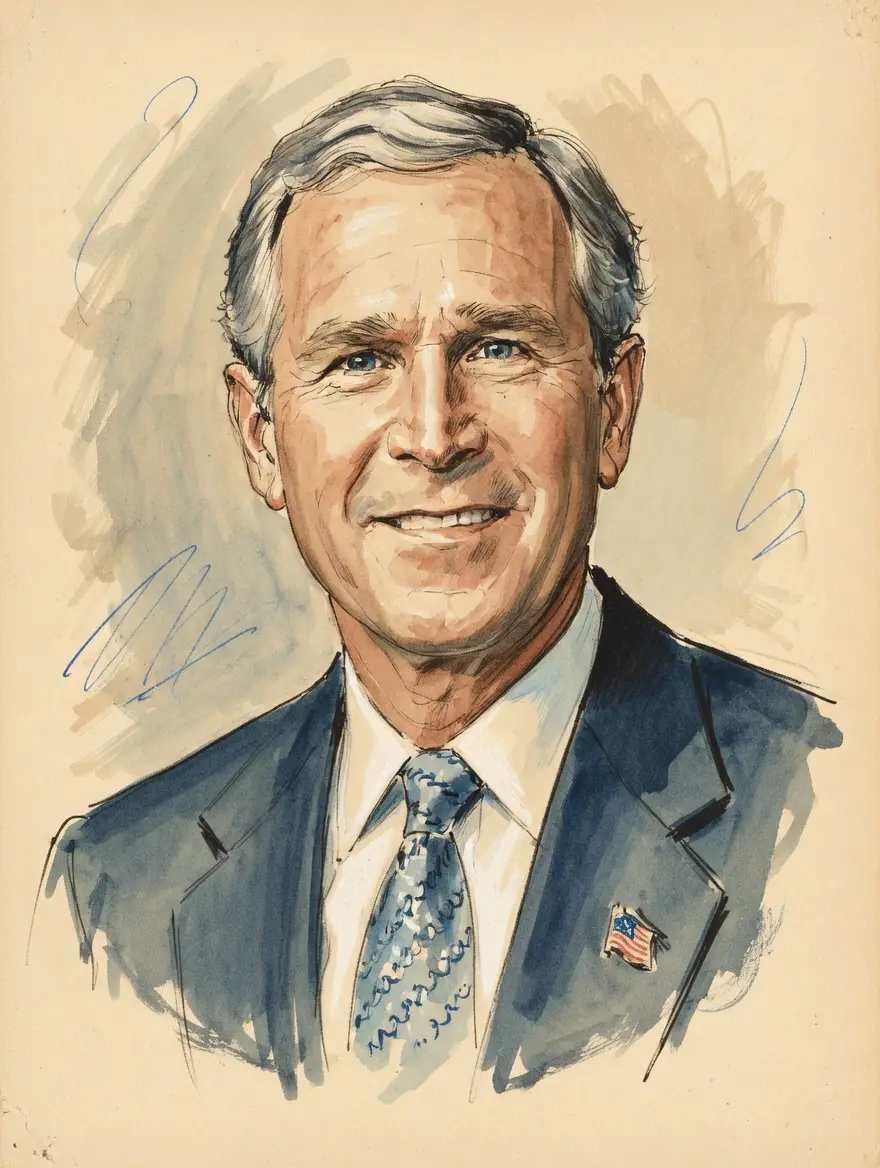
George W. Bush on Terrorism
TL;DR
George W. Bush defined the post-9/11 era as a decisive, global war against all terrorist groups of global reach.
Key Points
He addressed a joint session of Congress on September 20, 2001, proclaiming the "War on Terror" begins with al Qaeda but would continue until every terrorist group of global reach was defeated.
The administration initiated Operation Enduring Freedom in Afghanistan on October 7, 2001, to destroy al-Qaeda training camps and remove the Taliban regime that offered them sanctuary.
The initial response included financial warfare, such as signing an executive order on September 24, 2001, to freeze the U.S.-based assets of terrorist organizations.
Summary
George W. Bush established an expansive, global military and diplomatic campaign against terrorism following the September 11, 2001 attacks, framing the conflict as a clash between freedom and evil. He declared a "War on Terror" that he vowed would not end until every terrorist group with global reach was found, stopped, and defeated. This stance immediately transitioned his presidency, leading to military action in Afghanistan to remove the Taliban regime sheltering al-Qaeda and encompassing comprehensive efforts to disrupt terrorist financing worldwide, which included seizing assets and issuing warnings to nations harboring terrorists.
His administration justified the broad executive actions taken, citing commander-in-chief powers and Congressional authorization, which included establishing military commissions and initiating domestic surveillance programs. While publicly emphasizing that the conflict was not against the religion of Islam, but against the terrorists and their ideology, the declaration of an open-ended war was rhetorically employed to rally national resolve and provide the legal foundation for sustained, extraordinary measures to protect the nation from future attacks. The initial phase focused heavily on military destruction of enemy capability and the subsequent war in Iraq became integrated into this broader global focus.
Frequently Asked Questions
George W. Bush's main stance was the declaration and execution of a comprehensive Global War on Terror following the September 11, 2001 attacks. He viewed terrorism as an act of war against civilization itself, necessitating a worldwide campaign to find and defeat all terrorist networks with global reach. His administration was committed to this fight until the threat was eradicated.
No, the president was careful to distinguish the conflict from the religion of Islam. He stated publicly that the face of terror was not the true faith of Islam and that Muslims make valuable contributions to the country. His war, he repeatedly clarified, was against evil and the terrorists, not against the Muslim people.
The president authorized major military action, specifically Operation Enduring Freedom in Afghanistan, and authorized the use of force against those responsible for 9/11 on September 18, 2001. Domestically, he signed the USA Patriot Act into law to expand security and surveillance, and established military commissions for non-U.S. citizen terrorism suspects.
Sources10
Global War on Terror | George W. Bush Library
The Global War on Terrorism: The First 100 Days
Waging and Winning the War on Terror
President George W. Bush addressed a Joint Session of Congress on the subject of the war on terrorism
The Bush-Putin Transcripts: How Vladimir Putin and George W. Bush Bonded Over Terrorism
Echoes of 9/11: Rhetorical Analysis of Presidential Statements in the “War on Terror”
George W. Bush: Foreign Affairs
George W. Bush talking about the crusade on terrorism
Anatomy of a Rally Effect: George W. Bush and the War on Terrorism
George W. Bush, Policy Selling and Agenda-Setting after 9/11
* This is not an exhaustive list of sources.