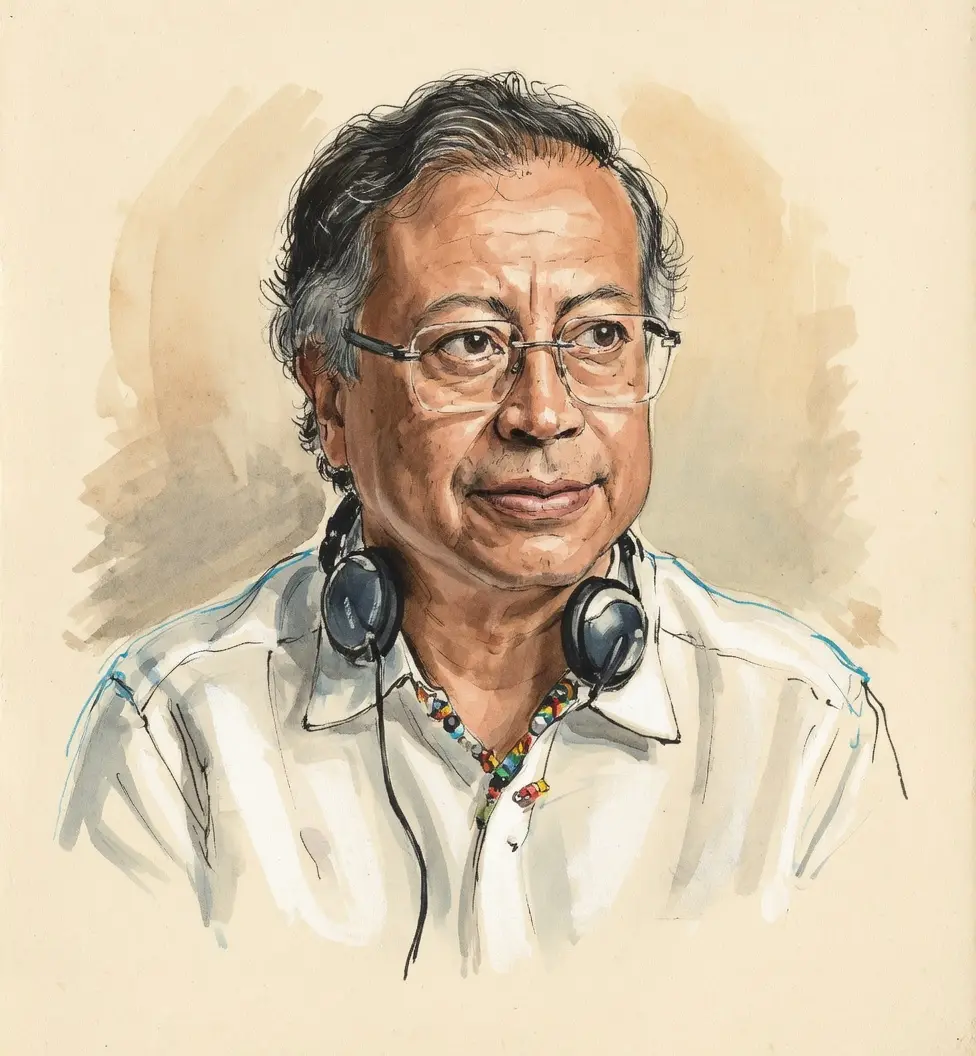
Gustavo Petro
- Known for
- First left-wing president, Former guerrilla leader, Mayor of Bogotá
- Born in
- Ciénaga de Oro, Colombia
- Education
- Bachelor's degree in economics, University of Salamanca
Gustavo Petro is a historic figure in Colombian politics, serving as the nation's first left-wing president since 2022. His trajectory spans from M-19 guerrilla membership to elected office, defining his worldview as one centered on profound structural change. His presidency is marked by a commitment to social justice, environmentalism, and agrarian reform.
Signature Positions
Petro's policy platform centers on a shift away from Colombia’s traditional extractive economy and entrenched inequality:
- Environmental Issues: Calls for an end to fossil fuel exploration to combat climate change and has strongly advocated for the Escazú Agreement ratification.
- Agrarian Reform: Aims to redistribute land to poor families, supporting the 2016 peace agreement's mandates for land distribution and purchase agreements with ranchers (Fedegan).
- Drug Policy: Proposes decriminalizing cocaine and marijuana production, advocating for a new international convention on the failed War on Drugs.
- Foreign Affairs (Venezuela): Prioritizes restoring diplomatic relations with Nicolás Maduro's government in Venezuela and opposed past U.S. interventionism.
- Social Issues: Advocates for progressive policies including the creation of a Ministry of Equality and support for LGBTQ+ rights and women's autonomy.
Notable Tensions
Petro's tenure has been fraught with political friction and notable controversies:
- United States Relations: His hardline stance on Palestine and direct confrontation with Donald Trump regarding deportations and drug policy led to visa revocation and U.S. sanctions against Petro and his family.
- Internal Governance: His administration has faced significant protests and accusations of illegal wiretapping, leading to scandals (Nannygate) and the resignation of key cabinet members like Armando Benedetti and Laura Sarabia.
- Policy Implementation: Key structural reforms, particularly in health and labor, have stalled in Congress, forcing Petro to rely on controversial uses of presidential decrees (Decretazo).
- Past Behavior: His history as an M-19 militant and past inconsistencies regarding his academic degrees have been recurrent points of political attack.
Petro’s victory fundamentally altered the political landscape, making him the first left-wing president in modern Colombian history. His early governance involved building a broad congressional coalition to pass reforms, though this coalition later fractured. His public image has been complicated by allegations of erratic behavior and scrutiny over his management style amidst declining approval ratings.