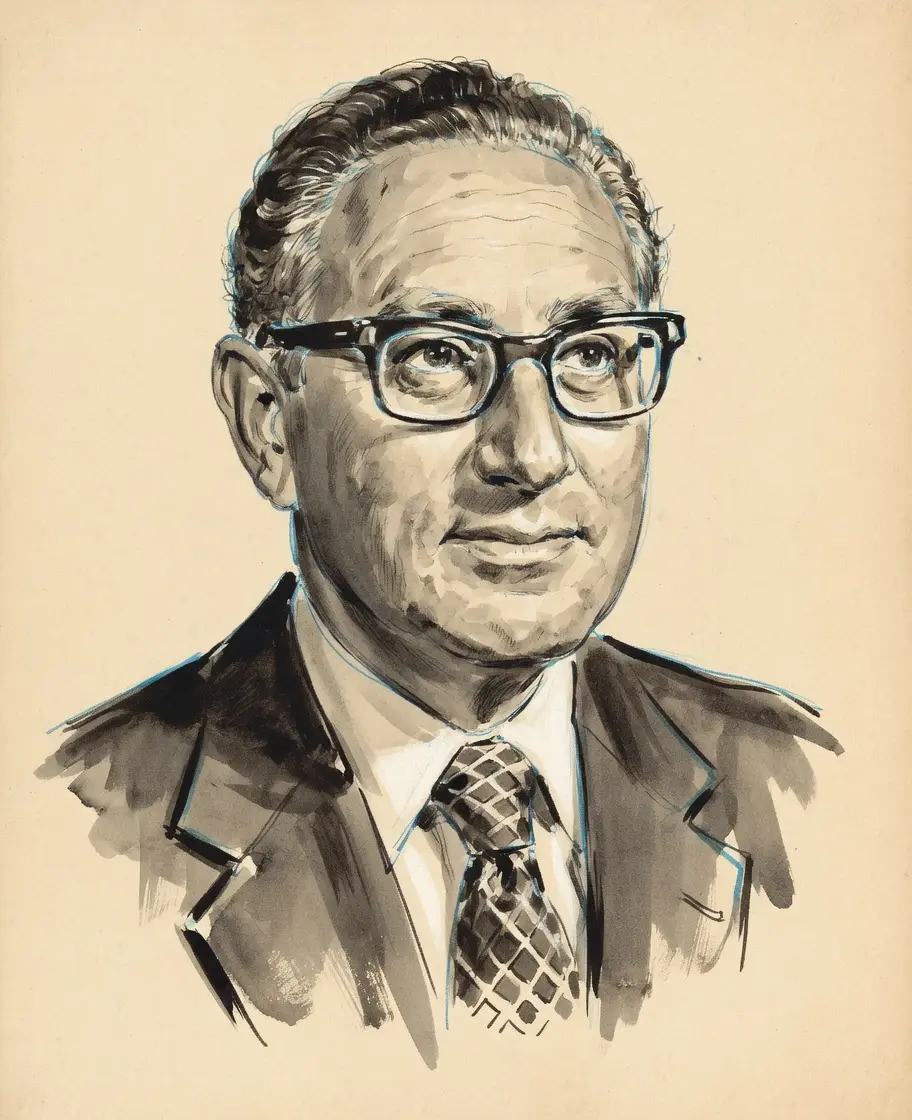
Henry Kissinger on Artificial Intelligence
TL;DR
Henry Kissinger viewed Artificial Intelligence as an intellectual revolution demanding sober optimism and new human conceptualizations to navigate its profound risks.
Key Points
He considered generative artificial intelligence to present a practical and philosophical challenge on a scale not seen since the start of the Enlightenment.
He believed some risks of AI, particularly in diplomacy and defense, could only be managed successfully by AI itself acting as an impartial third party.
In 2019, he noted that since AI is an established reality, the opportunity lies in assessing specific dangers rather than arguing for its abolition.
Summary
Henry Kissinger, particularly in his final works like "Genesis: Artificial Intelligence, Hope, and the Human Spirit," addressed Artificial Intelligence as an epochal challenge comparable to the Enlightenment. He argued that generative AI, exemplified by ChatGPT, created a cognitive shift, accelerating knowledge while simultaneously widening the gap between human knowledge and human understanding because its processes remain largely mysterious to its creators and users. He stressed that the commercial imperative driving AI development currently overshadows the necessary long-range thinking regarding its geopolitical and philosophical implications, leading to a situation where society is relatively unmoored without guiding political or philosophical leadership.
He explored the dual nature of AI, seeing its potential to solve major global crises while warning that unchecked advance could rob humanity of its independent judgment, action, and dignity. Kissinger emphasized that humans must develop new concepts of thought and interaction with machines, asserting the need for humans to retain conscious choice and avoid becoming passive consumers or subservient to superior intelligence. His final conclusion advocated for a strategy built on neither blind faith nor unjustified fear, but on self-doubt leading to knowledge and self-confidence to act to meet this new genesis.
Key Quotes
I'm a newcomer to the artificial intelligence field, but I've now studied it quite a bit. Artificial intelligence is out of the box so we cannot argue about it as if we have an opportunity to abolish it.
“examines what AI means to humanity and explores solutions to the challenges it poses.“
Frequently Asked Questions
Henry Kissinger viewed Artificial Intelligence as a revolutionary force, co-authoring books that explore its epochal challenges and opportunities. He urged a path of sober optimism, recognizing its potential to solve global crises while cautioning against the risks to human judgment and dignity. He stressed the urgent need for new human conceptual frameworks to manage this technology.
Yes, Henry Kissinger raised concerns that AI and other technological advances could offer new methods for authoritarians to exercise control over their populations. He noted that complexity in governance, which AI reflects, can lead people to feel that elites are unresponsive, thereby creating a temptation for authoritarian solutions. He connected this to the need for robust democratic institutions to solve emerging problems.
The core message of his final book, 'Genesis,' was that humanity must develop an effective strategy for the AI age, avoiding both unjustified fear and blind faith. He insisted that humans must strive to encode their own nature and wisdom into machines to ensure they retain conscious choice and independent humanity while coexisting with superior intelligence.
Sources5
Henry Kissinger on Artificial Intelligence, Authoritarianism, and Hope
Henry Kissinger and His Last Book – GENESIS: Artificial Intelligence, Hope, and the Human Spirit
ChatGPT Heralds an Intellectual Revolution
Henry Kissinger: AI Could Mean the End of Human History
Genesis: Artificial Intelligence, Hope, and the Human Spirit
* This is not an exhaustive list of sources.