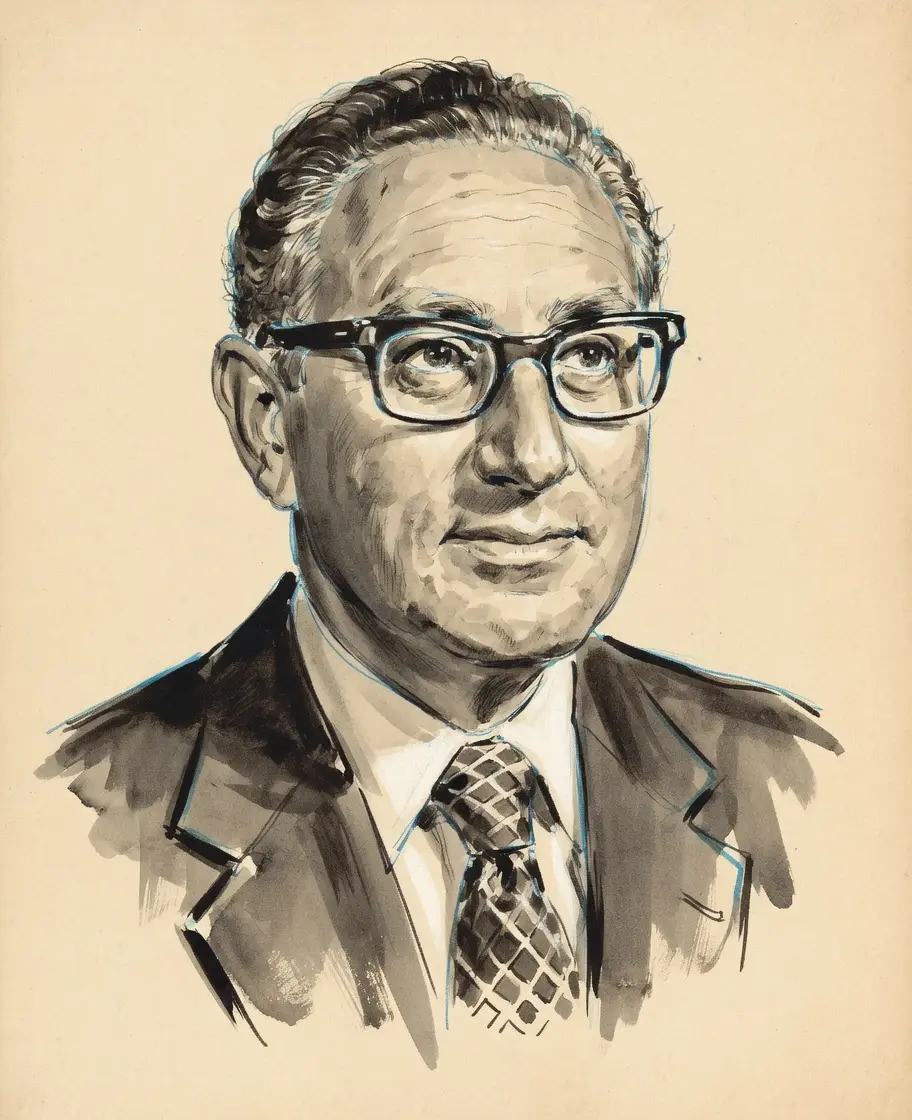
Henry Kissinger on Democracy
TL;DR
Henry Kissinger prioritized international stability and the balance of power over the promotion of democracy abroad.
Key Points
He stated in 1969 that if he had to choose between injustice and order versus justice and disorder, he would always select the latter.
The statesman considered promoting democracy abroad to be an objective that could not be realized within the timeframe of a single presidential administration.
In 2023, he expressed that US democracy was in "great danger" due in part to income inequalities.
Summary
Henry Kissinger, the former Secretary of State, consistently framed his foreign policy through the lens of Realpolitik, holding that international stability and the balance of power were the paramount objectives, often at the expense of democratic principles abroad. He famously declared a preference for order over justice when the two conflicted, suggesting in his scholarship that he would always choose the former. This stance was evident in his support for actions, such as the coup in Chile to overthrow the democratically elected government of Salvador Allende, because maintaining a non-communist bloc was deemed more crucial to global equilibrium. He viewed the promotion of democracy by the United States as a secondary, sometimes irrelevant, concern for immediate diplomacy.
However, Kissinger acknowledged the essential ideological importance of America as a democracy, particularly for an immigrant like himself, and recognized that American statesmen could not completely ignore the preference for democracy in other nations. He cautioned that stating unachievable democratic transformation goals within an administration's timeframe was not idealistic but practically irrelevant, risking greater confrontation. While he dismissed the human rights provisions included in the Helsinki Final Act as a concession to liberal consciences, some scholars argue that this very concession eventually galvanized dissent against authoritarian regimes, suggesting an underestimation of democracy's long-term force, even by the pragmatic statesman.
Key Quotes
It is impossible, as an American, not to believe in democracy.
Frequently Asked Questions
Henry Kissinger's primary position was to subordinate the promotion of democracy abroad to the pursuit of international stability and a balance of power among great nations. He believed that immediate diplomatic goals, which often involved dealing with existing authoritarian regimes for strategic reasons, took precedence over ideological transformation.
The former Secretary of State was skeptical of the US actively promoting democratic systems abroad, viewing such efforts as often impractical within the short timeframe of a political administration. He believed this kind of idealism could lead to impractical foreign policy divorced from geopolitical necessity.
Yes, in later life, Henry Kissinger expressed concern regarding the state of democracy within the US itself. Specifically, he cited income inequalities as a significant factor that placed American democracy in "great danger" as of late 2023.
Sources6
Henry Kissinger Is No Friend of Humanity
Democracy and Dr. Kissinger | THR Web Features | Web Features | The Hedgehog Review
Kissinger's Lessons for American Foreign Policy Today – John Doherty
A tribute to Henry Kissinger, brilliant strategist and consummate Atlanticist - Atlantic Council
Foreign Relations of the United States, 1969–1976, Volume I, Foundations of Foreign Policy, 1969–1972 Document 4
Kissinger: US Democracy in 'Great Danger' Due to Income Inequalities
* This is not an exhaustive list of sources.