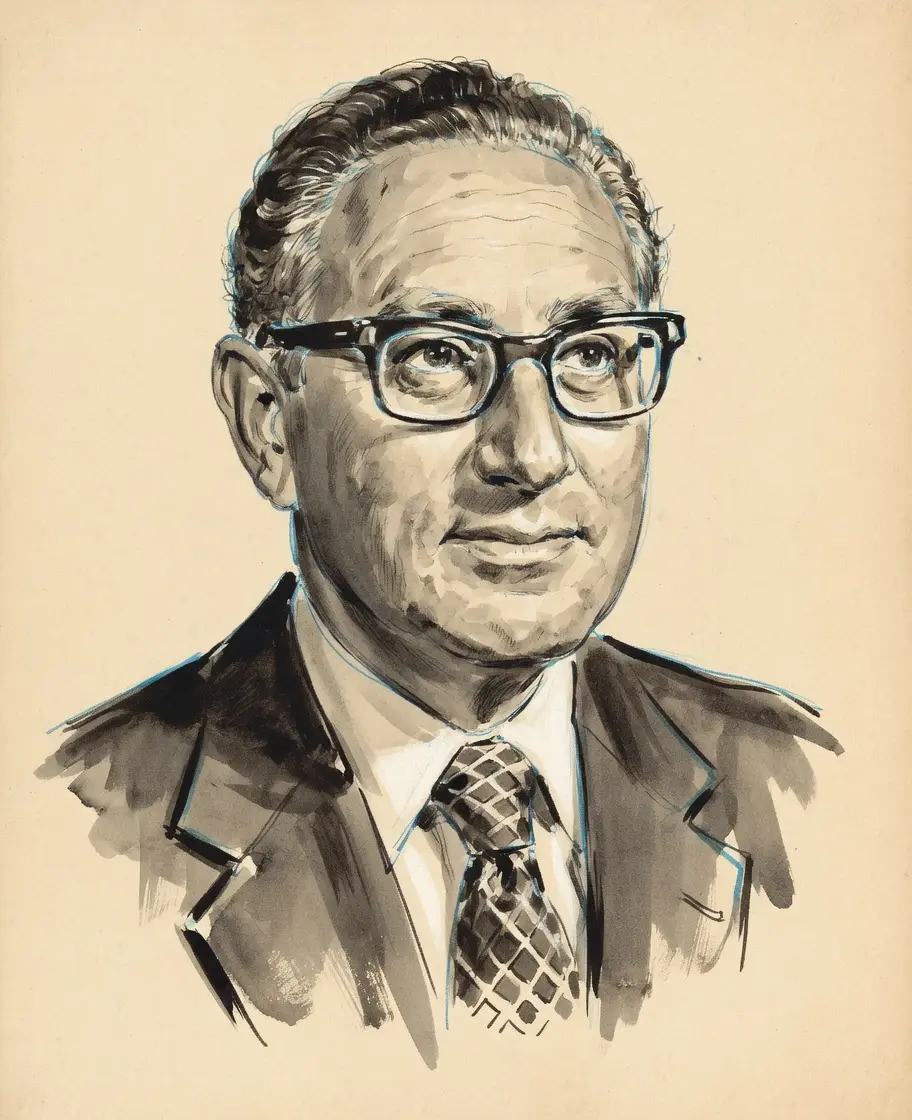
Henry Kissinger on Donald Trump
TL;DR
Henry Kissinger initially saw Donald Trump as a unique phenomenon with potential but grew skeptical of his challenge to the constitutional system.
Key Points
He met with the former president multiple times after the election, according to reports from 2017.
Kissinger said in December 2016 that Trump was a phenomenon that foreign countries had not previously encountered.
He explicitly stated there was no excuse for an American president to challenge the constitutional system, as observed in 2022.
Summary
Henry Kissinger acknowledged Donald Trump as a distinct political force who offered an extraordinary, if unpredictable, opportunity to reshape global affairs, especially when the previous administration was perceived as withdrawing from international politics. He expressed initial sympathy for the president's focus on asserting American national interest over abstract principles, suggesting that the combination of a perceived diplomatic vacuum and the new president's unfamiliar questions could lead to something remarkable and new in world order.
However, this initial view tempered as the former Secretary of State became less enthusiastic, particularly as the focus became centered on one person and issues devolved into confrontations. Kissinger ultimately found the act of an American president challenging and attempting to overthrow the constitutional system to be a grave matter for which he found no excuse, though he did not advocate for preventing him from running again.
Frequently Asked Questions
Henry Kissinger held a mixed view of Donald Trump, initially seeing him as a unique figure who might fundamentally alter international politics. This initial position shifted as he became critical of what he perceived as Trump's challenge to the nation's core constitutional framework.
Kissinger expressed sympathy for Trump's early focus on asserting American national interest over abstract principles, which resonated with a transactional approach. However, he grew less enthusiastic as the dynamic shifted toward personal confrontation rather than strategic diplomacy.
The former diplomat stated that for an American president to challenge and attempt to overthrow the constitutional system was a grave matter for which he found no justification. Despite this, he did not suggest preventing the former president from running for office again.
Sources3
What Kissinger Has Said About Trump
Chaos, Power, and Diplomacy: What Kissinger and Trump Teach Us About World Order
Henry Kissinger reflects on leadership, global crises and the state of U.S. politics
* This is not an exhaustive list of sources.