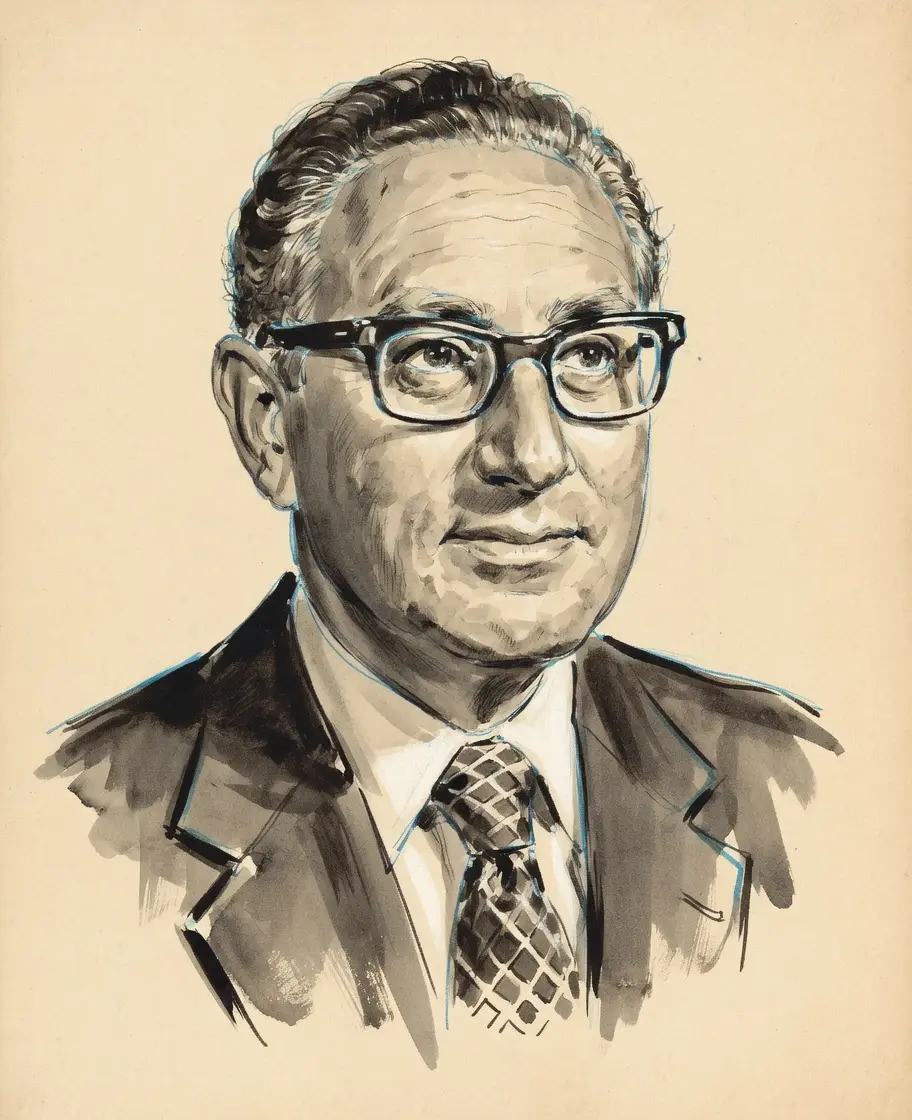
Henry Kissinger on NATO
TL;DR
Henry Kissinger evolved from opposing Ukraine's pre-war NATO membership to viewing it as an appropriate post-conflict outcome.
Key Points
He previously cautioned against Ukraine joining NATO before the war, fearing it would trigger conflict.
He called for a ceasefire along the pre-2022 invasion lines as a reasonable initial military outcome.
He later stated that Ukrainian membership in NATO would be an appropriate outcome following the cessation of fighting.
Summary
Henry Kissinger's stance on NATO, particularly regarding Ukraine, has seen a significant evolution rooted in his Realpolitik framework. Before the 2022 invasion, the statesman was opposed to Ukraine's membership in NATO, fearing it would precipitate the very conflict that later occurred. He believed Ukraine should serve as a bridge between Russia and the West rather than an outpost for either side, and he explicitly urged Kyiv to opt against joining the alliance following Russia's 2014 annexation of Crimea. Following the full-scale war, however, Kissinger conceded that the circumstances had changed fundamentally.
His later position, articulated in early 2023, supported the idea that post-war Ukraine should be guaranteed by NATO in some form, possibly as a full member. This shift was driven by the realization that the idea of a neutral Ukraine was no longer meaningful given the nature of the conflict. While previously prioritizing the prevention of escalation and maintaining an opening to Russia, the veteran diplomat concluded that the strategic objective of resisting conventional Russian aggression had been demonstrated, making Ukrainian affiliation with NATO an appropriate final arrangement.
Frequently Asked Questions
Henry Kissinger's final public stance was supportive of Ukraine joining NATO, but only after the fighting concluded and a new arrangement was established. He clarified that before the war, he opposed membership because he feared it would provoke the invasion, but that this calculus changed once the war was underway.
No, Henry Kissinger's position evolved over time, demonstrating a change in his Realpolitik assessment. Prior to the 2022 Russian invasion, he publicly argued against Ukraine joining the alliance, preferring a status of close connection without full membership.
The statesman changed his thinking because the nature and scale of the Russian aggression rendered the previous goal of a neutral Ukraine meaningless. He concluded that the reality of the conflict had shifted the strategic landscape so fundamentally that NATO guarantees were necessary for Ukraine's future security.
Sources8
The Evolution Of Henry Kissinger's Views On Russia And ...
Greenland, NATO and the ghost of Henry Kissinger
Kissinger: for the safety of Europe, get Ukraine into NATO
Kissinger's Post-War Vision Puts Ukraine in NATO but Also ...
'There are three possible outcomes to this war': Henry ...
What Kissinger would do about Putin and Ukraine
- THE DEBATE ON NATO ENLARGEMENT
Henry Kissinger: Why I changed my mind about Ukraine
* This is not an exhaustive list of sources.