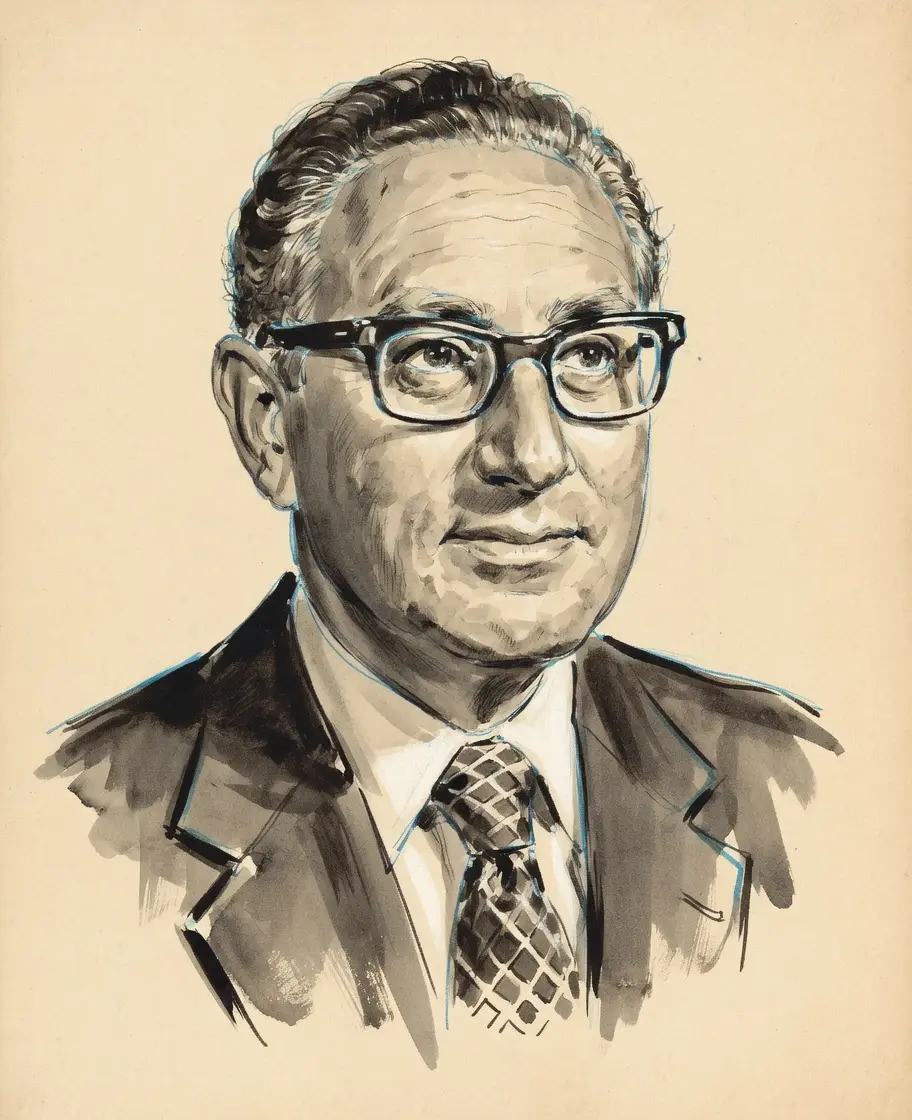
Henry Kissinger on Peace
TL;DR
Henry Kissinger believed true peace required a stable balance of power, not merely the absence of conflict, which invites ruthlessness.
Key Points
He received the 1973 Nobel Peace Prize for his role in negotiating the Paris Peace Accords to end the Vietnam War.
He believed that a peace based only on avoiding war made the international system vulnerable to the most ruthless member.
His goal in foreign policy was to create a structure of peace and stability by managing the balance of power between great nations.
Summary
Henry Kissinger viewed peace not simply as the avoidance of war, but as a dynamic equilibrium of forces, which he considered the only foundation for stability. He argued that when peace is conceived only as the absence of war, the international system becomes vulnerable to the most ruthless actors within it. For him, lasting peace depended on recognizing and upholding certain non-negotiable principles, thereby establishing a structure to which all nations had a vested commitment. This pragmatic approach underscored his diplomatic efforts, such as those leading to the Nobel Peace Prize in 1973, which aimed to create a durable international order.
This pursuit of a structured peace was exemplified by his commitment to complex, long-term negotiations, even amidst severe conflict, as seen in his work toward agreements in the Middle East and Southeast Asia. His philosophy held that a statesman must navigate societal passions and immediate crises to establish conditions where coexistence can eventually thrive, even if the initial agreements are more based on practical power considerations than idealist reconciliation. He maintained that diplomacy, sustained by realism, was the essential bridge to achieving man's aspirations for tranquility and community.
Frequently Asked Questions
Henry Kissinger viewed peace primarily as a stable structure maintained by an equilibrium of power among nations, rather than just the absence of fighting. He argued that peace conceived solely as avoidance of war allows ruthless actors to dominate the international system. Therefore, he prioritized diplomatic realism to build lasting order.
He negotiated the Paris Peace Accords, leading to a ceasefire and American troop withdrawal, for which he received the Nobel Peace Prize in 1973. However, some historians suggest the agreement only provided a 'decent interval' before the South Vietnamese government fell to communist forces in 1975.
He suggested that achieving peace requires both the pursuit of security elements and acts of reconciliation, and that leaders must practice peace through responsibility and accommodation. He stressed that lasting peace would be the accomplishment of all mankind, not just one person or nation.
Sources8
Remarks by the Honorable Henry Kissinger
Peace is at Hand - Teaching American History
Whenever peace – conceived as the avoidance of war – has been the primary objective of a power or a group of powers, the international system has been at the mercy of the most ruthless member of the international community.
The Push for Peace: How to Avoid Another World War
If peace is equated simply with the absence of war, it can become abject pacifism that turns the world over to the most ruthless.
Henry Kissinger – Acceptance Speech - NobelPrize.org
The Sixties . War & Peace . Reflections | PBS
Kissinger's great goal was to create a structure of peace and stability: biographer - Global Times
* This is not an exhaustive list of sources.