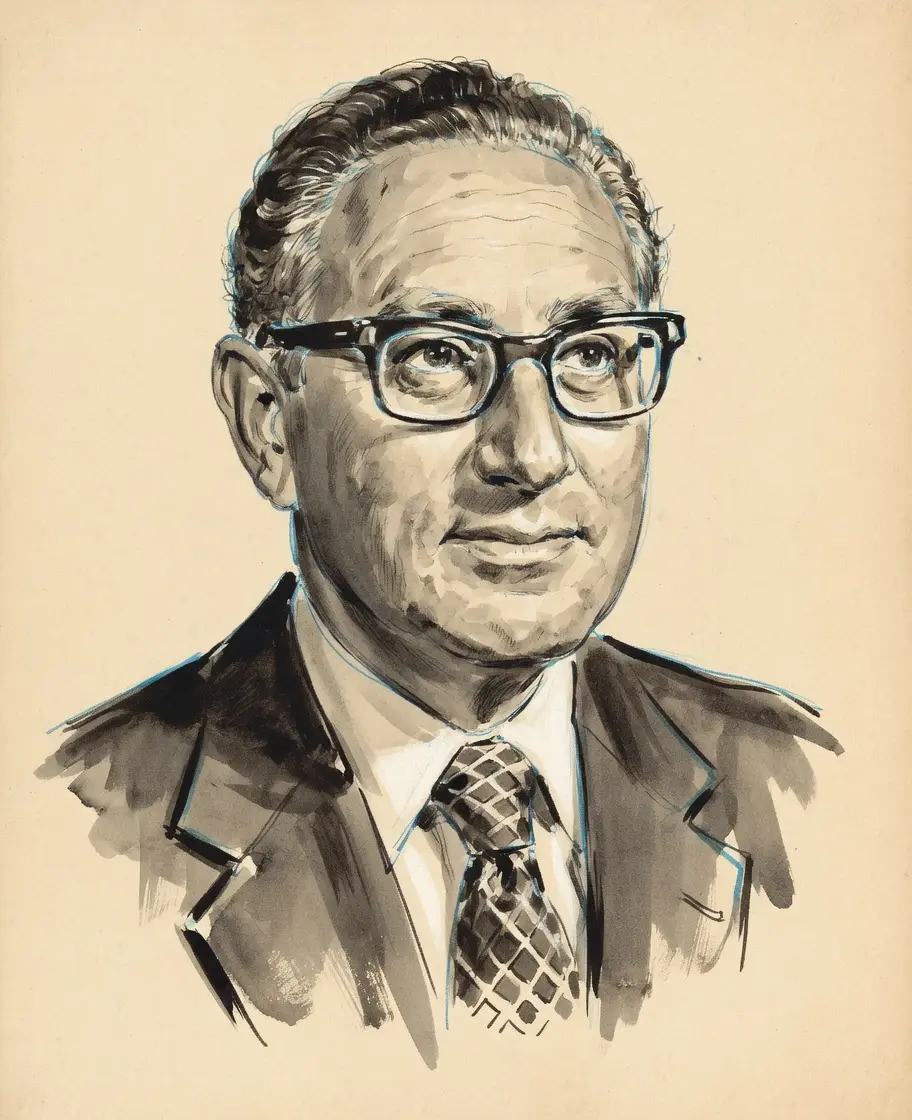
Henry Kissinger on Realism
TL;DR
Henry Kissinger viewed Realism as the essential framework for understanding and navigating international relations based on power.
Key Points
He championed the necessity of maintaining a balance of power as the primary stabilizer for international order.
Kissinger argued that a state's foreign policy must be based on national interest, which he consistently defined by power capabilities.
He often cautioned against subordinating geopolitical strategy to domestic political considerations or moral objectives.
Summary
Henry Kissinger's approach to foreign policy was fundamentally rooted in the tenets of Realism, viewing the international system as anarchic and driven by a perpetual struggle for power among self-interested states. He argued that the primary objective of diplomacy must be the maintenance of a stable balance of power, rather than the pursuit of abstract moral goals or the universal imposition of domestic values. His intellectual framework, shaped by historical analysis, emphasized national interest defined in terms of power as the irreducible core of state behavior, demanding pragmatic, results-oriented statecraft over ideological crusades.
This commitment meant that he consistently advocated for an approach that eschewed idealistic prescriptions, warning against what he termed the dangers of self-righteousness in foreign policy decision-making. The application of his Realist principles involved managing tensions through strategic interaction, famously culminating in policies like détente with the Soviet Union and the opening to China. For the former statesman, while domestic legitimacy was important, it could not substitute for the fundamental requirement of ensuring national security and international equilibrium through judicious application of national power.
Frequently Asked Questions
Henry Kissinger was a staunch advocate for Realism, viewing it as the indispensable intellectual foundation for effective diplomacy. He believed the international system is inherently competitive and requires states to prioritize national interest, defined as power, for stability.
Yes, Kissinger believed that Realism provided the necessary framework for navigating the complexities of international relations. He maintained that ignoring the underlying dynamics of power for idealistic reasons inevitably leads to miscalculation and instability.
Kissinger expressed skepticism toward foreign policies driven primarily by moral crusades, often warning against 'self-righteousness' in international affairs. For him, the pursuit of absolute morality often obscured pragmatic requirements for security and order.