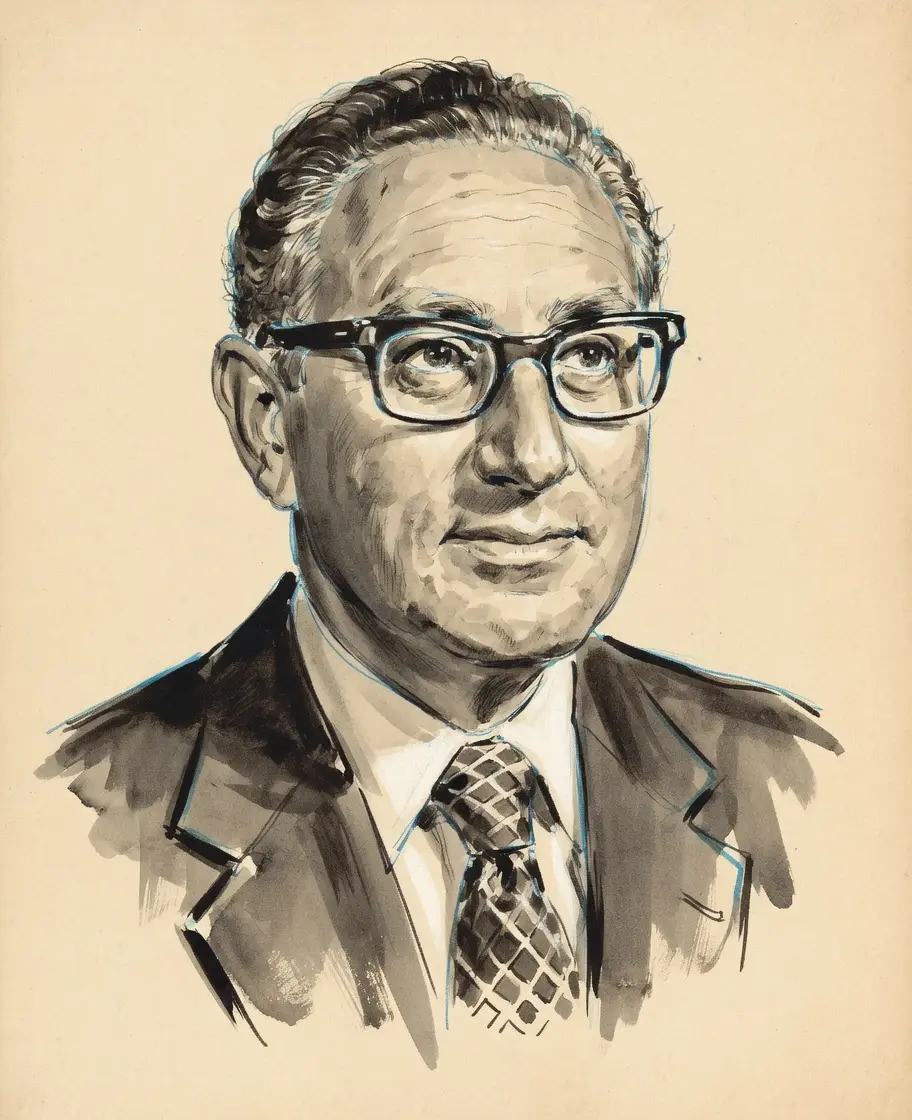
Henry Kissinger on Russia-Ukraine War
TL;DR
Henry Kissinger advocated for negotiating a peace settlement, including territorial concessions, to prevent a prolonged and escalating conflict.
Key Points
In May 2022, he proposed that Ukraine should accept territorial compromises, including for Crimea and Donbas, as a basis for peace talks.
He suggested in 2023 that Vladimir Putin’s survival as a leader would be improbable if Ukraine succeeded in reversing all territorial losses.
Kissinger asserted that the goal should be to bring Russia back into a relationship with Europe, which required a diplomatic framework for ending the war.
Summary
Henry Kissinger’s position regarding the Russia-Ukraine War has centered on the necessity of a negotiated settlement to end the conflict, often suggesting that a complete military defeat of Russia might be counterproductive to long-term stability. In the early stages, he proposed a roadmap that involved Ukraine accepting some form of territorial compromise concerning Crimea and the Donbas regions as a precondition for talks. This stance drew significant criticism from Kyiv, which viewed any such concession as rewarding aggression. The former Secretary of State suggested that a failure to pursue diplomacy could lead to a situation where Russia’s defeat became an end in itself, potentially destabilizing the international order in unpredictable ways.
Over time, his public stance seemed to evolve, although the emphasis on negotiation remained. While he appeared to acknowledge the bravery of the Ukrainian defense, the underlying principle of seeking a diplomatic off-ramp persisted. He argued that the war needed to be separated from Russia’s permanent place in the European structure, implying that a pathway for Russia's eventual reintegration, contingent upon a settlement, was crucial. Kissinger framed his advocacy as pragmatism aimed at avoiding a catastrophic escalation while securing the best achievable outcome for all parties involved.
Key Quotes
“the outcome of that war, both in the military and political sense, will affect relations between groupings of countries […]. [T]he outcome of any war and the peace settlement, and the nature of that peace settlement, […] will determine whether the combatants remain permanent adversaries, or whether it is possible to fit them into an international framework.”
Frequently Asked Questions
Henry Kissinger's core position advocates for a negotiated peace settlement to the Russia-Ukraine War. He has consistently stressed that the conflict must not be allowed to escalate indefinitely. His early proposals included Ukraine considering territorial concessions as part of a diplomatic resolution.
There has been an evolution in the nuances of Henry Kissinger's statements, though the underlying emphasis on diplomacy remains. While he initially faced criticism for suggesting territorial trade-offs, later comments acknowledged the reality of Ukrainian defense and the potential political jeopardy for the Russian leadership if Ukraine was completely victorious.
Kissinger has been a proponent of peace talks, suggesting a roadmap to end the conflict before it spirals further out of control. He believes that a framework must be established that separates Russia's role in Europe from the immediate conflict outcome. His view is that a complete subjugation of Russia is not a desirable long-term strategic outcome.
Sources9
Kissinger Says Ukraine Should Cede Territory to Russia to Achieve Peace
Kyiv slams Kissinger over call to negotiate with Russia for peace
Kissinger proposes roadmap for talks to end Russia-Ukraine war
Kissinger says Putin’s survival improbable if Ukraine prevails
Kissinger says Putin’s survival improbable if Ukraine prevails
Kissinger’s outdated remedy for the Ukraine war
Russia-Ukraine War: A peace solution eludes Kissinger too
Henry Kissinger and Ending the Conflict Over Ukraine
* This is not an exhaustive list of sources.