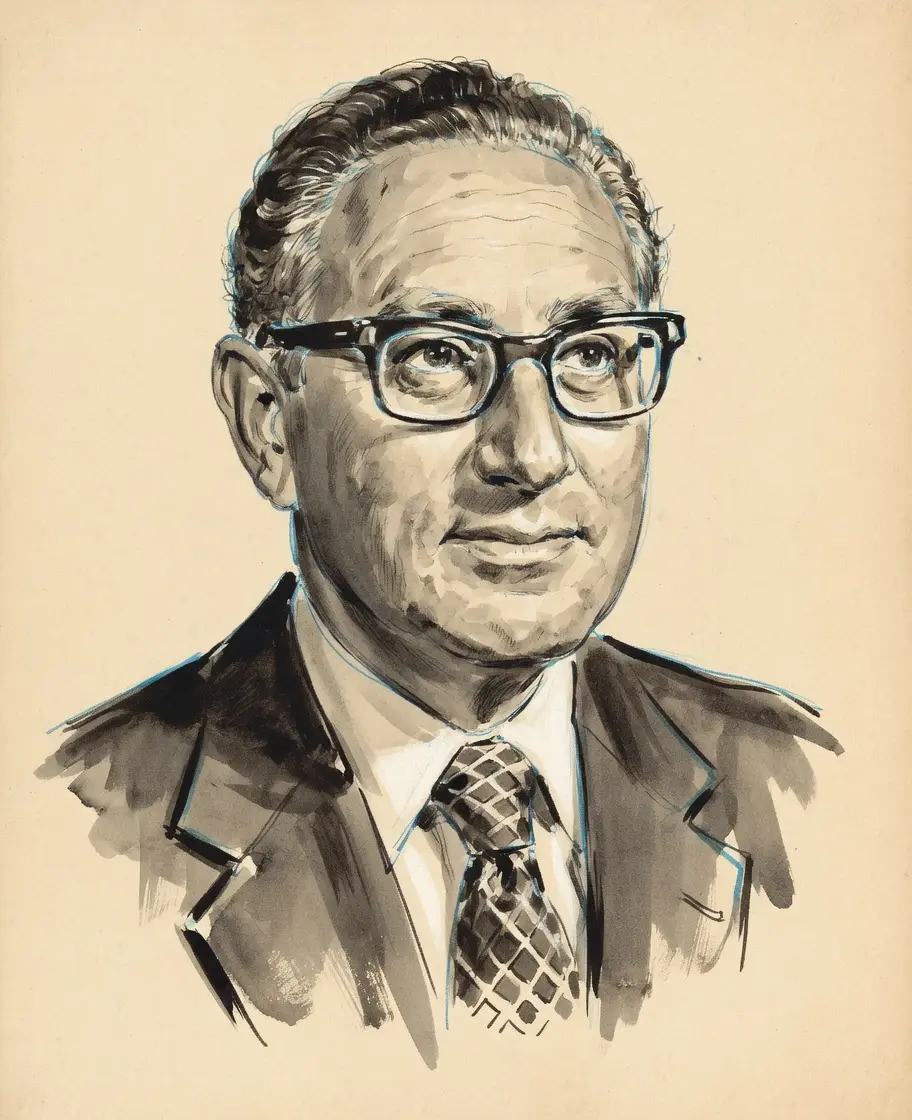
Henry Kissinger on War
TL;DR
Henry Kissinger viewed war as an inherent, manageable tool within a grand strategy of balancing global power dynamics.
Key Points
During the Vietnam War, he ultimately prioritized an armistice that minimized damage to American prestige over achieving a full military victory.
He believed nuclear weapons created a necessary reluctance to start large-scale conflicts, but the proliferation of such weapons creates new grave problems.
He advocated for managing the Cold War through 'détente'—a strategy of determined resistance combined with easing confrontation to reduce nuclear war dangers.
Summary
Henry Kissinger's position on war was rooted in the historical application of Primat der Aussenpolitik, viewing it as a tragic but necessary, and ultimately manageable, element of international relations when levers of diplomacy and power failed. His core stance emphasized that conflict must be framed within a grand strategy of power balancing, as evidenced by his work on the Vietnam War, where the goal shifted from military victory to securing a politically viable armistice to preserve American prestige and domestic cohesion. He believed that nuclear weapons fundamentally altered conflict by creating a reluctance to initiate major wars, though the spread of such technology presented new dangers that demanded constant strategic adaptation.
His approach to war was pragmatic, focused on managing conflicts to achieve specific geopolitical outcomes rather than achieving absolute ideological victories or pursuing every global injustice. For instance, in the context of the Cold War, he viewed the nuclear standoff as a situation that, while dangerous, required a continuous dialogue and demonstration of resolve to avoid conventional conflict between great powers. In contemporary conflicts, such as in Ukraine, his emphasis remained on defining achievable military and political outcomes—a strategic negotiation of what is possible—to prevent a descent into a broader, potentially catastrophic war.
Key Quotes
If Russia stays where it is now, it will have conquered 20 per cent of Ukraine and most of the Donbas, the industrial and agricultural main area, and a strip of land along the Black Sea.
Frequently Asked Questions
Henry Kissinger generally viewed war as an inherent, though regrettable, tool of statecraft, to be used or threatened as part of a strategic effort to maintain or adjust the international balance of power. His philosophy emphasized avoiding the escalation of conflicts between great powers, particularly those involving nuclear capabilities, by using calculated displays of force alongside persistent diplomacy.
Yes, he believed that nuclear weapons were central to keeping the Cold War 'cold' because they created a situation of 'producing reluctance to get the conflict started at all' between the US and the Soviet Union. However, he also expressed deep concern that the proliferation of these weapons to other states could tempt them to use them, making them function as conventional weapons.
In Vietnam, his position evolved to seeking an expedient end to the war via a negotiated settlement rather than holding out for an unlikely military victory, which he saw as a drain on American power. For him, the success of the peace efforts was measured by achieving a withdrawal under conditions that preserved American credibility, even if the ultimate political reality in South Vietnam remained fragile.
Sources6
'There are three possible outcomes to this war': Henry Kissinger interview
Kissinger on Russia: Insights and Recommendations
A Conversation with Henry Kissinger
The Evolution Of Henry Kissinger's Views On Russia And Ukraine
Henry Kissinger and the Vietnam War - Wikipedia
Henry Kissinger Looks Back on the Cold War
* This is not an exhaustive list of sources.