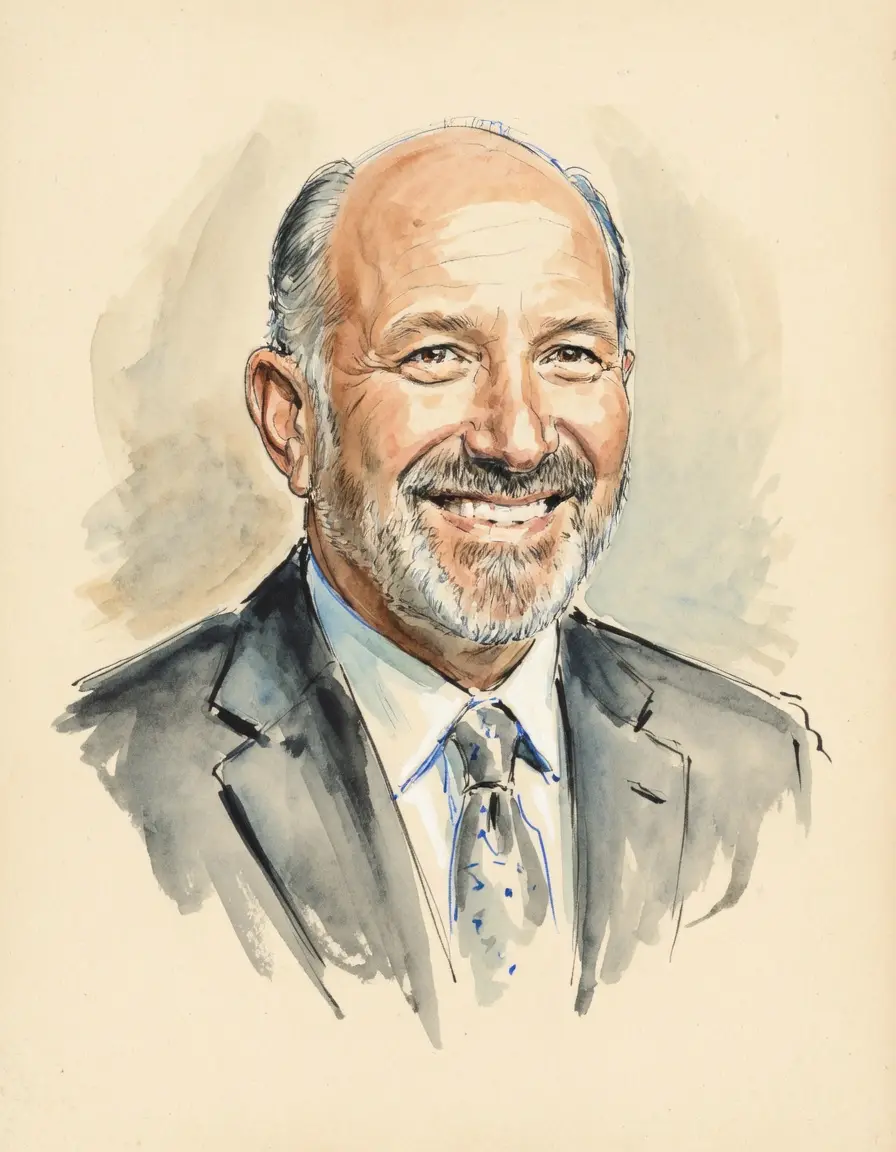
Howard Lutnick on Tariffs
TL;DR
Howard Lutnick champions a historical view of tariffs as the foundation of America's pre-income tax industrial golden age.
Key Points
He frames the period before 1913, when tariffs funded the government, as America’s “Tariff-Funded Golden Age” of prosperity.
The Commerce Secretary stated that President Trump understands the tariff issue, noting the leader was discussing it since the 1980s.
Following a Supreme Court setback on sweeping global tariffs, the administration introduced a temporary 10% baseline tariff as part of ongoing trade adjustments.
Summary
Howard Lutnick, serving as Commerce Secretary, presents a historical argument asserting that the United States was fundamentally built on tariffs, not income tax, until 1913. He views the period from 1880 to 1913, which was funded by tariffs, as America's richest and most prosperous era, suggesting President Trump’s policies evoke this time. This perspective frames modern tariff policies as a necessary return to an era of American self-sufficiency and economic dominance, contrasting it with the post-1913 era following the introduction of the federal income tax.
His analysis contrasts the pre-WWI tariff-funded state with post-WWII policy, where he contends the U.S. engaged in tariff generosity to aid global reconstruction, leading to a modern policy of "Low tariffs here, high tariffs there." Lutnick points to international examples, such as high tariffs imposed by Kuwait despite U.S. defense spending, as evidence that America's willingness to lower its own trade barriers has been exploited. He views the revival of tariffs as a corrective measure to reverse decades of this perceived complacency and unfair treatment by global trading partners.
Frequently Asked Questions
Howard Lutnick views tariffs as the essential financial foundation of America's industrial dominance prior to the implementation of the federal income tax in 1913. He suggests that this tariff-funded era represents the country’s economic peak in terms of wealth and power. He sees the current push for tariffs as an attempt to return to that successful model.
The Commerce Secretary articulates his tariff position as a consistent historical narrative stretching back decades, suggesting that President Trump was teaching him the principle rather than the reverse. His framework suggests a long-term critique of the 20th-century policy shift toward lower domestic tariffs and global engagement.
Howard Lutnick argued that the Smoot-Hawley Tariff Act of 1930 failed because it was implemented when the rest of the world was already in economic decline following the 1929 stock market crash. He stated that one cannot effectively charge other nations when they are not economically sound themselves.
Sources4
The History of Tariffs as Told by Howard Lutnick - No Labels
Commerce Secretary Howard Lutnick makes quiet trip to India days after tariff setback
Secretary Howard Lutnick | U.S. Department of Commerce
* This is not an exhaustive list of sources.