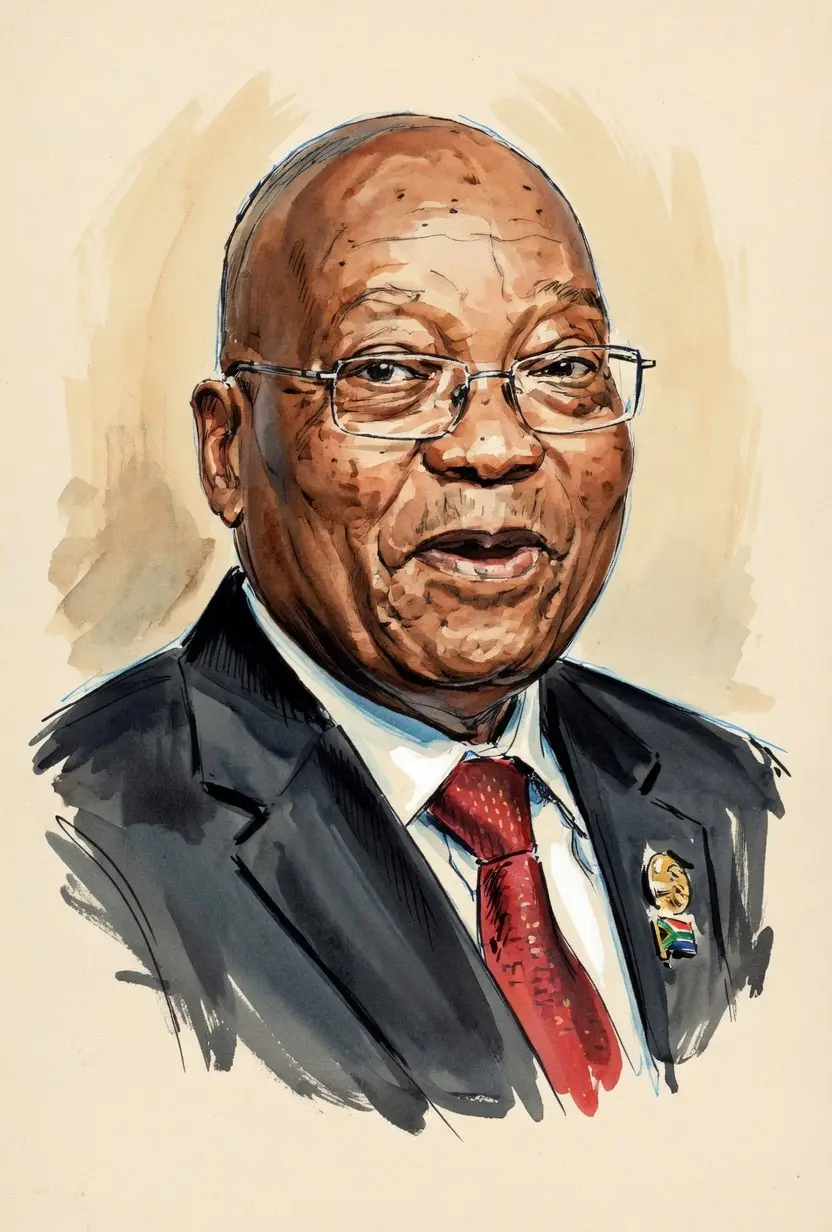
Jacob Zuma
- Known for
- President of South Africa, ANC leadership, Anti-apartheid activist
- Born in
- South Africa
- Education
- Peking University
Jacob Zuma, a former anti-apartheid activist and ex-President of South Africa (2009–2018), remains a polarizing figure defined by political resilience amid pervasive legal scandals. His politics blended a charismatic connection to the ANC grassroots with a controversial embrace of radical economic transformation (RET).
Signature Positions
Zuma's tenure was marked by significant policy shifts and persistent controversy:
- Radical Economic Transformation (RET): Announced in 2017, this aimed for fundamental restructuring of the economy to favour the poor, though critics claimed it was a cover for corruption.
- Foreign Policy: Emphasized South-South cooperation and economic diplomacy, highlighted by South Africa's successful admission to BRICS.
- HIV/AIDS Policy: His administration was praised for expanding social grants and improving HIV/AIDS policy, which increased life expectancy.
- International Criminal Court (ICC): Took a confrontational stance, notably by granting Omar al-Bashir diplomatic immunity, leading to a subsequent withdrawal threat from the ICC.
Notable Tensions
Zuma’s career is defined by numerous high-profile tensions and allegations:
- Constitutional Crisis: The Constitutional Court ruled he failed to uphold the Constitution regarding the Nkandla homestead upgrades, necessitating repayment.
- State Capture: His presidency was severely beset by allegations of improper influence by the Gupta family, leading to the establishment of the Zondo Commission.
- Internal ANC Conflict: His political rise involved a bitter succession battle with Thabo Mbeki, culminating in Mbeki's recall as President.
- Legal Battles: Faced multiple corruption charges related to the Arms Deal, which were reinstated after he resigned, and was ultimately jailed for contempt of court regarding the Zondo Commission.
Zuma’s public persona is characterized by charisma and accessibility, often contrasting sharply with the perceived intellectualism of his predecessors. His reliance on populist rhetoric and traditionalist stances, including polygamy, resonated deeply with his base in KwaZulu-Natal.