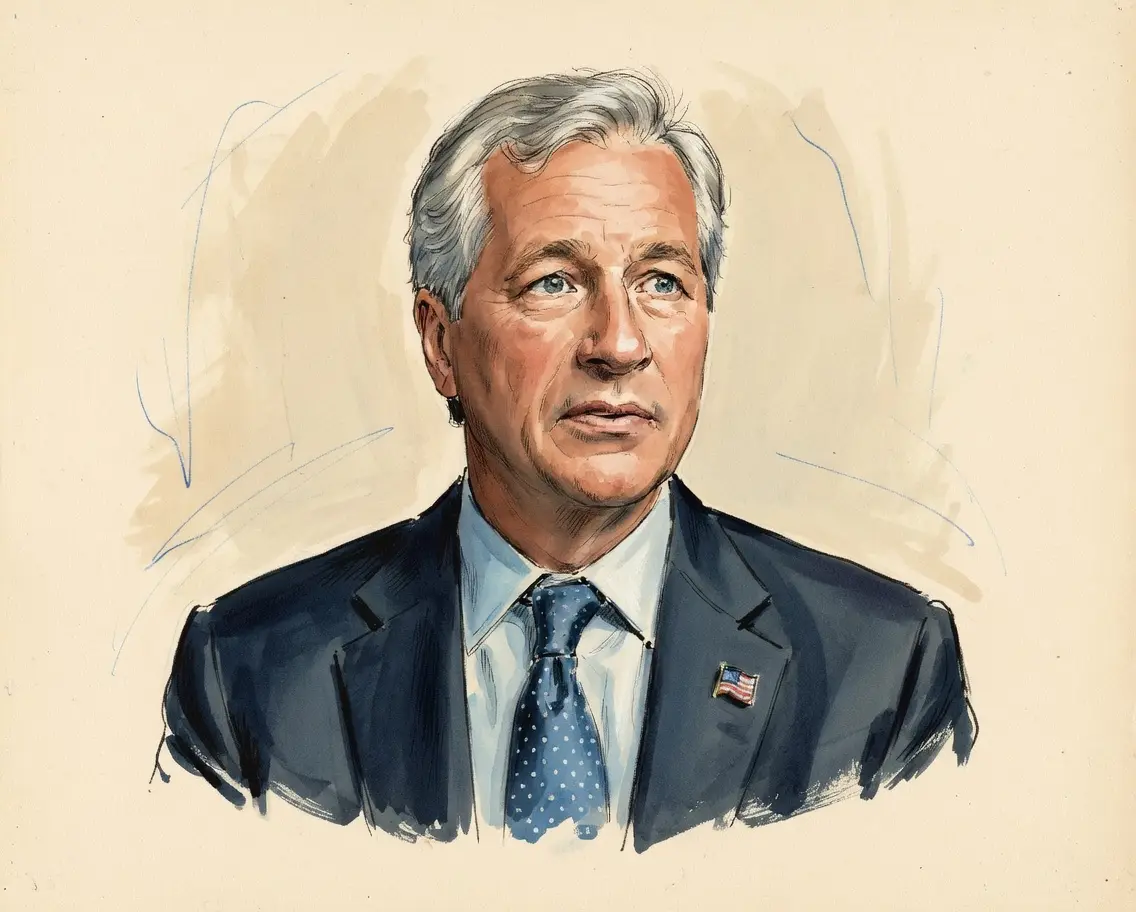
Jamie Dimon
- Known for
- JPMorgan Chase CEO, American businessman
- Born in
- New York City, USA
- Education
- MBA, Harvard Business School
Jamie Dimon is one of the most powerful figures in global finance, serving as Chairman and CEO of JPMorgan Chase since 2006. Rising through the ranks via Sandy Weill’s mentorship, Dimon built his firm into the dominant U.S. bank by assets and market capitalization. He navigates the intersection of high finance, regulatory scrutiny, and partisan politics.
Signature Positions
Dimon's public stances often blend a staunch defense of free-market capitalism with pragmatic calls for specific regulatory adjustments:
- Tariffs: Has shown evolving views, recently supporting Trump's tariff policies while previously warning they create market uncertainty.
- US Global Standing: Has described the United States as a less reliable global partner in recent years, urging a restoration of faith in American institutions.
- Political Alignment: Describes himself as "barely a Democrat" but has engaged with both Republican and Democratic administrations, including advising President Trump’s business forum.
- Cryptocurrency: Has historically been critical of Bitcoin, though his firm's stance has shifted over time.
Notable Tensions
Dimon’s tenure is marked by high-profile controversies and complex political maneuvering:
- The London Whale: Faced intense scrutiny following a disastrous $6 billion trading loss in 2012, which he admitted was "flawed, complex, poorly reviewed, poorly executed and poorly monitored."
- Political Fluidity: Despite lobbying against Brexit and having ties to the Obama White House, he later supported aspects of the Trump administration's tax cuts and, more recently, some Trump tariff policies.
- Epstein Client: Testified under oath in 2023 regarding JPMorgan Chase's banking relationship with Jeffrey Epstein, despite internal warnings about his behavior.
Dimon is noted for his extremely high compensation, becoming a rare billionaire CEO in the sector. His management style is famously disciplined, using systematic lists and the OODA loop method for evaluations. He is a central figure in American corporate governance, having served on the Federal Reserve Bank of New York board and leading the Business Roundtable.