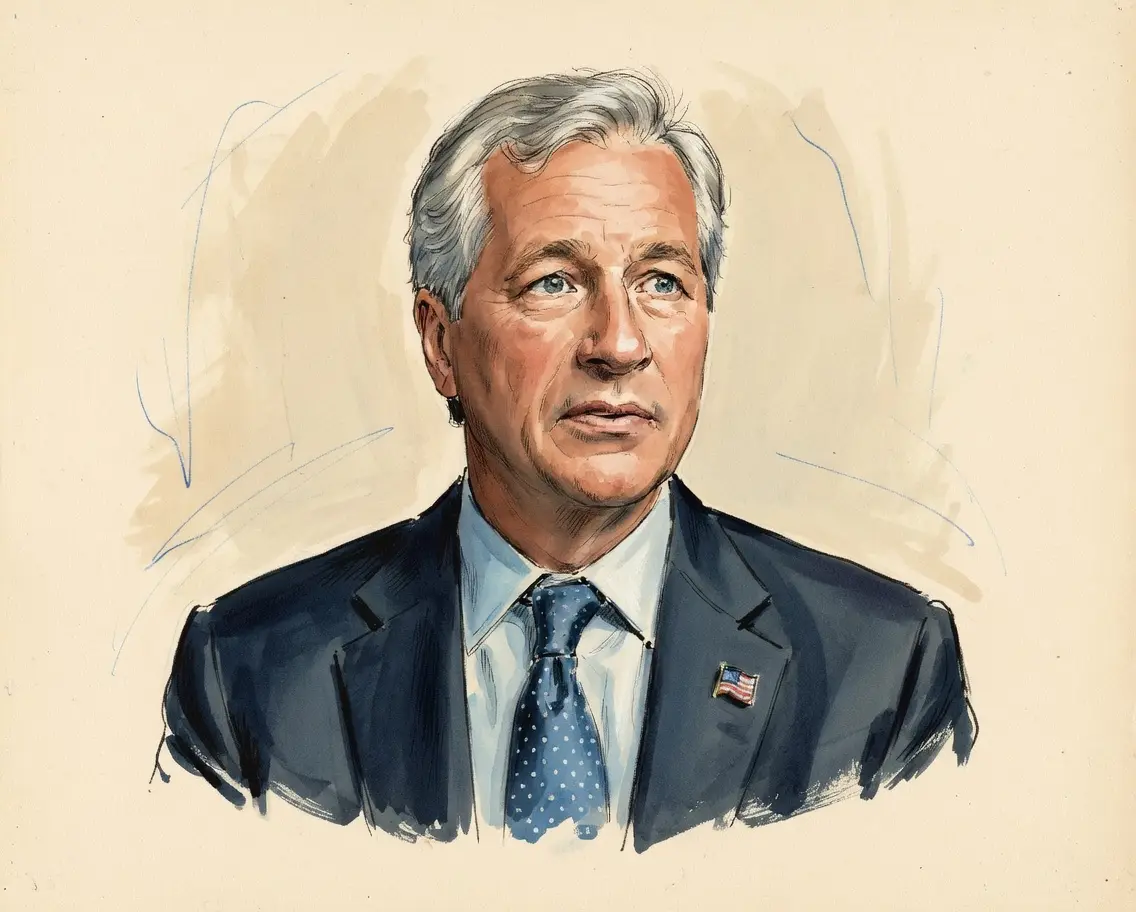
Jamie Dimon on Global Economy
TL;DR
Jamie Dimon views the global economy as facing persistent inflationary pressures driven by fiscal and geopolitical factors, necessitating caution.
Key Points
He stated that geopolitical risks are a greater concern than the domestic economy alone as of early 2025.
He warned that investors are engaging in 'dumb things' reminiscent of pre-2008 years, fueled by high asset prices.
He suggested that escalating tensions with Iran were unlikely to cause sustained inflation unless the conflict was prolonged beyond a short duration.
Summary
Jamie Dimon, the CEO of JPMorgan Chase, maintains a cautious stance on the global economic outlook, frequently identifying numerous inflationary factors he believes are often underestimated by the market. He points to substantial government deficits, elevated asset prices, and excess cash from pandemic-era payouts as fundamental drivers pushing prices higher. Furthermore, he emphasizes that geopolitical instability, such as tensions in the Middle East or ongoing friction between major powers, adds another layer of uncertainty that can easily translate into economic headwinds.
He has strongly cautioned against complacency, suggesting that while immediate shocks from events like regional conflicts might be limited, the cumulative effect of these trends makes a typical economic downturn potentially more severe when it eventually arrives. He believes in a multilateral global system and is wary of an isolationist approach, stating that an 'America First' philosophy cannot mean being 'America alone' in global economic and security partnerships.
Frequently Asked Questions
Jamie Dimon views the global economy as being persistently inflationary due to high government deficits and geopolitical uncertainty. He strongly urges caution, believing that underlying economic factors suggest a downturn, when it occurs, could be more severe than a normal cycle.
He frequently highlights geopolitical instability, such as regional conflicts, as a major threat to global economic stability. In addition to this, he warns about mounting credit risks stemming from loose underwriting standards and the potential for major cyberattacks against financial institutions.
He has voiced concern over the fraying of economic ties between nations, particularly between the U.S. and China. While he supports an 'America First' focus, he is adamant that this cannot translate into international isolation, stressing the need to maintain multilateral systems and alliances.
Sources3
Jamie Dimon: Iran tensions unlikely to spur lasting inflation, warns of credit and cyber risks
Jamie Dimon on the US, global economic outlook: 'It's all inflationary'
Jamie Dimon warns of 'dumb things' people are doing - similar to pre-2008 financial crash
* This is not an exhaustive list of sources.