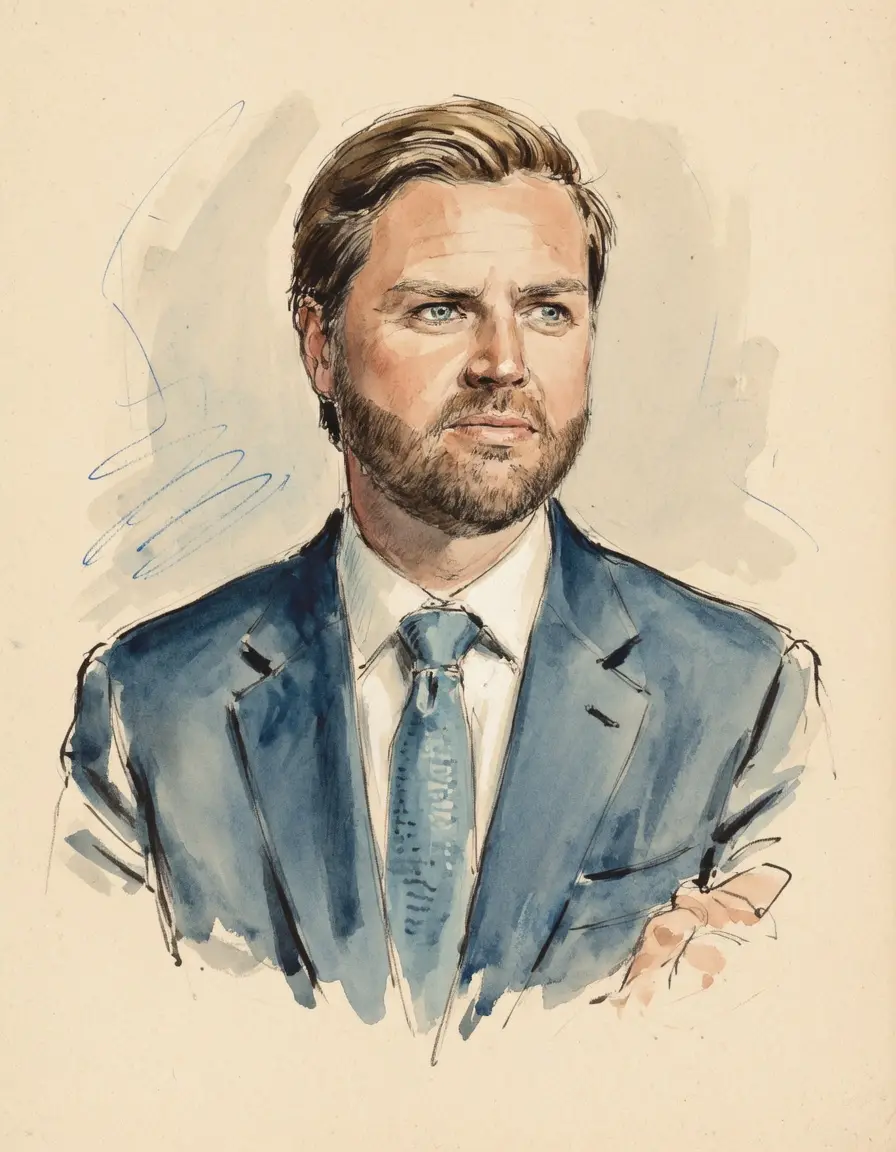
JD Vance on Global Economy
TL;DR
JD Vance advocates for an economic nationalist approach, prioritizing domestic industrial self-reliance over conventional globalization.
Key Points
He advocates for creating a preferential trade zone for critical minerals with allies, protected by enforceable price floors against external market disruptions.
Vance sees the post-1980s globalization model as flawed, arguing that offshoring production ultimately allowed manufacturing hubs to catch up on design and innovation.
The administration is actively working to reindustrialize the US, including the announcement of Project Vault, America's first-ever domestic critical minerals stockpile, in 2026.
Summary
JD Vance's core position on the global economy is a sharp critique of the prevailing model of globalization, which he argues has led to economic dependency and the hollowing out of the American industrial base. He asserts that the idea of outsourcing manufacturing while retaining high-value design work was a flawed premise, as the manufacturing geographies eventually become proficient in design, squeezing out developed nations. His view is that this structure, driven by a reliance on cheap labor, punishes strategic investment and long-term planning by making supply chains brittle and subject to external control. This perspective aligns him with dependency theory critiques regarding the trapping of the Global South in low value-added production.
This stance informs his policy push toward economic nationalism, centered on securing foundational elements for the modern economy, specifically critical minerals. He champions the creation of exclusive trading blocs with allies to maintain stable, enforceable price floors, protecting domestic and partner supply chains from non-market disruptions like strategic dumping by rivals. His approach seeks to reindustrialize the United States by investing in domestic production, creating strategic stockpiles, and actively securing end-to-end supply chains, framing economic security as synonymous with national security.
Key Quotes
The idea of globalization was that rich countries would move further up the value chain, while the poor countries made the simpler things. You would open an iPhone box, and it would say “designed in Cupertino, California”.
Frequently Asked Questions
JD Vance's primary critique is that globalization created a flawed international division of labor where wealthy nations outsourced manufacturing only to see the production centers advance up the value chain, ultimately creating a competitive disadvantage. He views the prior reliance on cheap labor as a 'crutch' that inhibited necessary domestic innovation.
He supports an economic strategy focused on building secure, end-to-end supply chains, particularly for critical minerals, through strong domestic investment and coordination with allies. This includes establishing preferential trading blocs to guarantee access to essential resources and industrial capacity.
His current positions reflect a long-held skepticism toward traditional globalization, which he has articulated since before entering national politics. His recent focus has shifted to the tactical implementation of economic nationalism, especially concerning mineral security and US reindustrialization efforts.
Sources9
US VP JD Vance admits West wants Global South trapped at bottom of value chain
VP Vance on President Trump's Economic Plan to Revitalize the American Workforce
Opening Remarks of the Critical Minerals Ministerial - United States Department of State
WATCH: Vance delivers address at State Department summit on critical mineral supply
Professor Woll: J.D. Vance's Speech Was 'Quite a Hypocritical Statement'
Do you agree or disagree with JD Vances criticism of globalization? Why or why not? : r/AskConservatives
Lots More on JD Vance and the Future of the US Dollar
Economic Mind: JD Vance
* This is not an exhaustive list of sources.