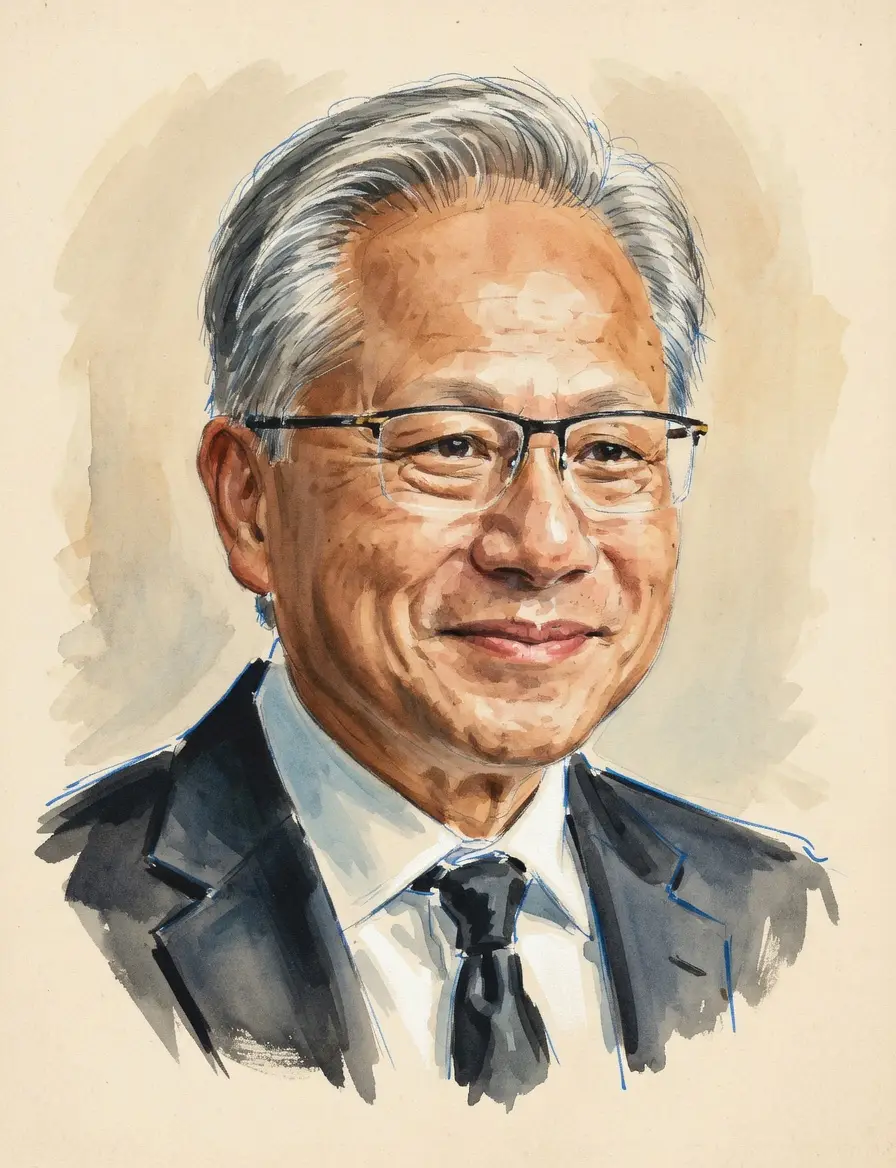
Jensen Huang on Future of Programming
TL;DR
Jensen Huang foresees an evolution where natural language, like English, becomes the primary programming interface, shifting focus from syntax to intent.
Key Points
He asserted in February 2026 that English could become the most powerful programming language by translating human intent into code via AI.
Traditional languages like C++ and Python will continue to power operating systems and core infrastructure, rather than being replaced entirely.
The critical skill for future programmers will shift toward precise problem framing and defining constraints, as AI handles the syntax translation.
Summary
Jensen Huang positions the future of programming not as an extinction event for current languages, but as a fundamental evolution of the human-machine interface. He strongly contends that as artificial intelligence systems advance, the need for humans to write intricate, syntax-heavy code will diminish. Instead, the core skill will transition to expressing clear intent and precise problem definitions in natural language, such as English, which AI will then translate into working software. While he acknowledges that established languages like C++ and Python will remain essential for powering infrastructure and performance-critical systems, the democratization of software creation will occur at the interaction layer above this foundation.
This shift implies a significant change in developer focus and broader access to technology creation. The advantage for future builders will reside in the clarity of thought and the ability to articulate constraints and desired outcomes precisely, rather than memorizing rigid grammatical rules of a specific language. He suggests this transition means the hardest part of development moves from machine translation to human instruction clarity. Consequently, this opens software development to a wider audience, fundamentally changing the way problems are framed and solved in technology.
Frequently Asked Questions
Jensen Huang believes the future of programming involves a major evolution where natural language, such as English, becomes the primary interface for instructing computers. He sees this as an extension of current trends, enabled by advanced AI models that can interpret human intent into working software.
He does not predict the obsolescence of languages like Python or C++. Jensen Huang states that these structured languages will remain necessary for powering performance-critical systems, infrastructure, and enterprise backends. The change he highlights is at the human-interaction layer.
In Jensen Huang's view, the most important skill will shift from language syntax mastery to the ability to think clearly and define problems with precision. Since AI will handle the translation, the quality of the initial human instruction—the intent—becomes the ultimate leverage point.
Sources8
AI And Programming: An Evolution, Not An Extinction
Human Is The New Code: Huang Declares The Future Of Programming
ASR Tech Company LinkedIn Post
Nvidia CEO Jensen Huang Instagram Post
Jensen Huang Says English Could Become the Most Powerful Programming Language
Facebook Group Post referencing Huang's views
Jensen Huang says kids shouldn't learn to code
* This is not an exhaustive list of sources.