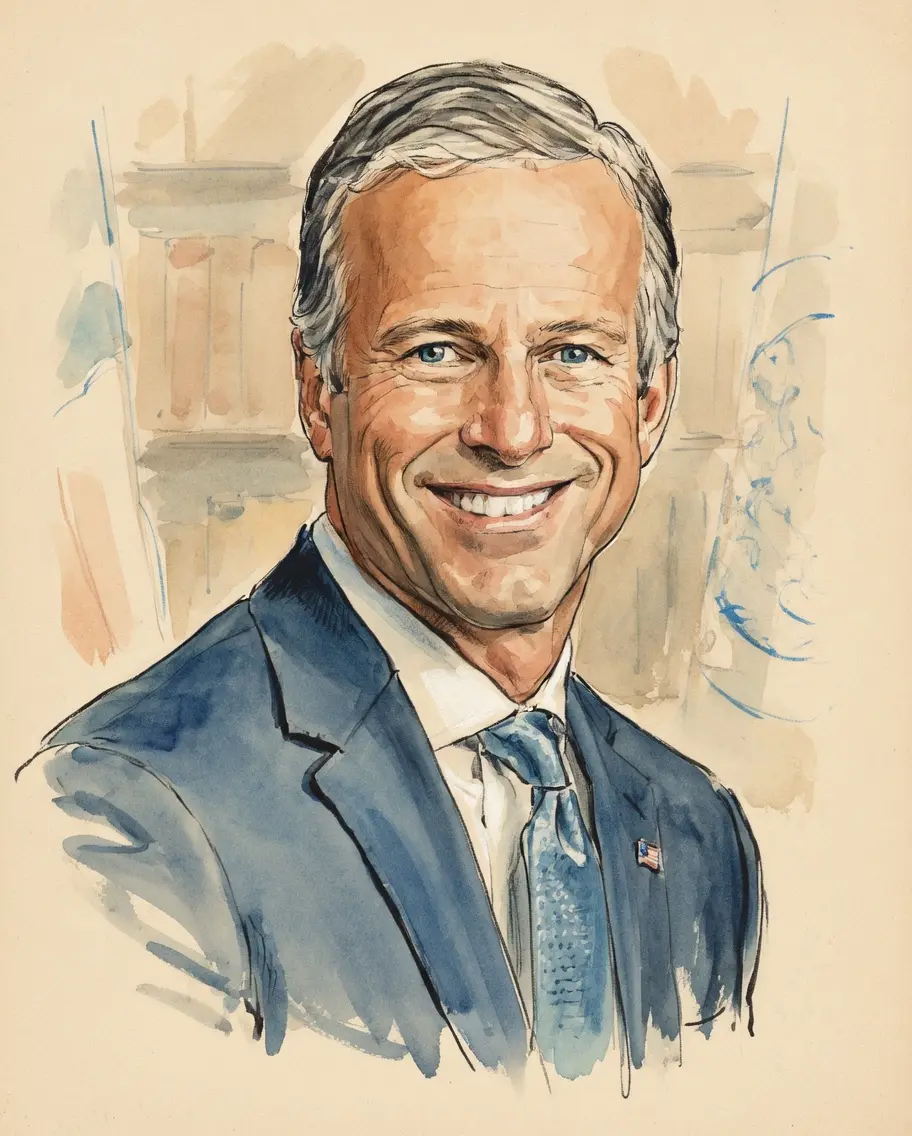
John Thune on Government Spending
TL;DR
John Thune strongly advocates for reining in reckless government spending and enacting meaningful fiscal reforms to stabilize the nation's finances.
Key Points
He criticized Democrats for prioritizing politics over DHS employee pay during a shutdown, suggesting they want to keep the funding issue alive as a political issue (March 2026).
Thune asserts that Republicans are working to make life more affordable by preventing a $2.6 trillion tax hike and implementing tax relief, rather than increasing spending.
He has stated that the federal government must live within a budget and stands ready to reduce spending, enact reforms to strengthen programs, and put the nation's fiscal house in order.
Summary
John Thune takes a strong stance against what he views as reckless government spending, asserting that the federal government must adhere to a budget, similar to American families. He frequently points to excessive spending, particularly on programs like Social Security, Medicare, and Medicaid, as leading to an unsustainable fiscal trajectory for the nation. He contends that the failure to control spending contributes significantly to economic issues like inflation and the rising cost of living, citing major spending bills as the catalyst for the worst inflation crisis in 40 years.
He champions Republican efforts aimed at reducing the burden on taxpayers, such as preventing large tax hikes and pushing for regulatory rollbacks that he believes drive up consumer costs. Thune is ready to reduce spending and enact reforms to strengthen entitlement programs, arguing that bipartisan cooperation is necessary to correct the course before the consequences become too severe. Furthermore, he often links spending control to the debt ceiling, insisting that any increase must be paired with meaningful budgetary changes to restrain the federal government's growth.
Frequently Asked Questions
John Thune's core position is one of fiscal responsibility, urging the federal government to live within a budget like American families. He is strongly opposed to what he considers excessive and reckless government spending which he blames for contributing to inflation and unsustainable national debt.
He proposes controlling spending by pairing debt ceiling increases with meaningful spending reforms, while also championing Republican efforts to cut costs through tax relief and deregulation. The Senator believes bipartisan cooperation is essential to enact the tough spending decisions necessary for fiscal stability.
The Senator has repeatedly criticized recent large spending bills, such as the $1.9 trillion American Rescue Plan, arguing that this excessive spending helped unleash a major inflation crisis. He contrasts this with Republican actions focused on lowering costs for families.
Sources7
Priorities - U.S. Senator John Thune
Press Release: Thune Criticizes Democrats for Prioritizing Politics Over DHS Employee Pay Amid Shutdown
Senate GOP approaching danger zone on approps
Senator Thune: The Ball is in President Biden's Court
* This is not an exhaustive list of sources.