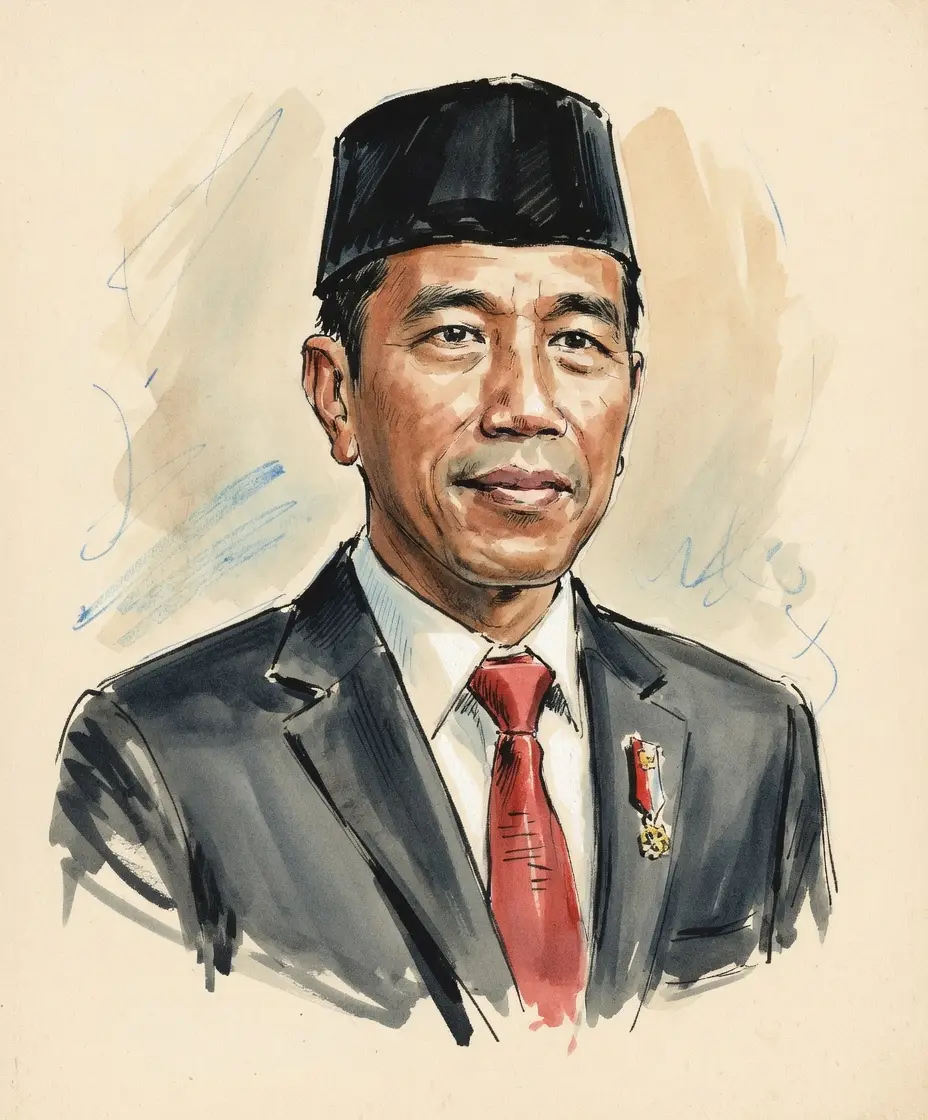
Joko Widodo
- Known for
- Seventh President of Indonesia, Infrastructure development focus, Outsider political profile
- Born in
- Surakarta, Indonesia
- Education
- Gadjah Mada University
Joko Widodo (Jokowi), the first Indonesian president not from the political or military elite, rose from humble beginnings as a carpenter to lead the nation for a decade (2014-2024). His governance style is defined by populist, hands-on engagement, exemplified by his trademark blusukan visits and an intense focus on physical development.
Signature Positions
Jokowi's presidency was dominated by major infrastructure and economic policies:
- Infrastructure Development: Nicknamed the "Father of Indonesian Infrastructure," his administration oversaw massive projects like the Trans-Papua Road and the Sea Toll Road program.
- Resource Nationalism: Implemented policies to increase state control over natural resources, including export bans on raw nickel to boost local industry.
- Foreign Policy: Advocated for Indonesia as a global maritime power (poros maritim dunia) while maintaining a pragmatic, inward-looking economic focus.
- Law & Human Rights: Adopted a tough stance against drug smugglers, prioritizing capital punishment despite international diplomatic protests.
- Nusantara Capital Project: Initiated the controversial relocation of the national capital to Nusantara in Kalimantan.
Notable Tensions
Jokowi's tenure was marked by significant political and ethical contradictions:
- Democratic Backsliding: Critics accused his administration of neo-authoritarianism, citing repressive measures during protests and the controversial Omnibus Law on Job Creation.
- Dynastic Politics: Near the end of his term, he faced intense criticism for perceived nepotism, notably supporting his son Gibran Rakabuming Raka’s successful vice-presidential bid through a controversial Constitutional Court ruling.
- Party Relations: His open support for rival Prabowo Subianto in the 2024 election led to his formal expulsion from his own party, PDI-P.
Jokowi leaves office with a high approval rating (75%), lauded for economic stability and infrastructure but criticized for weakening anti-corruption efforts and institutional independence. His background as an outsider businessman created the "Jokowi Effect," boosting his party's appeal while fundamentally reshaping Indonesia’s political landscape.